

Article
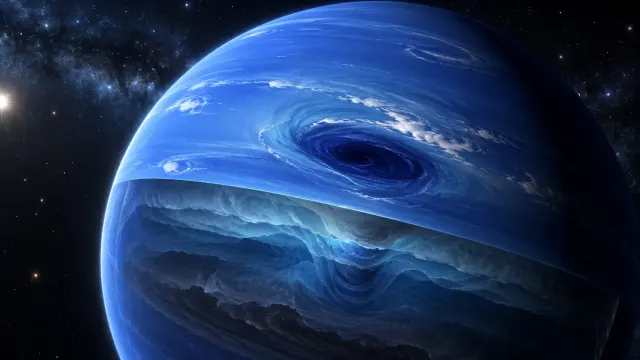
Bright clouds reveal Neptune’s dark vortices
Neptune’s dark vortices are high-pressure systems that are difficult to observe directly. Hubble detects them especially well at blue wavelengths...
Editorial archive
Neptune’s dark vortices are high-pressure systems that are difficult to observe directly. Hubble detects them especially well at blue wavelengths...
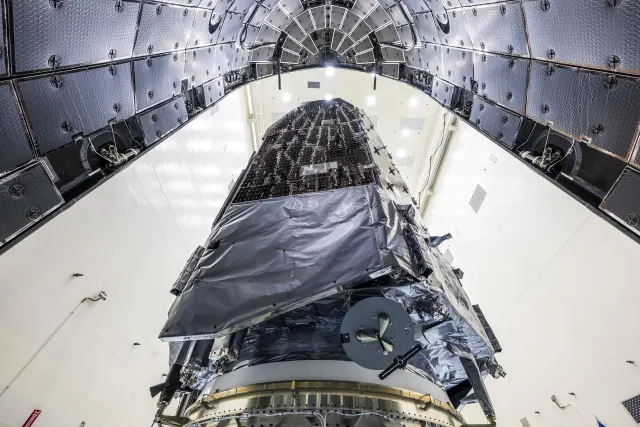
The Nancy Grace Roman Space Telescope began a roughly three-month journey to the second Lagrange point of the Sun-Earth system. NASA detailed the...
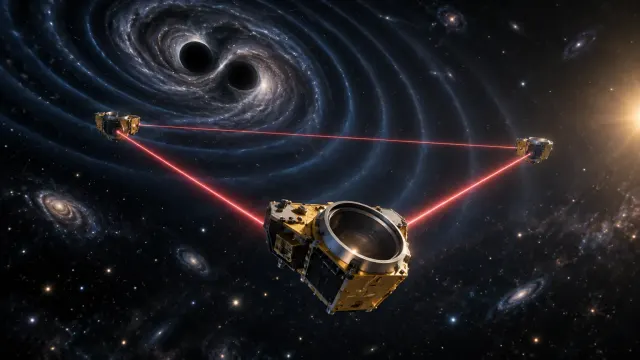
On October 8, 2026, NASA announced a new step in LISA’s development: L3Harris Technologies will design, assemble and integrate a telescope Engine...
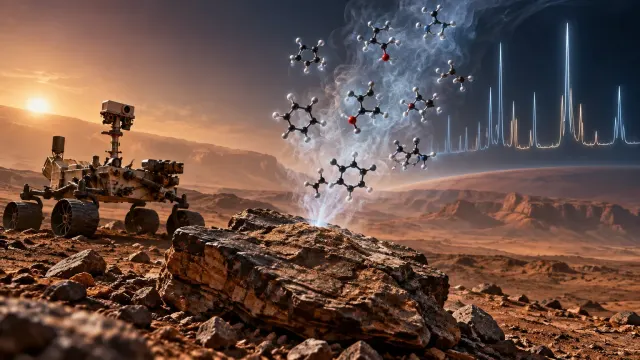
The Curiosity rover analyzed a roughly 3.5-billion-year-old clay-rich sandstone sample from Gale crater with its SAM instrument. In the first in...
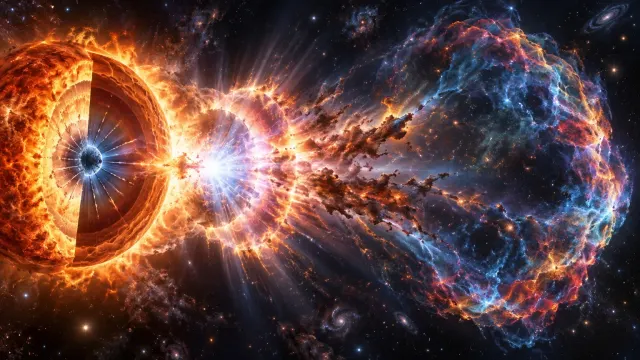
When a massive star runs out of fuel in its core, the outward pressure generated by fusion decreases, and gravity can cause the core to collapse....
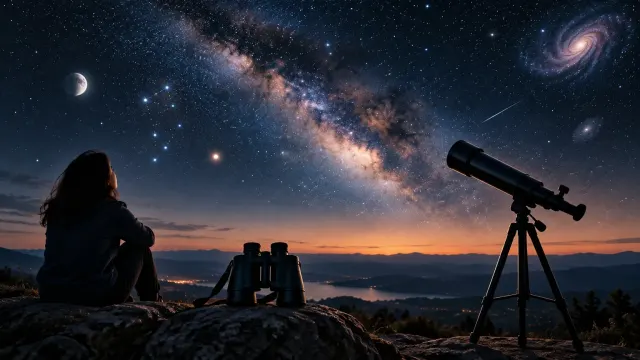
You do not need special equipment to start observing the sky. NASA explains what can be seen with the naked eye, what binoculars can do, and what...
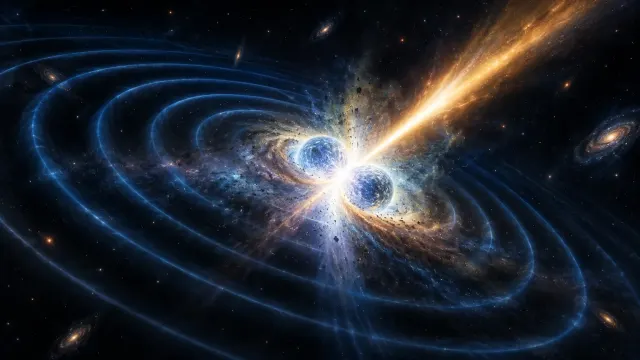
GW170817 was associated with the burst GRB 170817A and an optical source in the galaxy NGC 4993. INTEGRAL helped refine the location, while the c...
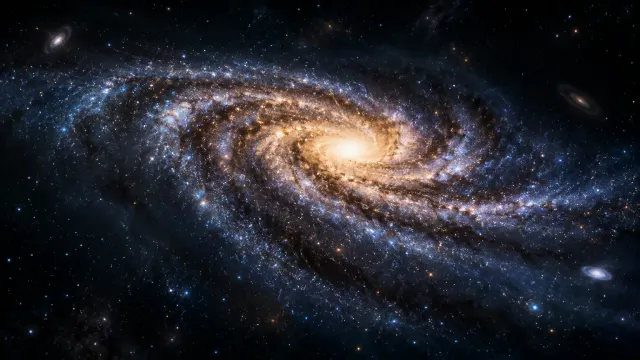
The Gaia science community’s archive describes a cosmic three-dimensional map of about 1.3 million quasars. The account concerns the distant univ...
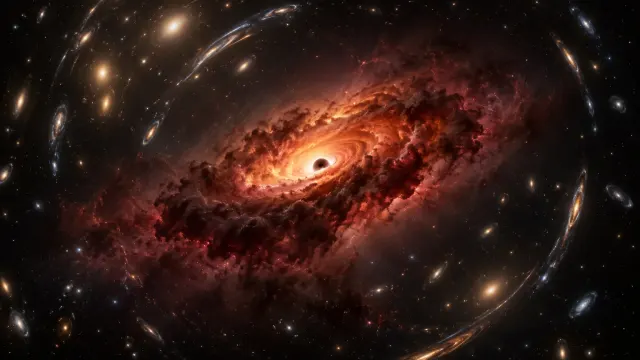
On June 10, 2026, NASA presented an analysis of GLIMPSE-17775, a “little red dot” whose light was magnified by the galaxy cluster Abell S1063. Th...
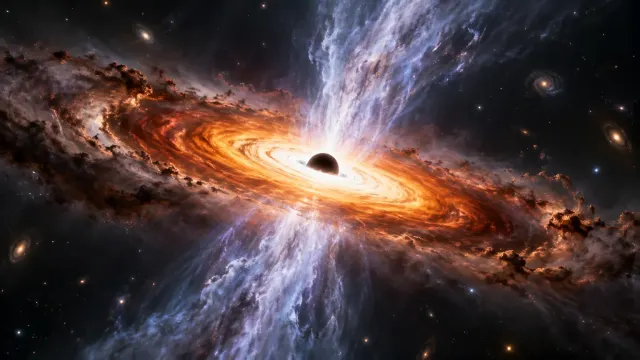
For LID-568, a supermassive black hole at the center of a galaxy that existed about 1.5 billion years after the Big Bang, the team estimates a fe...
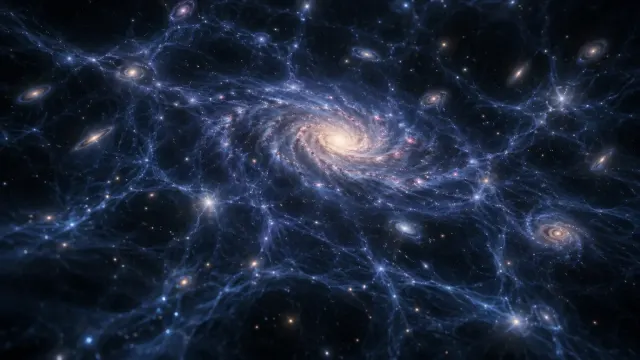
Cosmological simulations described by NASA suggest that dark matter moves slowly: cold models reproduce observed cosmic structures better than wa...
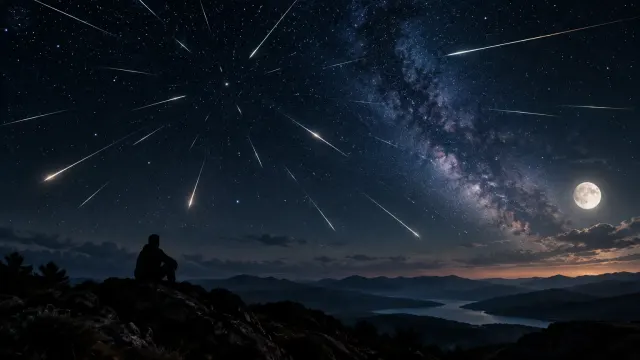
Meteor showers seem to originate from a particular region of the sky, but their meteors can cross any area. NASA guides offer advice on where to...
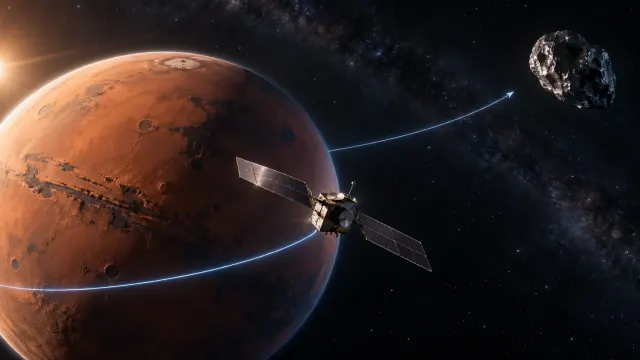
Psyche used Mars’s gravity to gain speed and adjust its trajectory toward the asteroid it will study in 2029. The encounter also let its instrume...
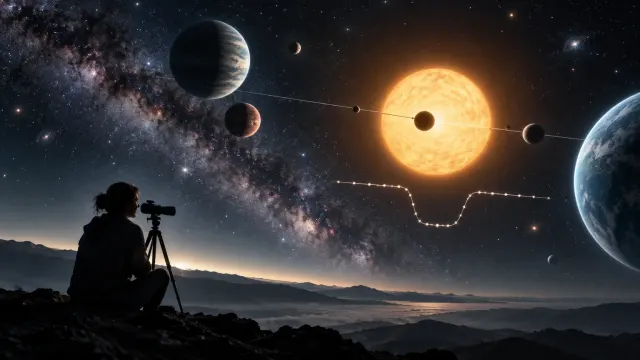
A practical guide to finding your way around NASA’s exoplanet resources: how to use the catalog, what light observations can reveal and how to co...
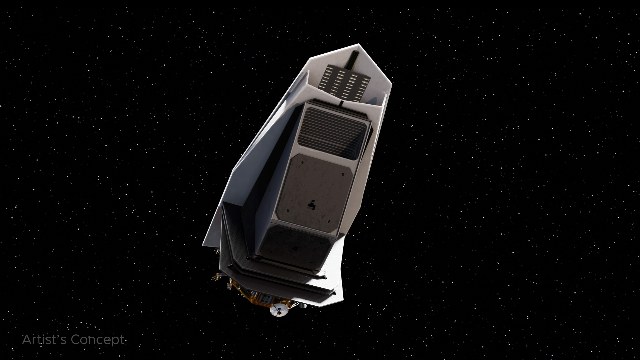
NEO Surveyor is a NASA mission designed to search for near-Earth asteroids and comets by detecting their infrared emissions, a signal that can re...
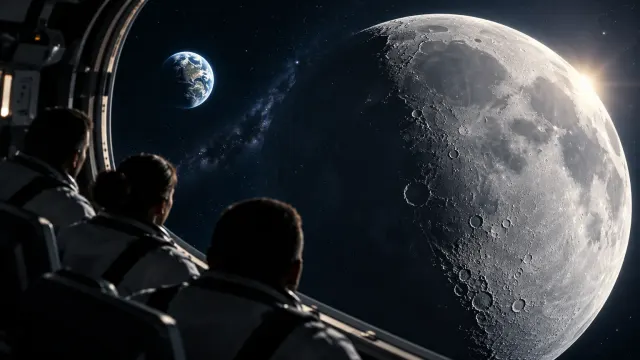
Artemis II was Orion’s first crewed flight. In April 2026, four astronauts traveled around the Moon, observed its surface and, according to NASA,...
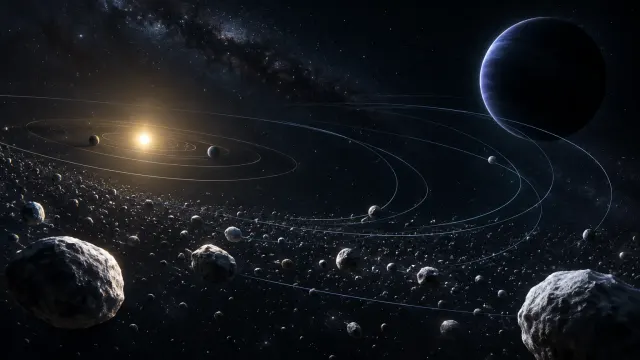
The apparent clustering of some orbits of icy Kuiper Belt objects led Konstantin Batygin and Mike Brown to propose the possible existence of a di...
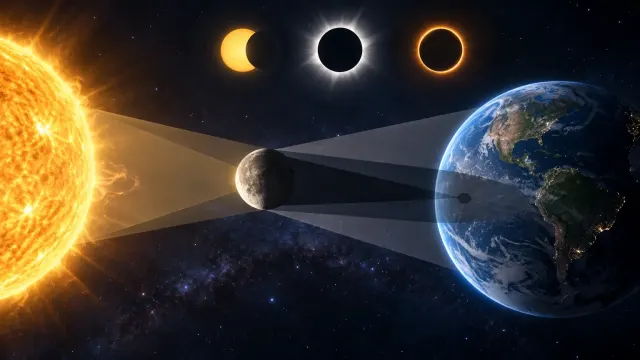
A solar eclipse occurs when the Moon passes between the Sun and Earth and casts a shadow on our planet. But the experience changes depending on w...