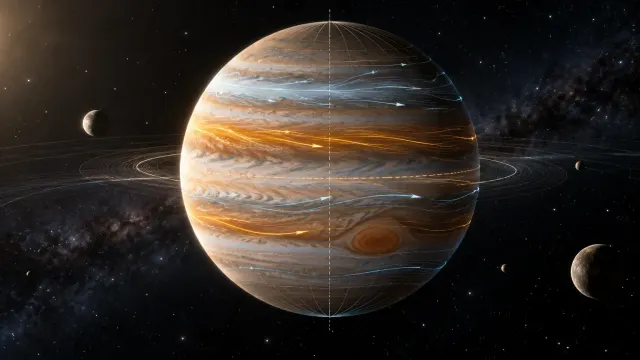
Juno redefines Jupiter’s shape by accounting for its winds
A study published in Nature Astronomy uses radio occultation measurements from the Juno spacecraft to derive Jupiter’s shape while accounting for...
Editorial archive
A study published in Nature Astronomy uses radio occultation measurements from the Juno spacecraft to derive Jupiter’s shape while accounting for...
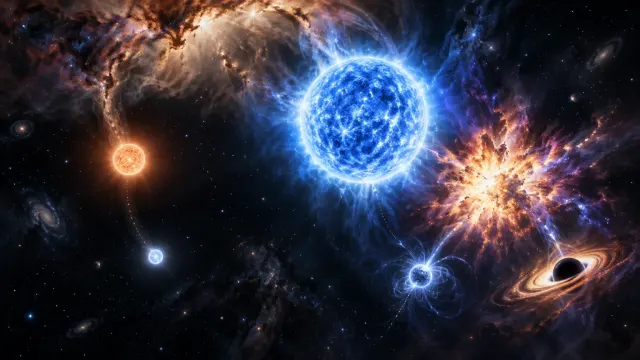
Stars are born in clouds of gas and dust, and spend most of their lives fusing hydrogen into helium. But they do not all follow the same pace: lo...
On September 17, 2025, NASA announced that its count had reached 6,000 confirmed exoplanets. The figure marked a milestone in a catalog that adds...
The Trifid Nebula, a star-forming region about 5,000 light-years away, has been observed again by the Hubble Space Telescope nearly three decades...
NASA puts the number of confirmed exoplanets at more than 6,000 and estimates that billions exist in the galaxy. The catalog makes it possible to...
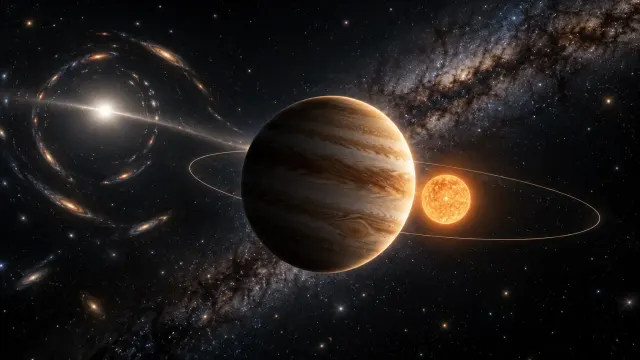
Gaia23bra b has 1.6 times Jupiter’s mass and orbits an orange dwarf star at a distance similar to that between Jupiter and the Sun. NASA explains...
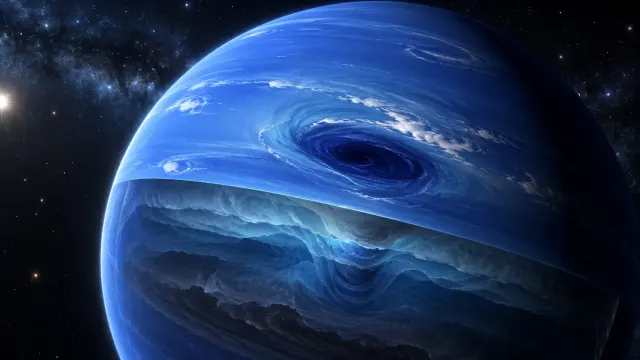
Neptune’s dark vortices are high-pressure systems that are difficult to observe directly. Hubble detects them especially well at blue wavelengths...
The apparent clustering of some orbits of icy Kuiper Belt objects led Konstantin Batygin and Mike Brown to propose the possible existence of a di...
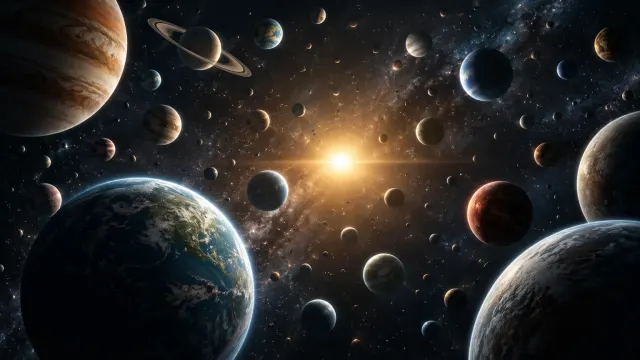
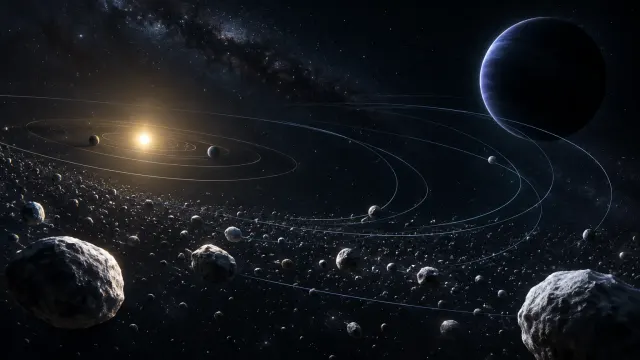
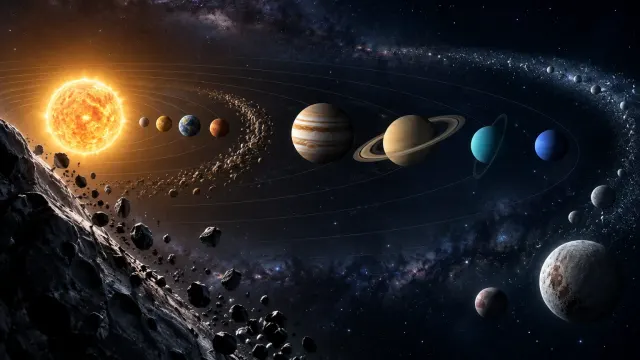
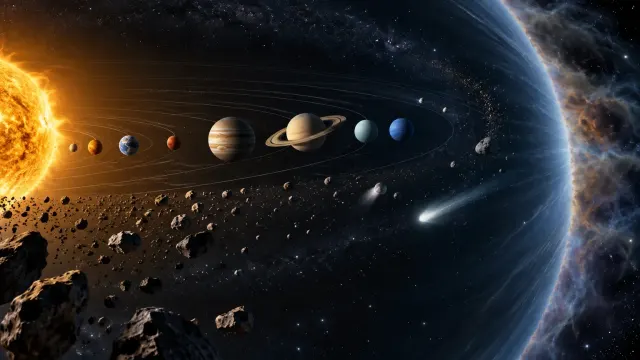
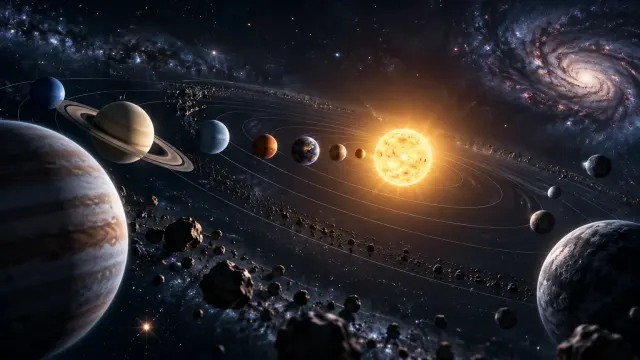
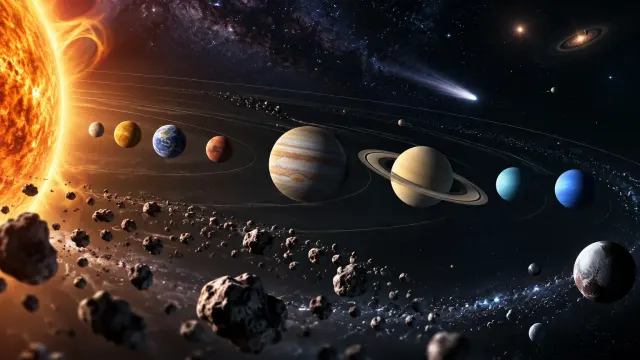
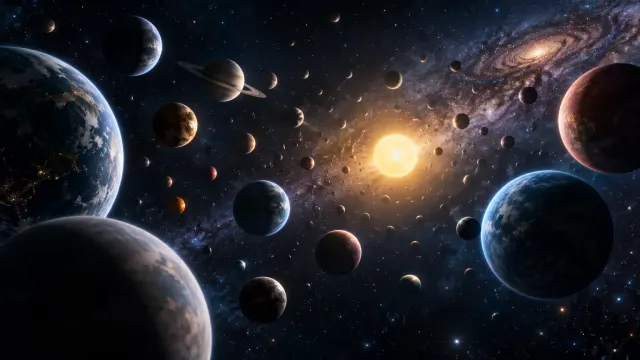
The Solar System is not limited to the planets shown in familiar diagrams. NASA’s figures include hundreds of moons and millions of smaller bodie...
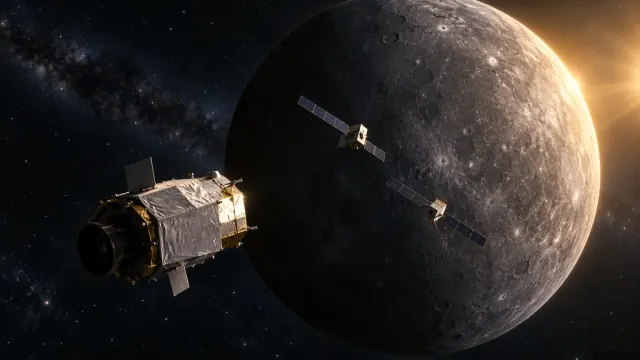
BepiColombo, a joint mission of the European Space Agency and Japan’s JAXA, is designed to study Mercury with two orbiters. Separation of its tra...
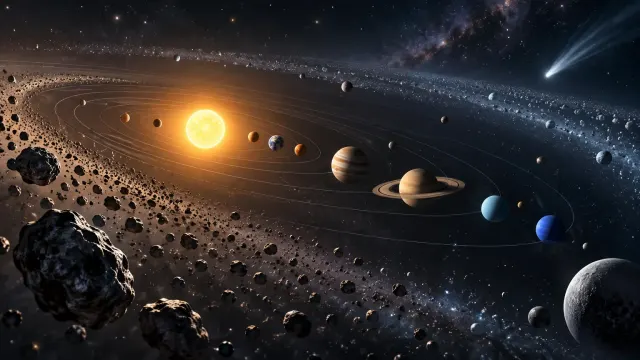
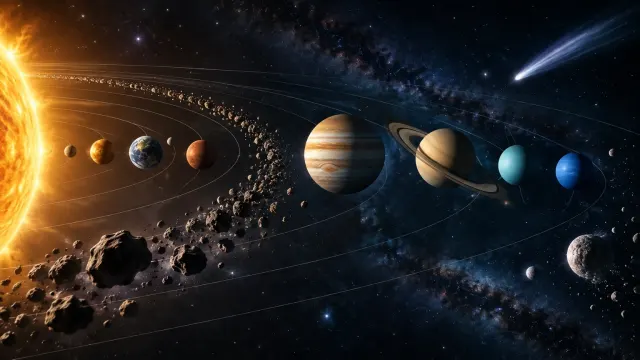
NASA lists eight planets, five officially named dwarf planets, and a far larger population of moons, asteroids and comets. Its missions study eve...
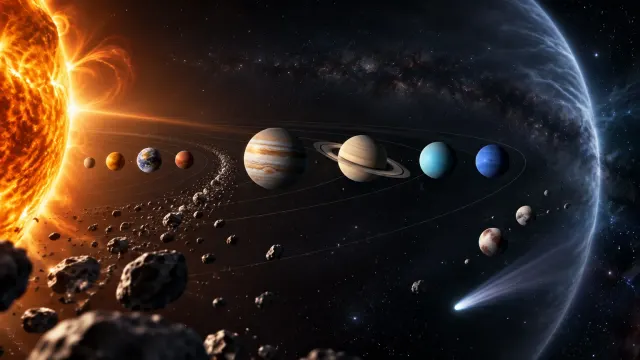
NASA describes a system with one star, eight planets, five dwarf planets and thousands of other bodies. Missions such as IMAP and New Horizons in...
The Solar System includes far more than the planets orbiting the Sun. NASA’s figures include hundreds of moons, more than a million asteroids and...
NASA’s available information offers an overview of the solar system and a unit for measuring distance. It also leaves questions unanswered: the s...
The solar system is much more than its planets. NASA’s figures describe its known inventory of worlds and small bodies, while several missions in...
The solar system contains one star, planets and a much larger population of asteroids, comets and moons. NASA’s data and news illustrate how diff...
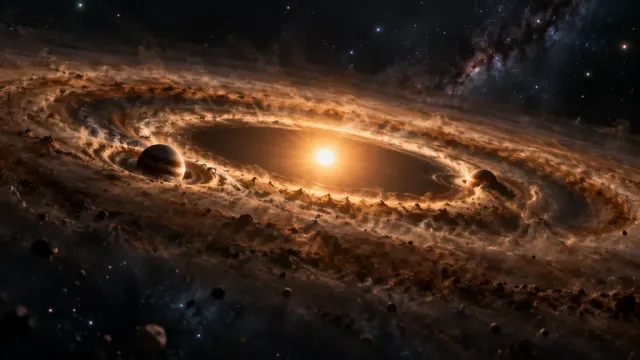
The observation of two planets forming around WISPIT 2 links the search for young worlds to a larger question: how planetary systems, including o...
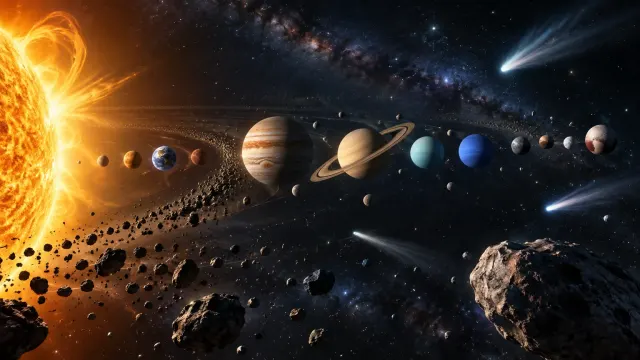
NASA describes a solar system with one star, eight planets, five dwarf planets, at least 290 moons, more than 1.3 million asteroids, and about 3,...