

heavy lift orbital Active
Ariane 6
A modular European heavy-lift launch vehicle available as Ariane 62 or Ariane 64 with two or four P120C strap-on boosters.
Technology
Verified coverage for Rockets.
22 resultsA modular European heavy-lift launch vehicle available as Ariane 62 or Ariane 64 with two or four P120C strap-on boosters.

SpaceX’s Falcon 9 combines two orbital stages with a recoverable first stage. Performance depends on configuration and flight profile.
Ariane 5 is an orbital vehicle recorded in the historical launch-vehicle atlas, with its first documented flight in 1996.
Electron is Rocket Lab’s small-satellite launcher, with two main stages and a Kick Stage for precise orbital delivery.
Falcon Heavy is a SpaceX heavy-lift launcher with three booster cores and 27 Merlin engines at liftoff. Its first flight took place on February 6...
A main-stage engine demonstrator cited by ESA to examine key technological issues and develop European capabilities in propulsion-system integrat...
NASA’s space transportation system, retired in 2011, combined a reusable orbiter, an external tank and two solid rocket boosters.
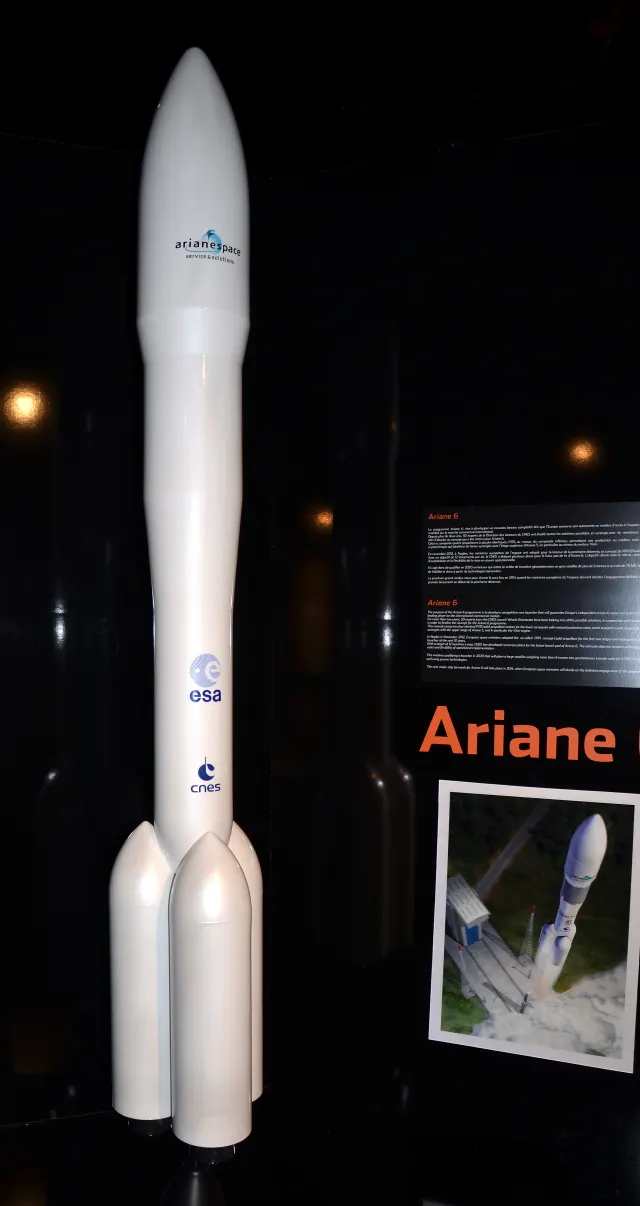
Rockets carry satellites, probes and other payloads beyond Earth’s atmosphere. Ariane 6 and the Space Launch System show two current configuratio...
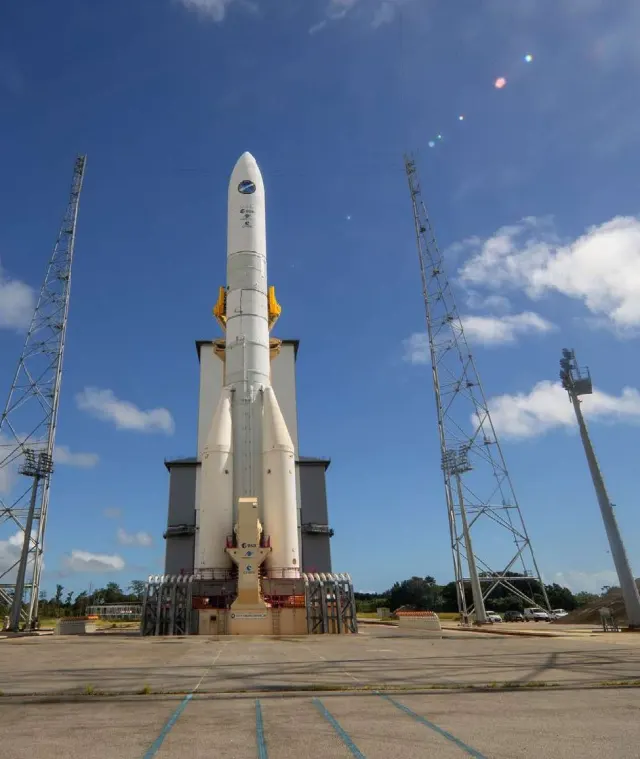
Space rockets can combine solid-fuel boosters with liquid-fuel engines. Here is what official sources say—and what they do not establish—about SL...
Today’s rockets combine engines and stages to carry payloads to different destinations. Available official information describes several componen...
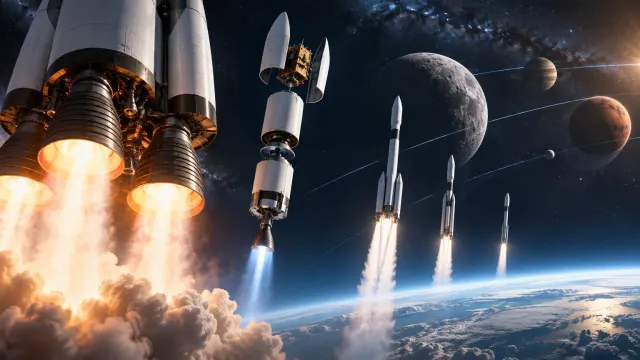
A look at launch vehicles described by NASA and the European Space Agency helps distinguish engines, stages, boosters and missions without confla...
Available official fact sheets make it possible to compare how liquid propulsion, solid boosters and stages are combined in major launchers for t...
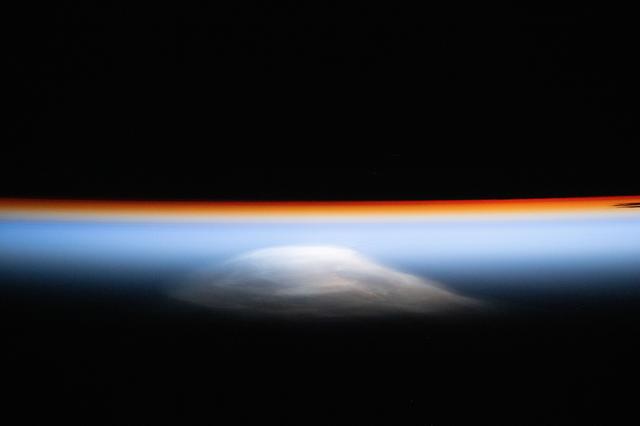
SLS, New Glenn and Ariane 6 illustrate different launch architectures. The supplied evidence identifies engines, published capacities and roles,...
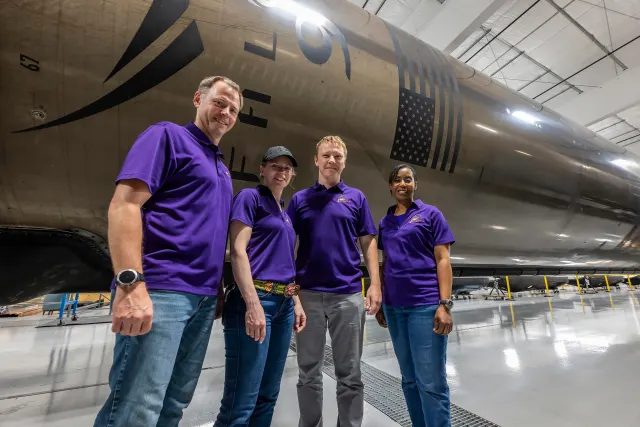
A review of the supplied evidence finds references to Artemis, Falcon 9, Blue Ghost 1 and Long March 5B, alongside an official NASA portal. The r...
NASA says Artemis II launched around the time of the April 1, 2026 full Moon.
Artemis II launched around the April 1, 2026 full Moon, sending astronauts on a journey around the Moon.
NASA sources dated August 12, 2026, refer to the Perseid meteor shower.
The annual Perseid meteor shower reaches its peak in August; August 12, 2026 is given as a reference date based on the available evidence.
NASA identifies a total solar eclipse on August 12, 2026.
A total solar eclipse will occur on August 12, 2026, with a partial eclipse visible in parts of the United States.
A total solar eclipse will be visible in some regions, with a partial eclipse across parts of the United States.
A total solar eclipse visible along a path including northern Russia, Greenland, Iceland, northern Spain, and part of Portugal. A partial eclipse...