

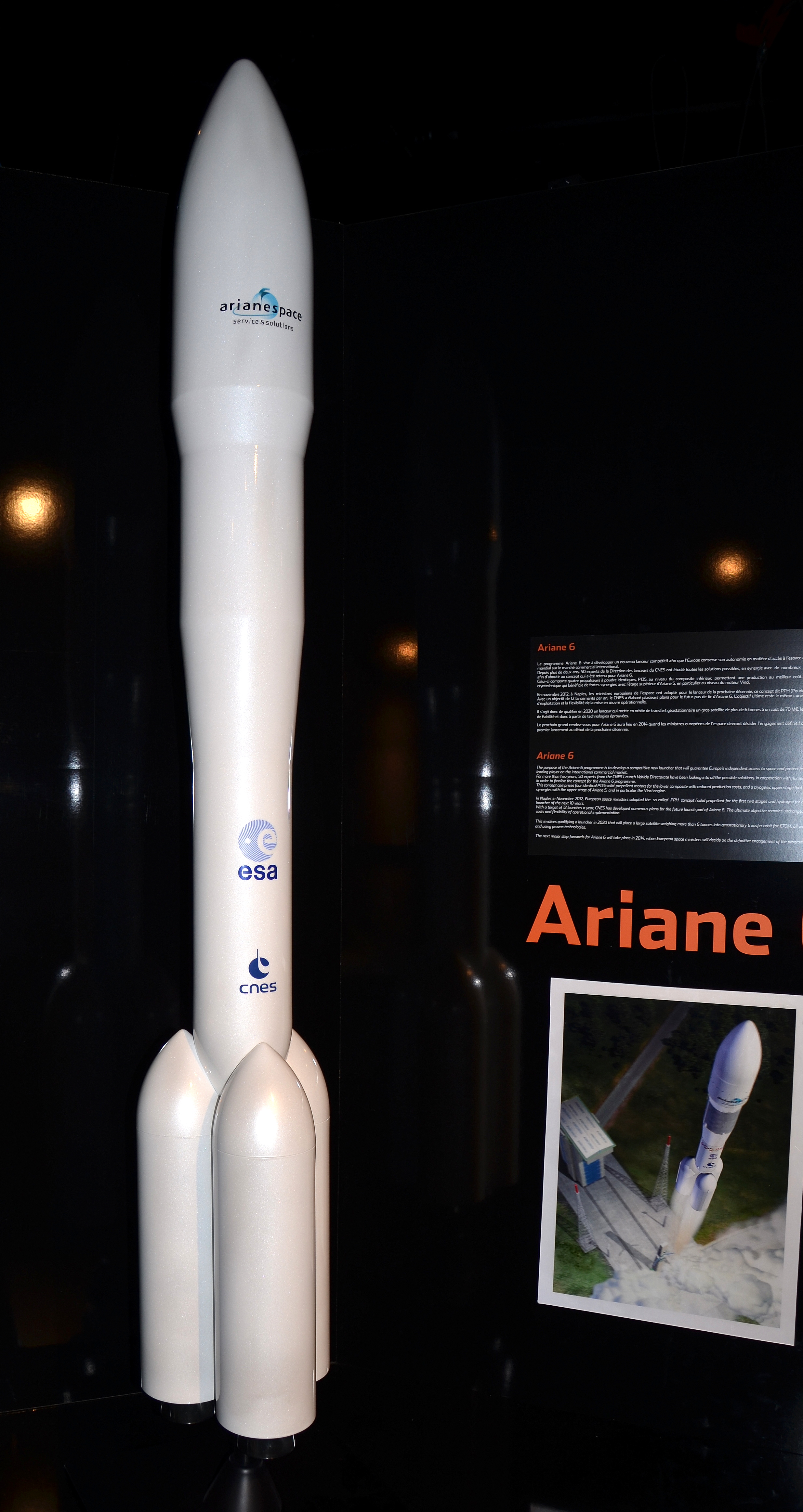
Key facts
- Ariane 6 is an ESA launcher more than 60 metres tall, according to the agency.
- Ariane 6’s core stage is 32 m tall and 5.4 m wide, weighs 23,000 kg without propellants and uses the Vulcain 2.1 engine.
- Ariane 6’s P120C boosters provide additional thrust at liftoff.
- The SLS core stage is 212 feet high and 27.6 feet in diameter and stores cryogenic liquid hydrogen and oxygen.
- The UNOOSA-based space-object indicator covers 1957–2025, counts objects and is estimated by the UN to capture around 88% of objects launched.
Related records
What a launch vehicle does
A launch vehicle carries a payload—such as a satellite, probe or spacecraft—to Earth orbit or beyond. To leave the ground and continue climbing, it uses engines that expel gas and generate thrust. The ESA and NASA examples documented here include liquid-fuel engines and solid rocket boosters, but the specific configuration differs from one vehicle to another.
A useful way to understand a rocket is as a system of stages. Each section contains elements needed for part of the flight; once a stage is no longer needed, the rest of the vehicle can continue. On Ariane 6, the core stage sits at the base and uses the Vulcain 2.1 engine. ESA also describes P120C boosters that provide additional thrust at liftoff. These details explain the launcher’s broad architecture, but they are not enough to establish how much it can carry on a particular mission.
Ariane 6: a European staged launcher
Ariane 6 is an ESA rocket. The agency describes the complete vehicle as more than 60 metres tall. At its base is the main stage, also called the core stage: according to ESA’s fact sheet, it is 32 metres tall, 5.4 metres wide and weighs 23,000 kilograms without propellants. It is powered by the Vulcain 2.1, a liquid-fuel engine derived from the Vulcain 2 used on Ariane 5.
The difference between dry mass and mass with propellant matters: fuel and oxidiser contribute to the mass the launcher must carry at the beginning of flight. ESA says the Vulcain 2.1 burns liquid oxygen; the fact sheet provided here does not specify all the details of its operation. P120C boosters add thrust at liftoff. The available description explains components, but does not provide a verifiable figure for payload, cost per launch or flight frequency.
NASA’s SLS and other development paths
The Space Launch System, or SLS, is a NASA launch vehicle. The agency’s fact sheet identifies its core stage as the tallest stage NASA has ever built: it is 212 feet high and 27.6 feet in diameter. It stores cryogenic liquid hydrogen and liquid oxygen, along with the systems that feed them to its four engines. NASA’s reference material also describes the vehicle as using solid rocket boosters and liquid fuel, as well as an upper stage for in-space propulsion.
These features show that there is no single rocket design recipe: engineers combine stages, engines and propellants to suit each vehicle. Without consistent data on missions, configuration and payload, the dimensions cited here should not be treated as a direct comparison between SLS and Ariane 6.
ESA also lists work on future propulsion technologies. This includes a very-low-cost reusable engine demonstrator using liquid oxygen and methane, with a stated thrust of 1,000 kilonewtons. It is a technology demonstrator, not evidence that an operational launcher using that engine is already in service. The same page refers to proposals to mature reusability technologies for future launch vehicles; the material available here gives no timeline or flight results.
What space-object registers count
To follow space activity over time, readers can consult Our World in Data’s indicator based on the United Nations Office for Outer Space Affairs (UNOOSA) Online Index of Objects Launched into Outer Space. Its unit is the object, not the rocket or necessarily the launch: it includes satellites, probes, landers, crewed spacecraft and space-station flight elements placed in Earth orbit or beyond. The series covers 1957–2025, and the consulted page was updated on 25 February 2026.
The original source is UNOOSA’s index, maintained since 1962. According to the UN estimate reported in the data page, the records capture around 88% of objects launched. Our World in Data processes the information, harmonises country names and aggregates objects by year. If one country launches an object on behalf of another, it is attributed to the beneficiary country; joint launches are counted in each national series but only once in the world total.
The coverage estimate and the definition of “object” shape what can be concluded. This indicator is not an exact count of rockets, does not by itself report whether each mission succeeded and, according to the cited estimate, omits some objects. The evidence available describes the series but does not include specific annual values that would support a claim here that launches rose or fell in a particular year.
What is known—and what remains open
Ariane 6 and SLS show why it is useful to distinguish a complete launcher from its stages and engines. ESA’s fact sheets provide dimensions and components for Ariane 6; NASA supplies dimensions and features of the SLS core stage; and ESA presents an engine demonstrator as part of its technology work. Each source describes different aspects, so together they do not provide a complete ranking of today’s rockets.
It is also important to distinguish technology under development from an operational system, and a registered space object from a launch. The cited material does not specify comparable payload capacities, costs or mission schedules for Ariane 6 and SLS. Those questions would require additional sources and directly comparable data. What this evidence does show is the basic logic: rockets combine engines, propellants and stages to carry payloads into space, while international registers provide a useful, if incomplete, measure of the objects that get there.
Sources: ESA, Ariane 6 overview; ESA, Ariane 6 components; NASA, SLS fact sheets; ESA, propulsion activities; Our World in Data, objects launched per year, based on the UNOOSA index.