
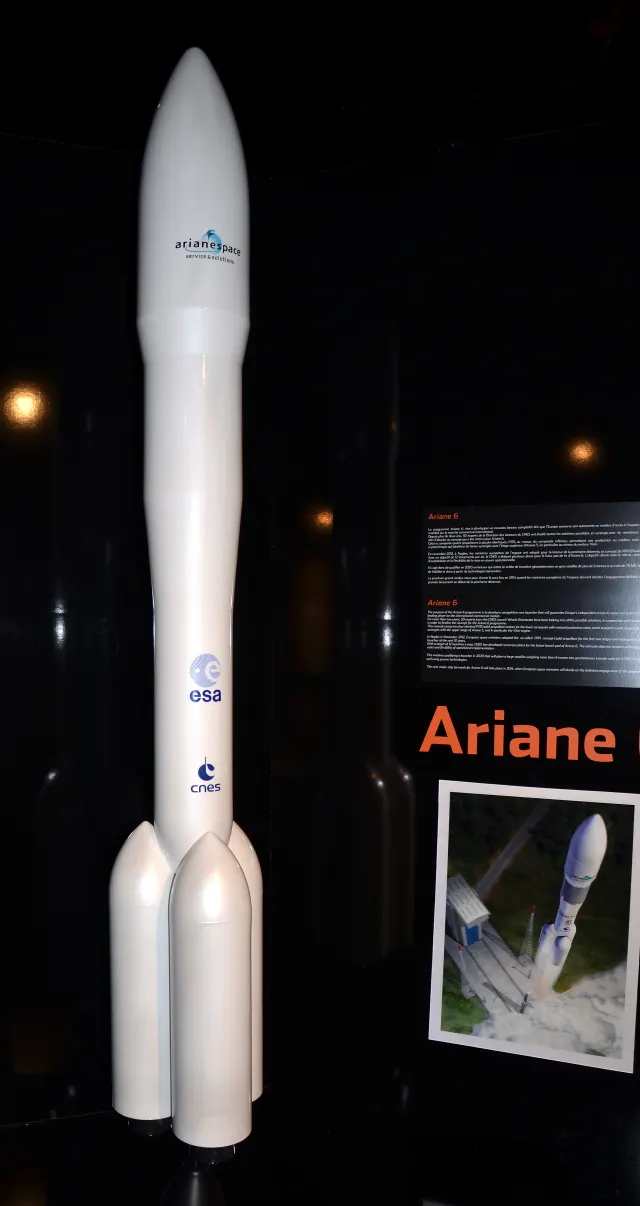
Rockets: how launch vehicles carry payloads into space
Rockets carry satellites, probes and other payloads beyond Earth’s atmosphere. Ariane 6 and the Space Launch System show two current configuratio...
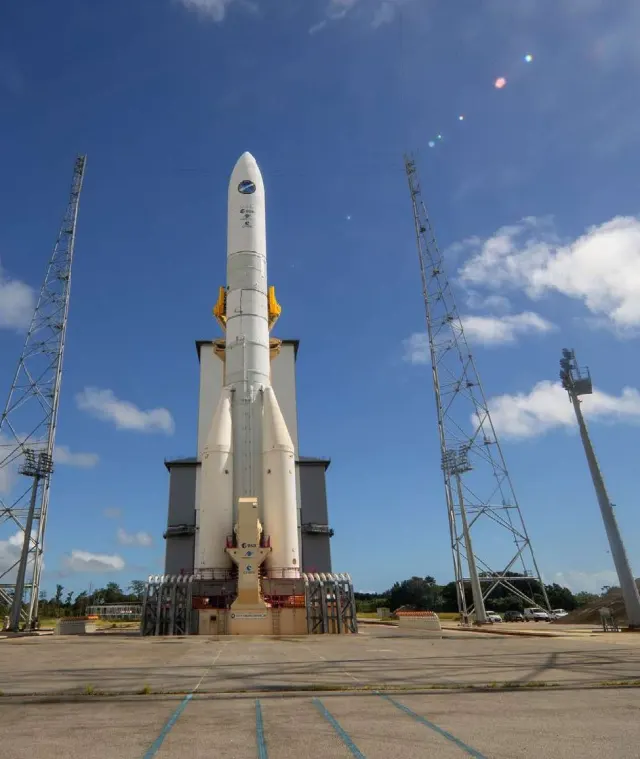
heavy lift orbital
A modular European heavy-lift launch vehicle available as Ariane 62 or Ariane 64 with two or four P120C strap-on boosters.
Ariane 6 is Europe’s heavy-lift launch vehicle, developed to succeed Ariane 5 and serve institutional and commercial missions. Its modular design is offered in two configurations: Ariane 62 carries two P120C solid boosters, while Ariane 64 uses four. The cryogenic core stage is powered by a Vulcain 2.1 engine and the upper stage uses a restartable Vinci engine, allowing separated burns and the deployment of payloads into different orbits during one mission. According to the European Space Agency, the vehicle is between 56 and 62 metres tall depending on its fairing, with a core diameter of 5.4 metres. Published performance reaches about 10,300 kilograms to low Earth orbit for Ariane 62 and 21,600 kilograms for Ariane 64; to geostationary transfer orbit the corresponding values are about 4,500 and 11,500 kilograms. These are reference configuration figures and do not replace mission analysis, which depends on orbit, adapter and flight profile.
Context
Rockets carry satellites, probes and other payloads beyond Earth’s atmosphere. Ariane 6 and the Space Launch System show two current configuratio...
Space rockets can combine solid-fuel boosters with liquid-fuel engines. Here is what official sources say—and what they do not establish—about SL...
Today’s rockets combine engines and stages to carry payloads to different destinations. Available official information describes several componen...