

Key facts
- NASA describes the SLS design as combining liquid-fuel RS-25 engines with solid rocket boosters.
- NASA lists each SLS solid booster as 177 feet long, 12 feet in diameter, weighing 1.6 million pounds, producing 3.6 million pounds of thrust and operating for 126 seconds.
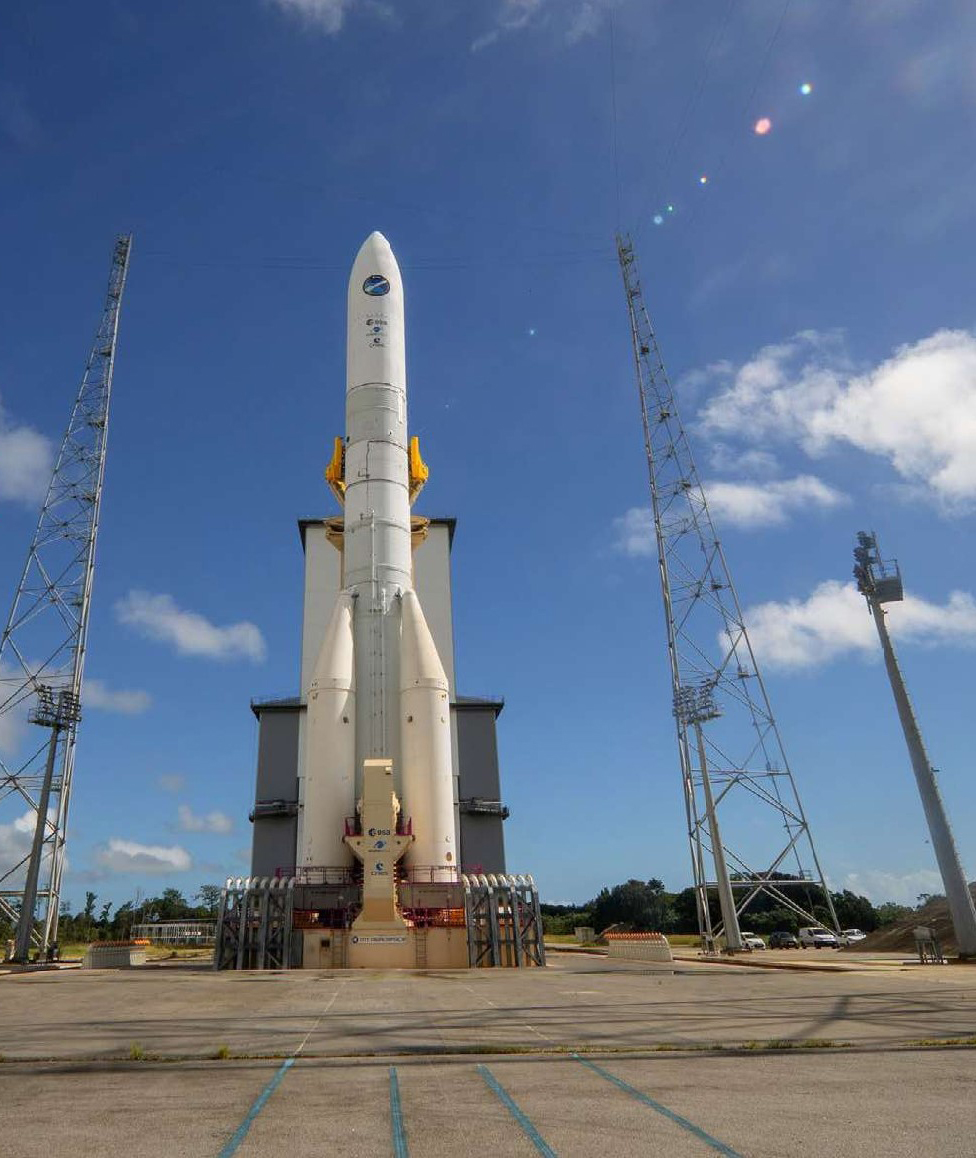
- ESA says Ariane 6’s core stage uses the Vulcain 2.1 engine and that P120C boosters provide additional thrust.
- The supplied information does not support a complete comparison of the vehicles’ performance, cost or reliability.
Related records
A launch rocket carries a payload—such as a spacecraft or instruments—from Earth into space. It does so using propulsion: material is expelled, producing thrust. The sources collected here describe engines that burn liquid fuel and solid-fuel boosters. They also show that a single vehicle can combine both types. This helps explain a rocket’s architecture; it does not, by itself, tell us its cost, reliability or launch frequency.
The information comes from institutional pages and documents published by NASA and ESA. No recent news item or dated announcement is included, and the excerpts do not provide a consistent set of specifications. The facts below are therefore attributed to their sources and are not used to rank the rockets.
One vehicle, several parts with different roles
A rocket can consist of stages: sections that take part in flight and, in some designs, can separate. NASA’s pages describe SLS as a heavy-lift launch vehicle and say its design uses liquid-fuel RS-25 engines together with solid rocket boosters. The SLS reference guide presents it as a system intended to carry payloads toward the Moon. These descriptions concern the vehicle’s design and intended role; they are not a measurement of all its flight results.
The difference between liquid and solid propulsion lies partly in the form of the materials used. NASA’s SLS description says liquid hydrogen and liquid oxygen power the RS-25 engines. By contrast, a solid booster contains propellant in solid form, as NASA defines solid propellant in its educational rocket guide. That definition does not cover every manufacturing detail, nor does it by itself tell us how much thrust a particular engine produces.
The SLS and its connection to Artemis
The Space Launch System, or SLS, is NASA’s rocket associated with its deep-space exploration programme and Artemis. Artemis provides the programme context for the NASA pages cited here. NASA’s Artemis I page lists RS-25 engines, solid rocket boosters, the core stage, and liquid hydrogen and oxygen tanks among the vehicle’s components. This list identifies major parts without attributing results to them that the excerpt does not provide.
NASA gives each SLS solid rocket booster a length of 177 feet, a diameter of 12 feet, a weight of 1.6 million pounds, a thrust of 3.6 million pounds and an operating time of 126 seconds. These figures come from NASA’s SLS solid-booster reference page. The excerpt does not explain the measurement method or conditions for each figure, so the original units are retained and the values should not be compared casually with figures for other systems.
One SLS reference page also describes a liquid-hydrogen and liquid-oxygen engine, but the available excerpt does not unambiguously identify which component is associated with the thrust figure it includes. That figure is therefore not used here to characterise the RS-25. It is an example of how an isolated number, removed from its context, can mislead.
Ariane 6: another combination of stages and engines
Ariane 6 is an ESA launch vehicle. According to the agency’s overview, its core stage is powered by the liquid-fuelled Vulcain 2.1 engine, an upgraded version derived from Ariane 5’s Vulcain 2. The same page says the P120C boosters provide additional thrust. These details describe an architecture combining a liquid-fuelled core stage with auxiliary boosters; they do not establish the exact payload capacity for every orbit or payload.
According to these official descriptions, SLS and Ariane 6 both use liquid-propulsion elements and solid boosters. However, the sources cited do not give comparable specifications for every stage, or a common definition of payload, destination or mission profile. Establishing that one outperforms the other would require additional information and a comparison under equivalent conditions.
What the references tell us—and what remains unknown
The sources also include a NASA page titled Mercury-Redstone Launch Vehicle, a document on liquid-propellant engine design and an educational chapter on launches. The Mercury-Redstone page excerpt contains garbled or truncated text and figures. It is therefore not reliable evidence for the vehicle’s dimensions, performance or results here. Its presence shows that NASA maintains a reference page devoted to it, but the supplied material is insufficient to describe its historical details with confidence.
NASA’s book on liquid-propellant engine design is identified as a 1967 publication, and its description says it covers the design and development of propulsion systems. This is technical context, not evidence that a technology discussed there is used in a particular vehicle. Likewise, an institutional page listing components does not, by itself, demonstrate how a system performed in flight.
In short, the official pages help identify key principles and components: liquid engines, solid boosters and stages arranged into a launch vehicle. They also support a cautious description of SLS and Ariane 6. The excerpts available here do not provide a full comparison of cost, reliability, launch cadence, payload capacity or mission performance. Those questions remain open on the evidence presented.