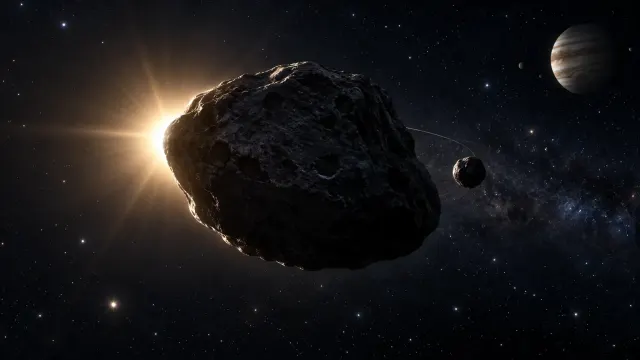
Polymele and its small moon: how an occultation revealed a satellite about 5 km across
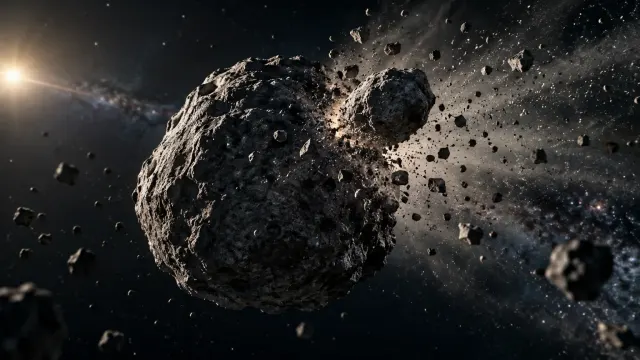
On March 27, 2022, the Lucy mission science team observed a stellar occultation by Polymele, a Jupiter Trojan asteroid. Of the 14 teams that repo...
News
Verified coverage for Planetary science.
15 results
On March 27, 2022, the Lucy mission science team observed a stellar occultation by Polymele, a Jupiter Trojan asteroid. Of the 14 teams that repo...
The erratic movement of planets in the night sky challenged the geocentric view for centuries. The transition to heliocentrism, driven by Coperni...
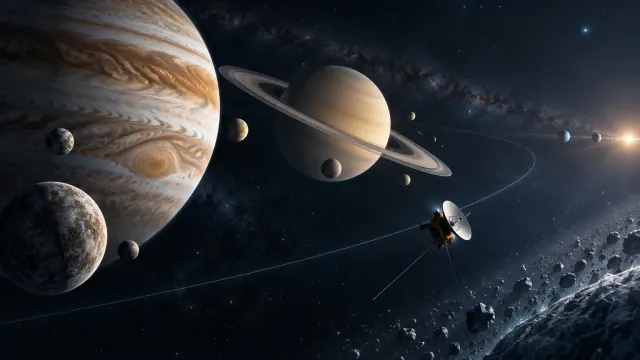
The Voyager mission was initially designed to study Jupiter and Saturn, their rings and their largest moons. An unusual alignment of the outer pl...
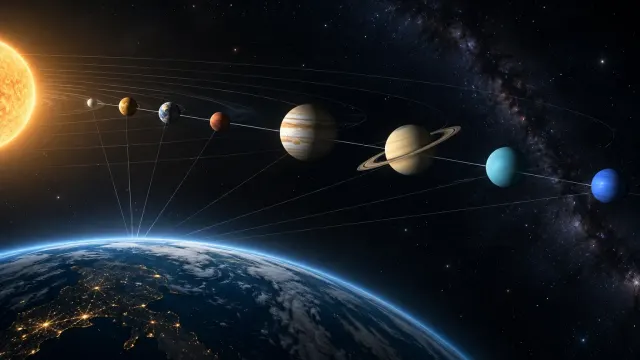
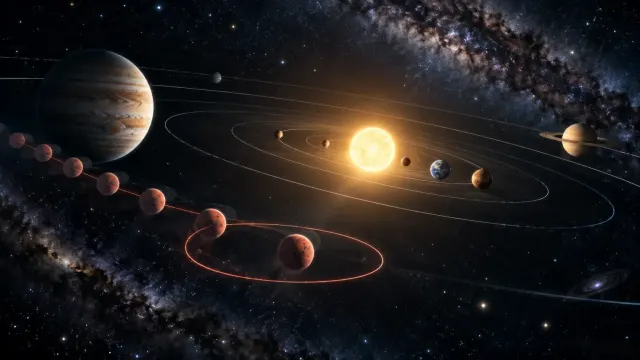
“Planet parade” is not a single technical term: it can refer to several worlds that appear to form a line or arc in the sky, while “alignment” is...
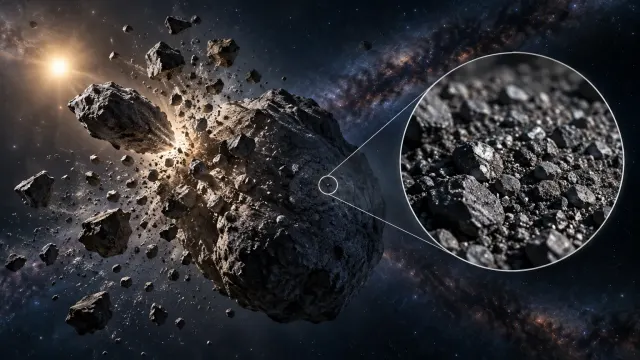
NASA’s Laboratory Astrophysics publication list includes a peer-reviewed paper on Bennu samples. Its title points to regolith production through...
NASA’s laboratory astrophysics publications list includes a 2026 paper on physical analysis of Bennu samples and regolith production through coll...
NASA Ciencia in Spanish identifies the Nancy Grace Roman Space Telescope as a mission aimed at investigating dark energy and dark matter. The ava...
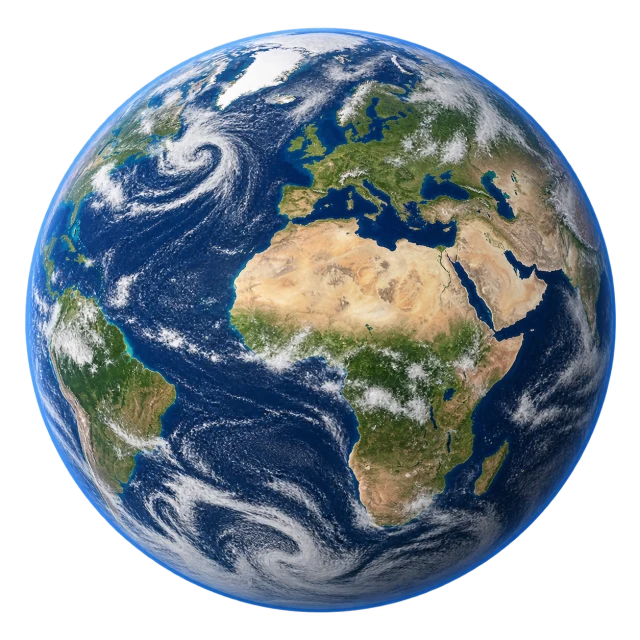
Earth is the third planet from the Sun and the largest of the terrestrial planets. It is the only known place inhabited by living things and the...
Europa is one of Jupiter’s four large moons and the planet’s fourth-largest moon. Its icy surface and measurements pointing to a salty ocean bene...
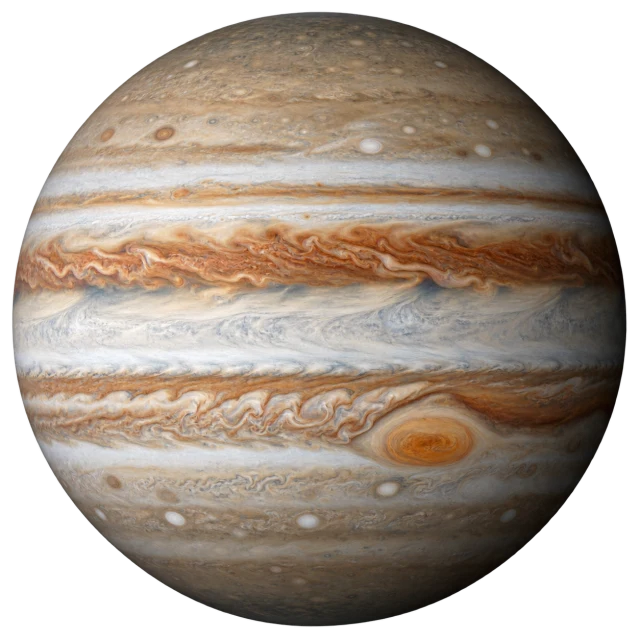
Jupiter (JPL 599) is the fifth planet: a rapidly rotating gas giant with a hydrogen-helium atmosphere, an intense magnetosphere, moons, and faint...
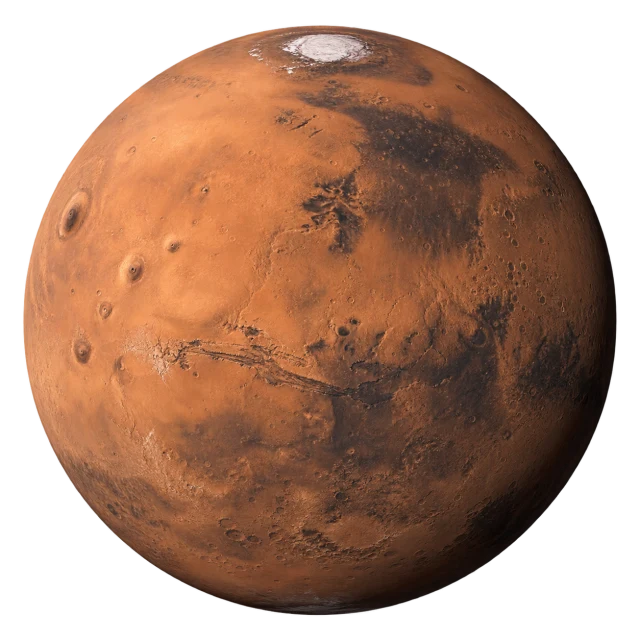
Mars (499) is the fourth planet from the Sun: a rocky, cold, dusty desert world with a very thin atmosphere, seasons, polar ice caps, extinct vol...
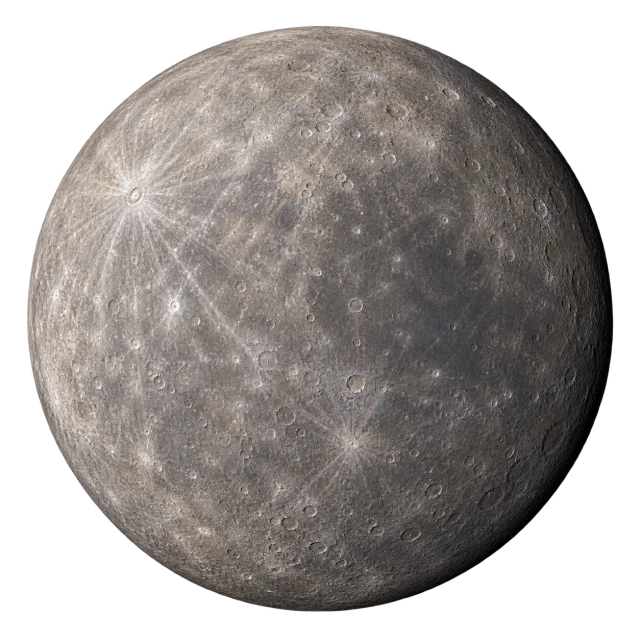
Mercury is the closest planet to the Sun and the smallest planet in the solar system. JPL identifier 199 corresponds to a rocky world with a 2439...
The Moon is Earth's only natural satellite. It is a differentiated rocky body with a core, mantle, and crust, orbiting Earth at an average distan...
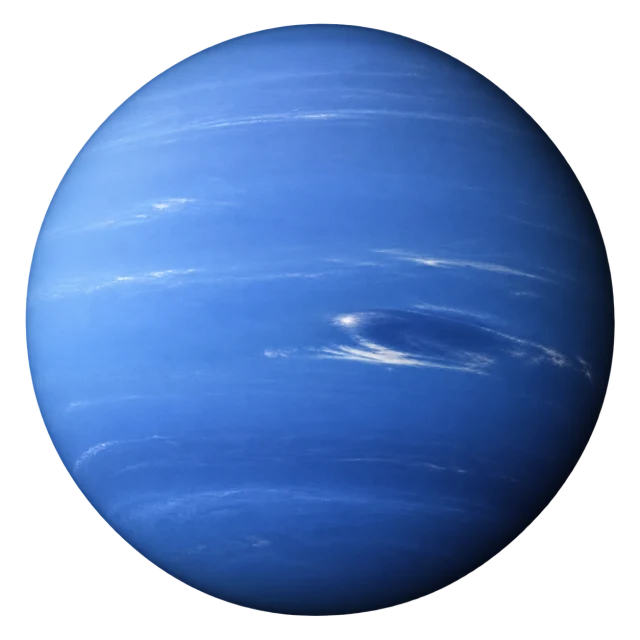
Neptune is the eighth and most distant planet in the solar system: an ice giant discovered in 1846 through mathematical predictions. It has a dyn...
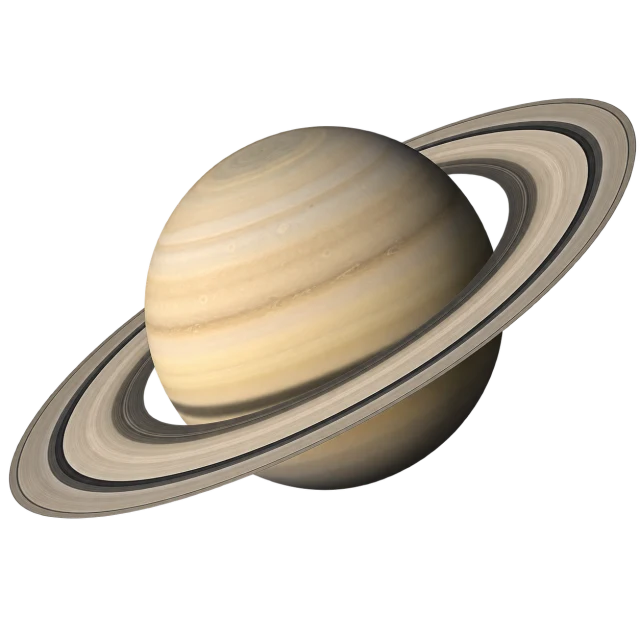
Saturn is the sixth planet from the Sun and the second-largest in the solar system. It is a gas giant composed mostly of hydrogen and helium, kno...