January 2026 X-class solar flare and geomagnetic storm
An X-class solar flare detected on 18 January 2026 was followed by a coronal mass ejection and a severe geomagnetic storm.
Observation
Verified coverage for Astronomical events.
14 resultsAn X-class solar flare detected on 18 January 2026 was followed by a coronal mass ejection and a severe geomagnetic storm.
Venus and Jupiter will appear very close in the evening sky on June 9, 2026.
A total solar eclipse on August 12, 2026, visible along a path including northern Russia, Greenland, Iceland, northern Spain, and part of Portuga...
A total solar eclipse will be visible across northern Russia, Greenland, Iceland, northern Spain, and part of Portugal.
NASA identifies a total solar eclipse for August 12, 2026.
A total solar eclipse whose path of totality includes northern Russia, Greenland, Iceland, northern Spain, and part of Portugal.
A total solar eclipse is expected on August 12, 2026, along a path crossing parts of northern Russia, Greenland, Iceland, northern Spain, and Por...
NASA identifies a total solar eclipse on August 12, 2026.
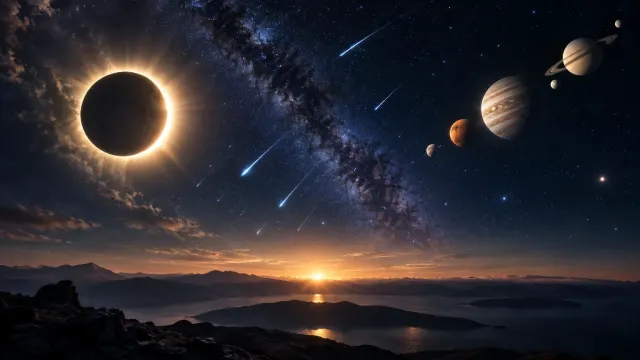
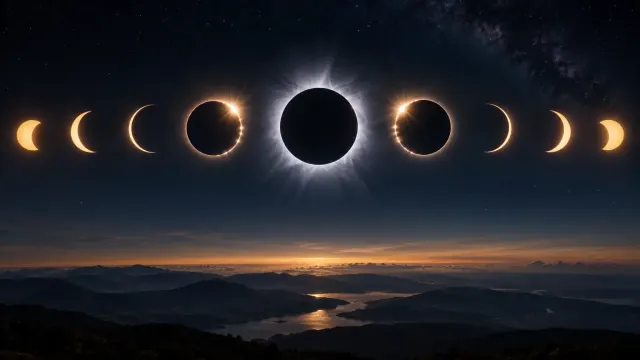
A total solar eclipse unfolds in phases: the Moon partially covers the Sun, flashes appear along its edge, and, within the path of totality, it c...
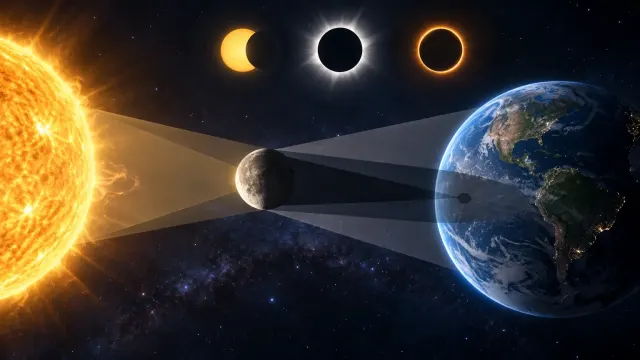
A solar eclipse occurs when the Moon passes between the Sun and Earth and casts a shadow on our planet. But the experience changes depending on w...
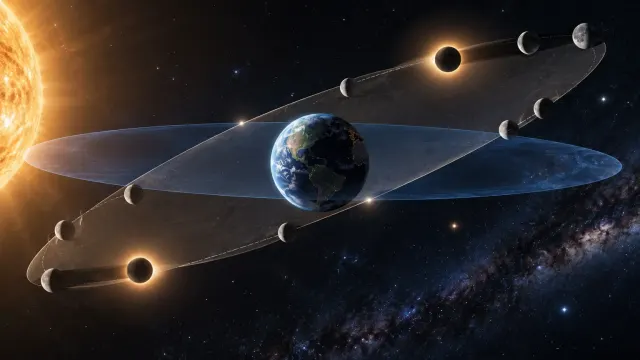
The Moon reaches its new and full phases every month, but those phases alone are not enough to produce an eclipse. The lunar orbit is tilted by a...
A guide to the sky events NASA flags for May, June and August 2026—and to the limits of the information published.
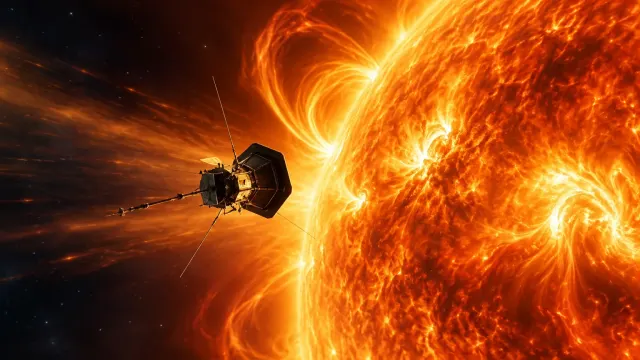
NASA says its Parker Solar Probe made its 29th close approach to the Sun on September 4 and again matched its records for speed and closeness to...
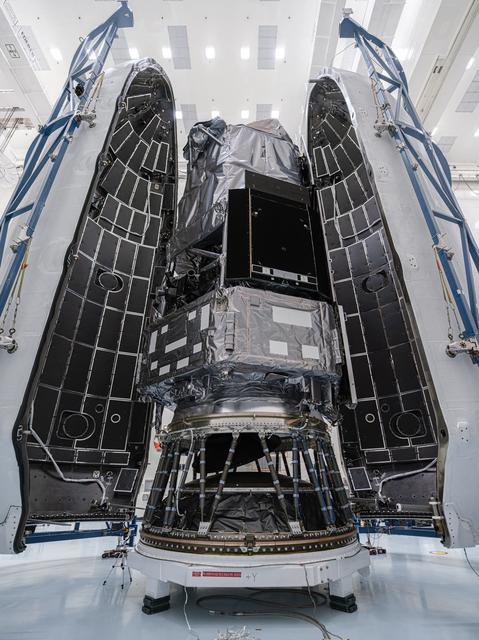
NASA Ciencia’s official result attributes a launch to the Nancy Grace Roman Space Telescope and outlines its scientific goals. The material does...