Architecture and reuse
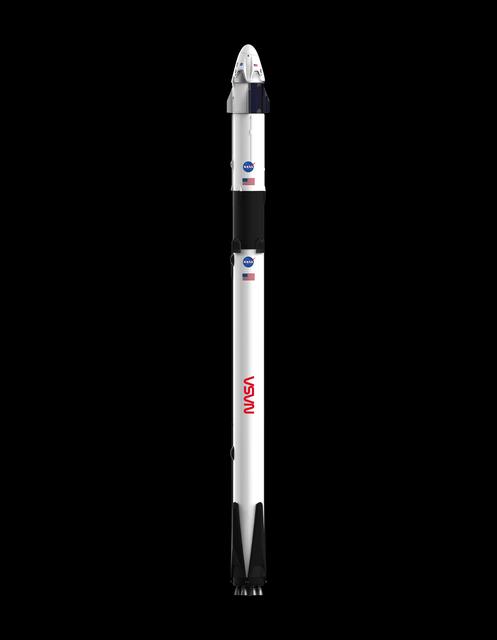
Falcon 9 burns liquid oxygen and RP-1 kerosene. Nine Merlin engines power the first stage and one Merlin Vacuum powers the second. Grid fins and landing legs support booster recovery, inspection and reuse. The family first flew in 2010; the dimensions below do not describe that initial version.
Dimensions and capability
SpaceX’s May 2025 guide specifies 70 m with a standard fairing and a 3.66 m diameter. NASA’s 2022 press kit rounds the diameter to 3.7 m and lists a mass of 549,054 kg and 22,800 kg to low Earth orbit. These are reference figures, not measurements of every launch.
The SpaceX commercial sheet read on 7 October 2026 prints 22,000 kg to low Earth orbit and 8,300 kg to geostationary transfer orbit for a fully expendable vehicle. Its LEO pound equivalent disagrees with its kilogram figure; this discrepancy remains unresolved. The guide also gives different liftoff thrust figures in its prose and table.
Stage recovery, target orbit and vehicle configuration affect performance. We therefore do not present a single LEO payload or thrust figure as an unambiguous current maximum.