

Key facts
- Roman lifted off on August 30, 2026, at 7:26 a.m. EDT from Launch Complex 39A at Kennedy Space Center in Florida.
- The telescope is traveling aboard a SpaceX Falcon Heavy toward L2, the second Lagrange point of the Sun-Earth system, located about one million miles from Earth.
- NASA described the journey to the final orbit as a three-month trip.
- The control team began receiving telemetry seven minutes after launch; the rocket separated from the observatory 31 minutes after the flight began.
- NASA confirmed deployment of the solar panels and lower sunshade one hour and 23 minutes after liftoff.
- The Wide Field Instrument is a 300-megapixel infrared camera with 18 4K detectors; according to NASA, Roman is designed to survey the universe a thousand times faster than Hubble.
- NASA forecast a data rate of 1.4 terabytes per day and the publication of the first images in early 2027.
Related records
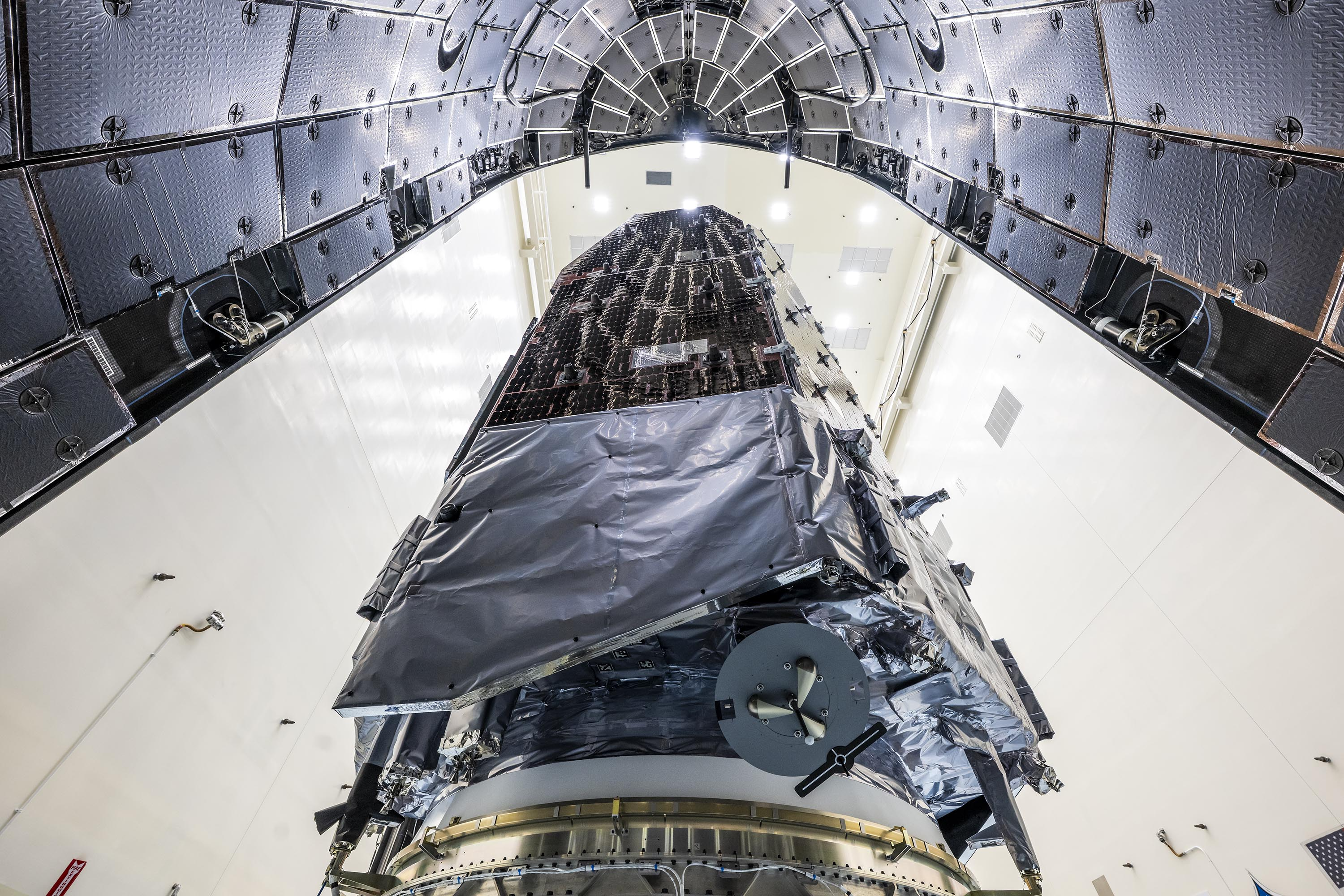
The Nancy Grace Roman Space Telescope, a NASA astrophysics mission, is now on its way to its final orbit. The observatory lifted off on Sunday, August 30, 2026, at 7:26 a.m. Eastern Daylight Time (EDT), from Launch Complex 39A at NASA’s Kennedy Space Center in Florida. The launch vehicle was a SpaceX Falcon Heavy.
The information comes from a NASA statement published on August 30. The agency described the destination as the second Lagrange point of the Sun-Earth system, known as L2, located approximately one million miles from Earth. According to NASA, the journey to the final orbit would take three months. The statement also recounted the initial flight sequence and listed the maneuvers and checks the team expected to carry out afterward.
From liftoff to observatory separation
The first operational milestone came seven minutes after liftoff: the ground control team at NASA’s Goddard Space Flight Center in Maryland began receiving telemetry data from Roman. This information allows controllers to monitor the data the observatory transmits during flight.
NASA said the Falcon Heavy performed as expected and that the rocket separated from the telescope 31 minutes after the mission began. After detaching from the center core, the boosters returned safely to the launch site for refurbishment. These milestones describe the separation of the launch vehicle from the observatory and the return of the boosters; they do not mark the end of Roman’s journey, which was to continue toward L2.
The first components deployed
One hour and 23 minutes after launch, the team confirmed the deployment of the solar panels and the instrument’s lower sunshade. These are the two deployments NASA reported as completed in its statement about the first hours of flight.
The agency described other operations as upcoming steps, not as milestones already completed. For the following days, the plan called for deploying the high-gain antenna and the deployable aperture cover, beginning the first of two mid-course trajectory corrections, and powering on the Coronagraph instrument. At the time of the announcement, these tasks were part of the planned sequence as Roman continued toward its destination.
The statement also explained the planned handover of communications. During launch and the initial orbital phase, Roman was using ground stations and relay satellites in the Near Space Network. NASA said the Deep Space Network would take over communications about 70 minutes after liftoff and guide the observatory toward L2. The first contact through that network was planned via the Canberra complex in Australia; the plan then called for the Madrid and Goldstone complexes.
What the mission will study
NASA presents Roman as an observatory designed to study dark matter, dark energy, and exoplanets—that is, planets located outside the solar system. According to the agency’s description, its combination of a wide field of view and infrared observations will enable surveys of large areas of the sky. The mission is also designed to support research beyond its primary science goals.
Its primary instrument will be the Wide Field Instrument, a 300-megapixel infrared camera with 18 4K detectors. NASA said the observatory is designed to survey the universe a thousand times faster than the Hubble Space Telescope. That figure describes the survey speed the agency attributes to Roman’s design; the statement does not present it as a comparison of scientific results already obtained.
The other instrument highlighted in the initial operations is the Coronagraph. NASA describes it as a technology demonstration that could help prepare for future missions—including the Habitable Worlds Observatory concept—capable of imaging Earth-like planets. For Roman, the statement identifies a more limited goal: capturing images of Jupiter-like planets.
Commissioning and upcoming milestones
After the journey, NASA anticipated a three-month commissioning period. During this stage, the science team was to calibrate and test the instruments. The agency expected to publish Roman’s first images in early 2027; this was a forecast shared in August 2026, not a result already available at the time of that announcement.
NASA also estimated that Roman would send 1.4 terabytes of data per day and described this rate as the highest, to that point, among its astrophysics missions. According to the statement, machine-learning and artificial-intelligence tools, together with citizen scientists, would help examine the data and flag relevant findings for astronomers to study.
Thus, the August 30 announcement brought together two distinct elements: the launch that had already taken place and several initial steps that had been confirmed, alongside a list of later operations NASA described as planned. The journey to L2, commissioning, and publication of the first images were future stages according to the schedule the agency presented in that statement.