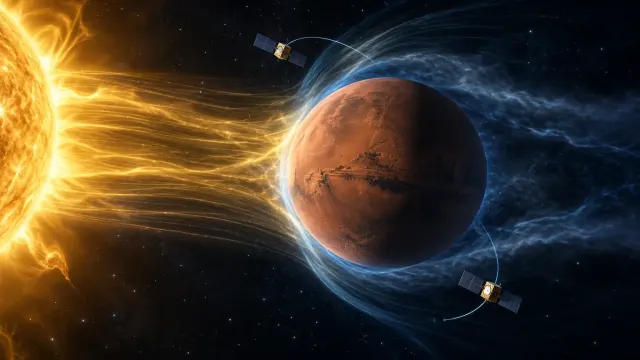
ESCAPADE will study how Mars responds to the solar wind
ESCAPADE is a NASA mission consisting of two orbiters roughly the size of a refrigerator. The agency says it has launched and expects the spacecr...
Editorial archive
ESCAPADE is a NASA mission consisting of two orbiters roughly the size of a refrigerator. The agency says it has launched and expects the spacecr...
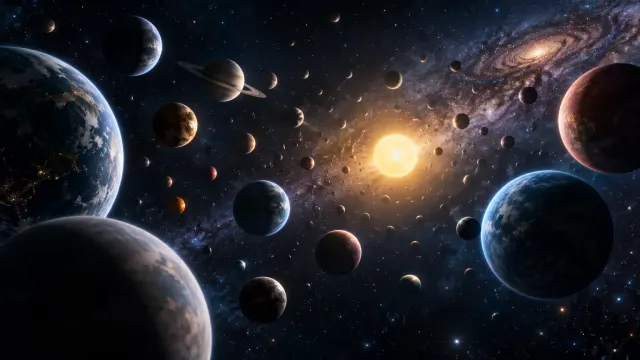
On September 17, 2025, NASA announced that its count had reached 6,000 confirmed exoplanets. The figure marked a milestone in a catalog that adds...
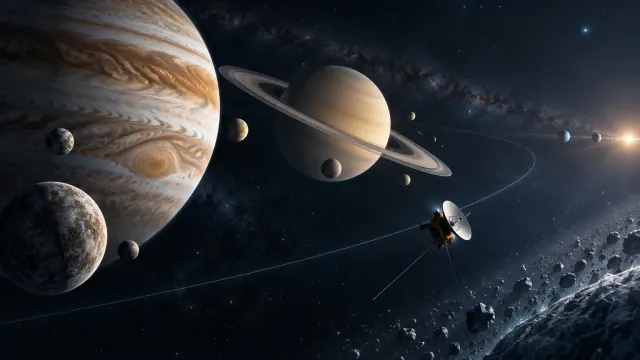
The Voyager mission was initially designed to study Jupiter and Saturn, their rings and their largest moons. An unusual alignment of the outer pl...
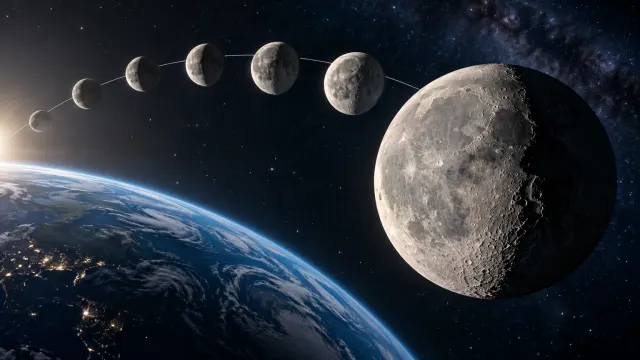
The Moon keeps nearly the same face turned toward Earth, but the tilt and shape of its orbit let us see it from slightly different angles over th...
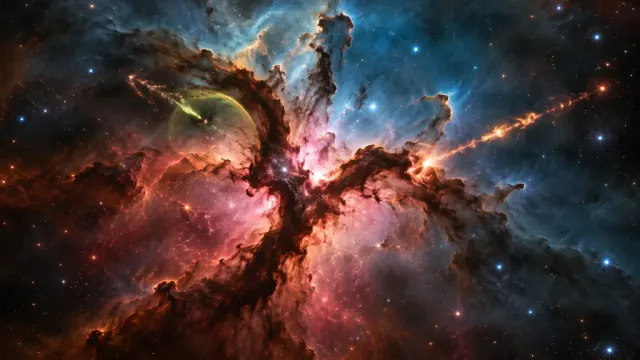
The Trifid Nebula, a star-forming region about 5,000 light-years away, has been observed again by the Hubble Space Telescope nearly three decades...
The proposals assessed total more than 1.7 million satellites. In simulations, their effects could complicate ground-based observations; the resu...
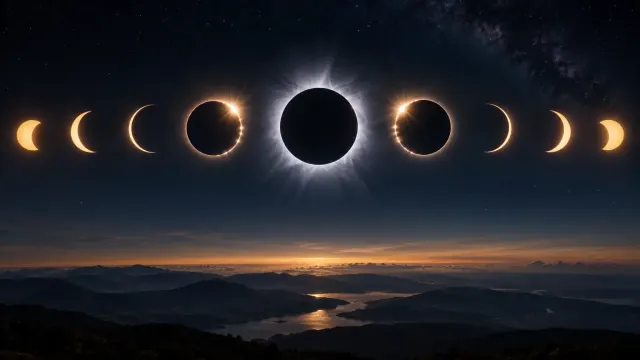
A total solar eclipse unfolds in phases: the Moon partially covers the Sun, flashes appear along its edge, and, within the path of totality, it c...
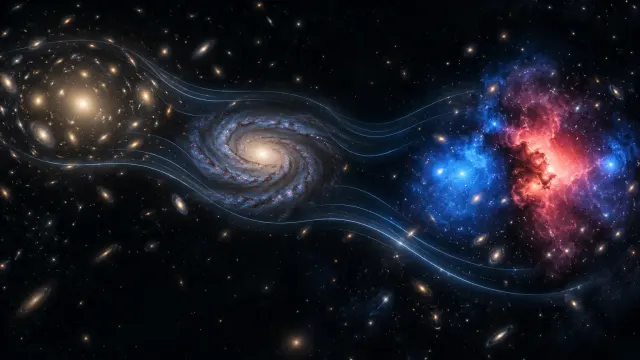
Dark matter is not identified by the light it emits, but by its gravitational effects. The evidence developed from galaxies in the Coma Cluster a...
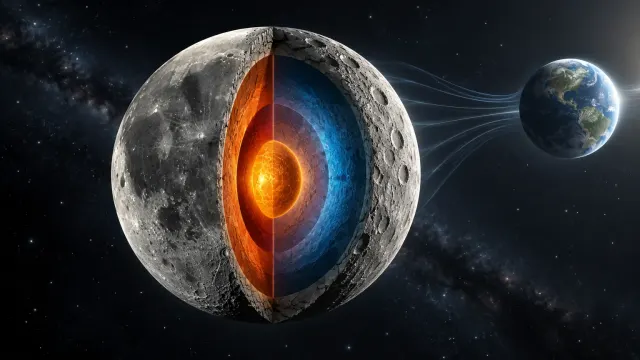
Data from the GRAIL mission’s Ebb and Flow orbiters made it possible to estimate how lunar gravity responds to tides raised by Earth. The result...
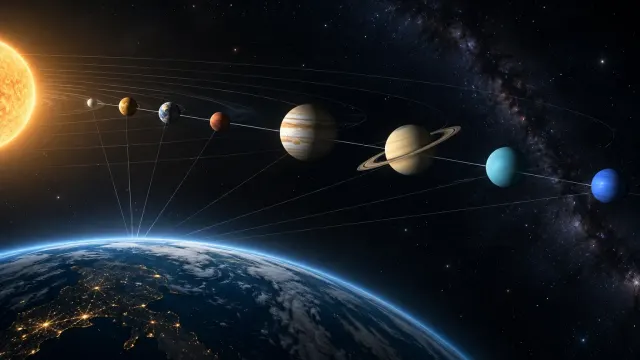
“Planet parade” is not a single technical term: it can refer to several worlds that appear to form a line or arc in the sky, while “alignment” is...
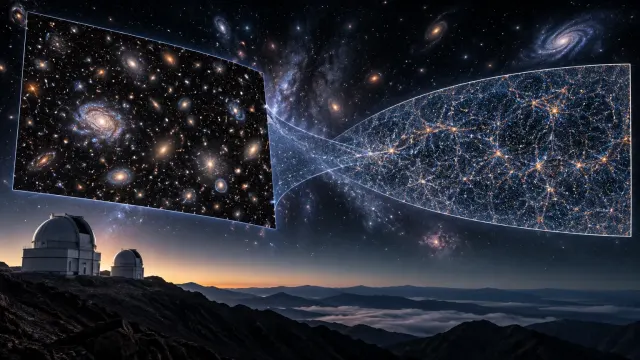
Vera C. Rubin Observatory released its first LSST Camera image for science on 31 July 2026. On 10 August, NOIRLab announced an update to the DESI...
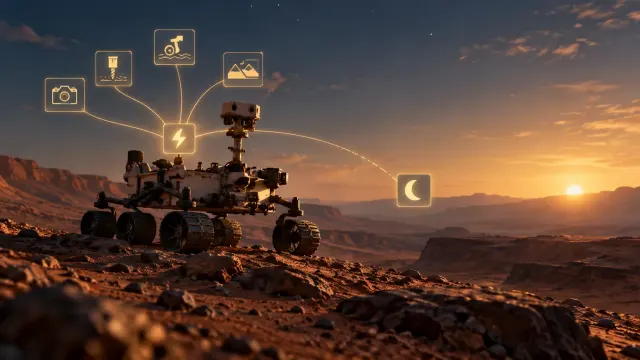
A JPL update published on August 4, 2025, explains how Curiosity makes better use of the energy from its generator: it can carry out some activit...
An analysis of the infrared spectrum of the quasar ULAS J1342+0928 detected an iron-to-magnesium ratio approximately ten times higher than the so...
NASA puts the number of confirmed exoplanets at more than 6,000 and estimates that billions exist in the galaxy. The catalog makes it possible to...
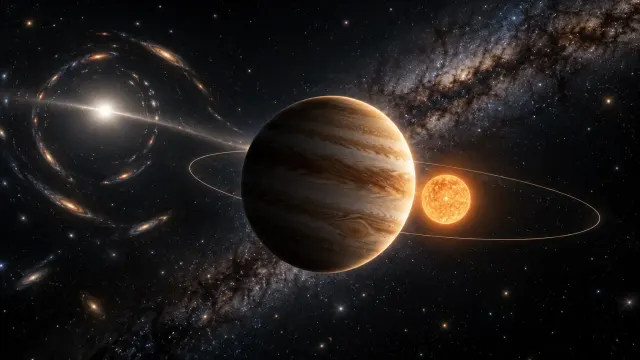
Gaia23bra b has 1.6 times Jupiter’s mass and orbits an orange dwarf star at a distance similar to that between Jupiter and the Sun. NASA explains...
Researchers grew Arabidopsis thaliana in authentic lunar regolith samples brought back by Apollo 11, Apollo 12 and Apollo 17. The seeds germinate...
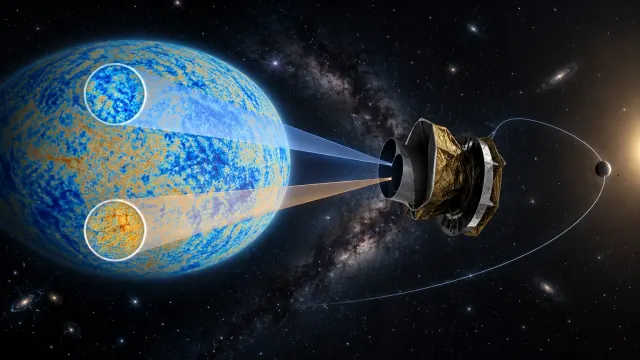
The WMAP probe observed small temperature differences in the cosmic microwave background, radiation released about 375,000 years after the birth...
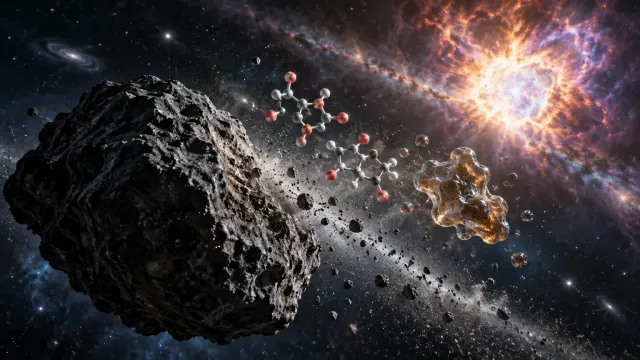
Several sugars were identified in samples from asteroid Bennu, including glucose for the first time in an extraterrestrial sample. Researchers al...