

Key facts
- JPL published the update on August 4, 2025, when Curiosity marked 13 years on Mars.
- The MMRTG uses decaying plutonium to generate energy and recharge the batteries; over time, recharging takes longer and less energy is available each day for science.
- In 2021, the team began studying whether it could safely combine two or three rover tasks.
- Curiosity has demonstrated on Mars that it can communicate with an orbiter while driving, moving the robotic arm, or taking images.
- If it finishes its planned activities early, the rover can go to sleep early; JPL notes that saving 10 or 20 minutes on an activity can add up over time.
- The team changed the drill sample-collection procedure, improved driving through software, found an alternative for Mastcam panoramas, and developed an algorithm to reduce wheel wear.
- In the 2025 update, JPL estimated that the wheels still had years of travel left after 22 miles (35 kilometers), despite some punctures.
Related records
Curiosity does not just explore Mars: it also has to carefully manage the energy it needs to do so. The rover is part of NASA’s Mars Science Laboratory mission and was built and is operated by the Jet Propulsion Laboratory (JPL). In an update published on August 4, 2025, marking 13 years on Mars, JPL explained how the team has changed planning and some procedures so the vehicle can make better use of its power source and devote more time to science.
The information describes specific measures, not a guarantee of indefinite operation. JPL itself notes that energy performance is affected by the aging power source and by the demands of operating in the Martian environment.
A daily budget that changes over time
Curiosity gets its energy from a multimission radioisotope thermoelectric generator, known by the acronym MMRTG. According to JPL, the system uses decaying plutonium to produce energy and recharge the rover’s batteries. Over time, this process makes the batteries take longer to recharge and reduces the energy available each day for scientific activities.
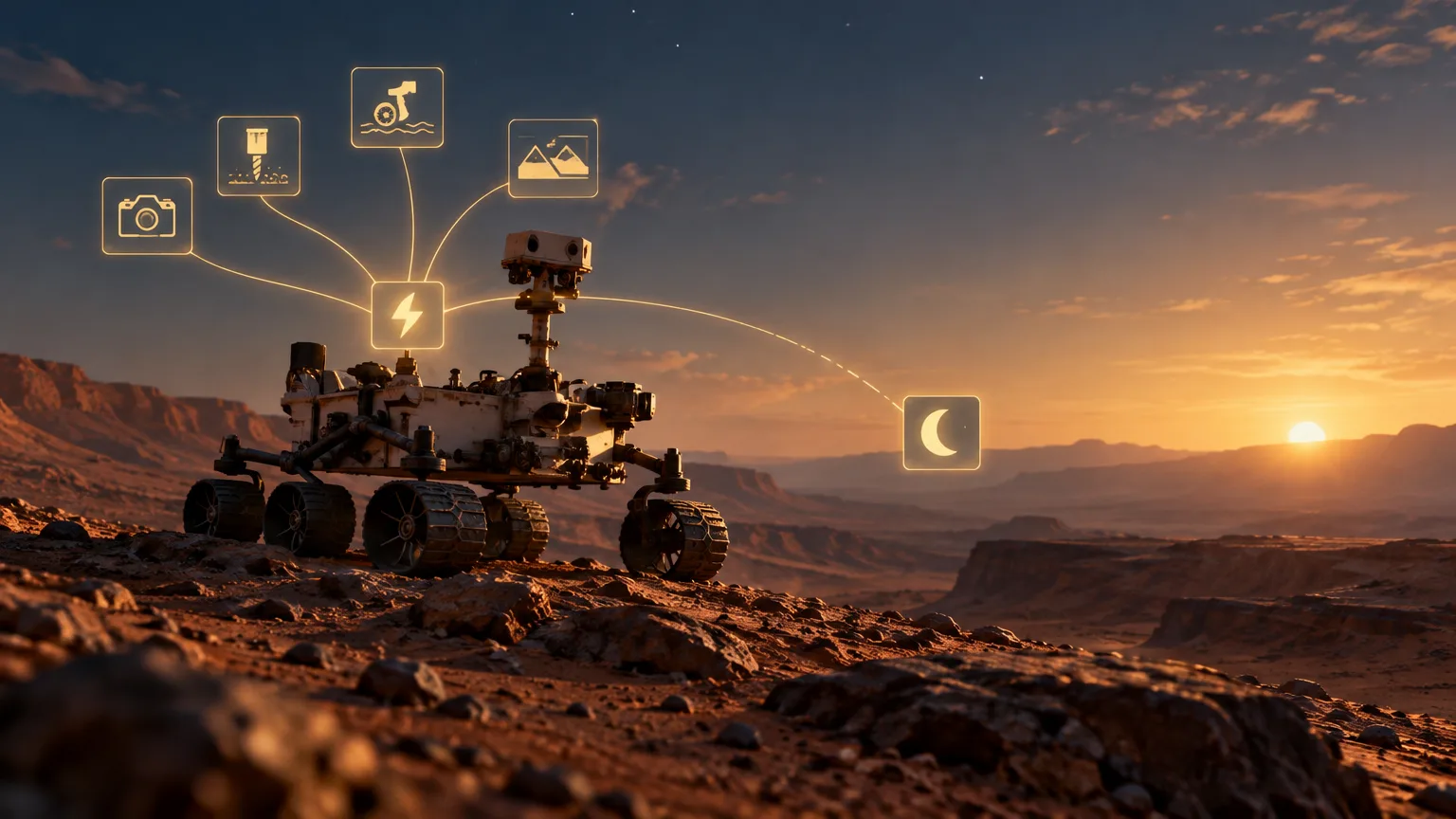
For that reason, the team manages an energy budget that takes into account the various components that draw power from the batteries. Driving, moving the robotic arm, taking images, communicating, and keeping equipment ready all require planning. Added to these are conditions that can reveal difficulties that are hard to anticipate before launch: JPL mentions dust, radiation, and sharp temperature changes on Mars.
Before the improvements described, the usual plan was to send the rover a list of activities to complete one after another and then let it rest at the end of the day to recharge. In 2021, the team began studying whether it was possible to safely combine two or three tasks, with the aim of reducing the time Curiosity stays active.
Doing several things at once
One of the rover’s routine activities is sending data and images to an orbiter passing over Mars; the orbiter then relays them to Earth. The team examined whether Curiosity could maintain that communication while carrying out another task, rather than stopping one operation to complete the other.
Tests showed that the rover could communicate with an orbiter while driving, moving the robotic arm, or taking images. JPL says these combinations have been successfully demonstrated on Mars. The operational rationale is to take advantage of periods when different activities can safely overlap, rather than assigning a separate time slot to each one.
Another change makes use of the allowance engineers build into their estimates of how long activities will take, a buffer intended to cover possible setbacks. If Curiosity completes its tasks before the allotted time expires, it can now go to sleep early. By starting its rest sooner, it needs less recharging before the next day’s plan.
JPL explains that even cutting 10 or 20 minutes from an activity can add up over time. The update presents this saving as a way to better manage the available energy over many days, not as a total savings figure for the entire mission.
Adapting the rover to problems as they arise
The planning improvements are part of a broader set of adjustments. Mechanical problems led the team to revise the procedure by which the drill, mounted on the robotic arm, collects samples of powdered rock. JPL also says that driving capabilities have been improved through software updates.
The team also found an alternative way to keep obtaining panoramas after a color-filter wheel in one of the Mastcam cameras, located on the rover’s movable head, stopped turning. The solution made it possible to continue capturing that type of image despite the failure of that component.
The wheels have also received attention. JPL developed an algorithm to reduce their wear. In the update, the team says that after traveling 22 miles (35 kilometers), and despite some punctures in the wheels, they still had years of estimated travel left. That assessment comes from the 2025 update and refers to the team’s evaluation at that time.
Greater efficiency to keep exploring
The common thread running through these measures is adapting operations to what the rover can actually do. Combining activities, ending the day early when the plan is complete, and revising procedures make it possible to better manage a power source whose performance changes over time. The modifications to the drill, driving software, camera, and wheels, in turn, address challenges that have emerged during operations.
The team describes a learning process based on the vehicle’s experience on Mars. Dust, radiation, and temperature variations can reveal particularities that were not fully anticipated; for that reason, planning includes buffers and procedures can be adapted. JPL’s update shows how this combination of energy management and operational adjustments helps Curiosity continue its scientific work on the Red Planet.
Main source: NASA’s Jet Propulsion Laboratory, update published on August 4, 2025.