

Key facts
- Meteors are fragments of rock and dust shed by comets and asteroids; annual showers occur when Earth passes through these debris streams again.
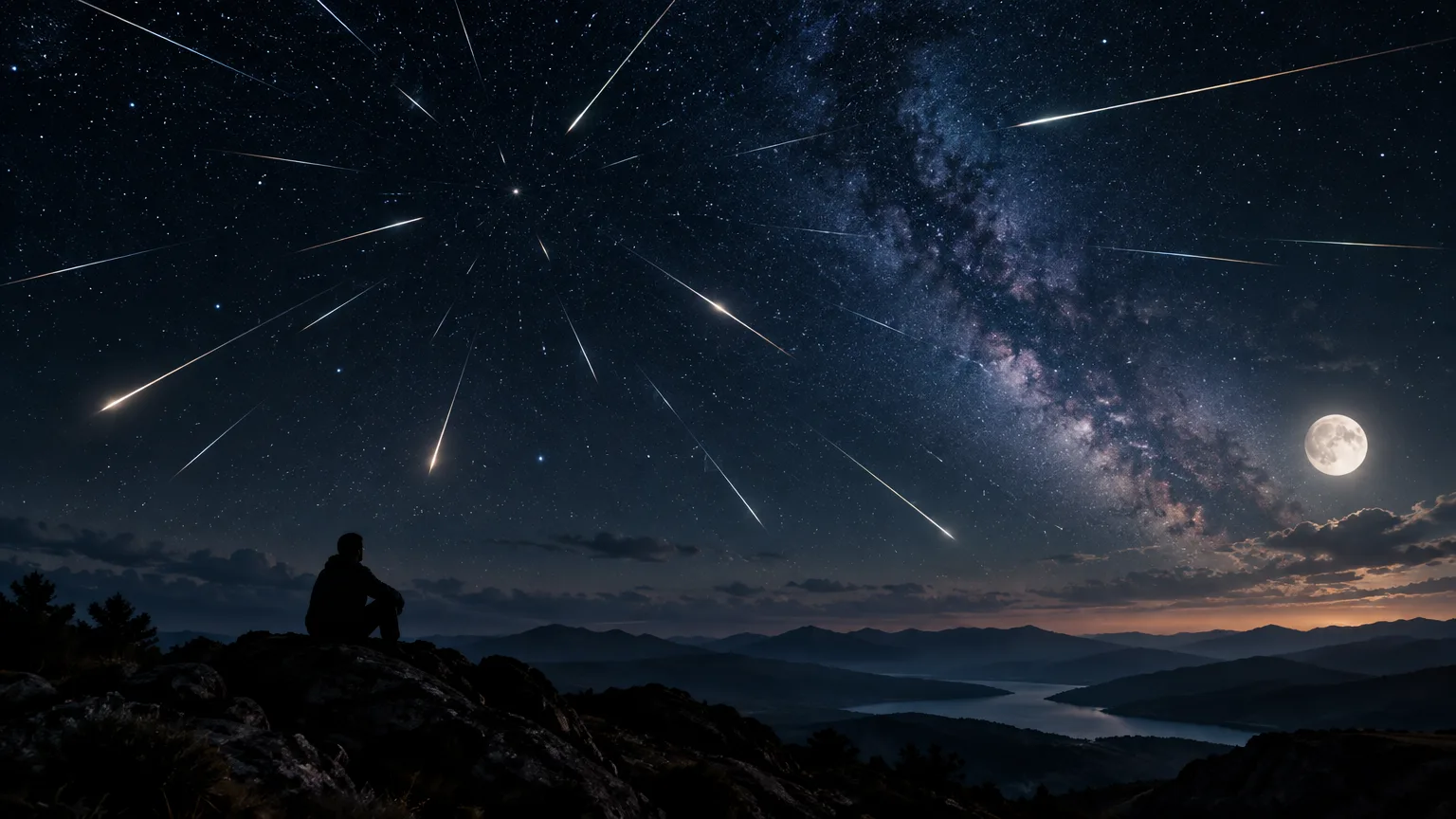
- The radiant is the direction from which meteors appear to come, but they can cross any part of the sky.
- For the Perseids, NASA recommends a dark, open location and 30 minutes for the eyes to adapt.
- Directions and viewing times differ among NASA’s guides to the Perseids, Lyrids, and Orionids.
- Moonlight can hide faint meteors; the observing recommendations cited come from monthly guides for 2026, not a current calendar.
Related records
A meteor shower can turn a night of skywatching into a search across the entire sky. The essential advice is simple: use the radiant as a reference, but do not stare only at it. Meteors can appear in other parts of the sky, so a wide view is more useful than focusing on a small spot.
NASA describes meteors as small fragments of rock and dust shed by comets and asteroids. When Earth passes through one of these debris streams again, an annual shower occurs. From the ground, its meteors appear to come from a particular direction, called the radiant. This appearance makes it possible to identify the shower and find your bearings; it does not mean that you should observe only that region.
The radiant provides direction, but the whole sky matters
The difference between the radiant and the places where a meteor can be seen is key to planning your observation. NASA’s guide to the Orionids explains that they appear to radiate from the direction of Orion, but meteors can cross any part of the sky. The advice for the Perseids is similar: locating Perseus helps you find the reference point, although flashes can also appear across the entire sky.
For that reason, a practical approach is to first identify the direction indicated for the shower and then keep your view open, rather than following only the associated constellation. NASA says that the eyes’ panoramic field of view can span up to 180 degrees and that showers are best enjoyed with the naked eye. You do not need an instrument to get started: you just need to be able to observe a wide area of sky.
Location and adapting your vision
For the Perseids, NASA recommends finding a dark, open location and giving your eyes time to adapt. The specific guide for that shower advises waiting 30 minutes. This is guidance associated with those observing instructions; it should not be confused with a universal peak time or a guarantee that meteors will be visible.
Once you have chosen a location, it is a good idea to look toward the broad area of sky where the celestial reference lies, without limiting yourself to it. The suggested direction indicates where to begin, while the rest of the sky remains within your field of view. This approach is consistent with NASA’s explanation that meteors can appear far from the radiant.
Direction and timing depend on the shower
Specific recommendations vary among showers. In its guide to the August 2026 Perseids, NASA suggested looking northeast once it was dark and locating Perseus. In its guide to the April 2026 Lyrids, it suggested starting to look east at around 10 p.m. and continuing through the night. For the Orionids, its October 2026 guide proposed watching before dawn, after the Moon had set.
These examples show how directions and timing instructions are used; they are not a current calendar. The dates cited come from monthly guides for 2026. For an outing on another date, consult an updated guide for the shower you want to watch and the relevant timing instructions; do not simply apply these times to another shower or another year.
There is also a reason timing matters: moonlight can make fainter meteors harder to see. NASA warned that the bright Moon could hide some of them during the October 2026 Orionids and recommended, for that appearance, taking advantage of the hours before dawn after the Moon had set. By contrast, its guide to the August 2026 Perseids noted that the new Moon would leave the sky ideally dark for that shower. These conditions are described for those specific occasions.
A short checklist before you head out
- Identify the shower and its radiant: use it for orientation, not as your only viewing point.
- Check the instructions for that particular shower: NASA guides give different directions and times for the Perseids, Lyrids, and Orionids.
- Find darkness and an open view: for the Perseids, NASA recommends a dark, open location.
- Give your eyes time to adapt: the Perseid guide advises 30 minutes.
- Look across the whole sky: meteors can appear far from the radiant, and naked-eye observing offers a wide field of view.
- Take the Moon into account: its light can make faint meteors less visible; the effect and recommended timing depend on the occasion described in the guide.
In short, the radiant helps you recognize the direction from which the shower appears to come, but it does not define where to look. Naked-eye observing, with time for your eyes to adapt and a wide area of sky in view, follows NASA’s practical approach. The direction, recommended time, and effect of the Moon should be understood as specific instructions for each shower and the conditions described in the relevant guide.
Sources: NASA skywatching resources; NASA guides to the Perseids, the Lyrids, and the Orionids.