

Key facts
- NASA announced HuLC 2027 on September 29, 2026.
- The call invites U.S.-based collegiate teams and faculty advisers to propose communications solutions for landers and lunar surface operations.
- NASA identifies three main categories: hardware, software, and surface and orbital communications architecture.
- The non-binding notice of intent is due October 15; the 5–7-page written proposal and 2-minute video are due March 4, 2027.
- Up to 12 finalist teams may be selected, each receiving US$9,000; the top three in Phase 2 will share US$18,000.
- The final design review is scheduled for June 21–24, 2027, in Huntsville.
- The call seeks solutions implementable within 3–5 years; that horizon does not confirm deployment.
Related records
On September 29, 2026, NASA announced its 2027 Human Lander Challenge (HuLC), a competition inviting college and university students and their faculty advisers to develop proposals for lunar communications. Its aim is to address a need the agency considers important for sustained exploration: connecting landers and operations on the lunar surface.
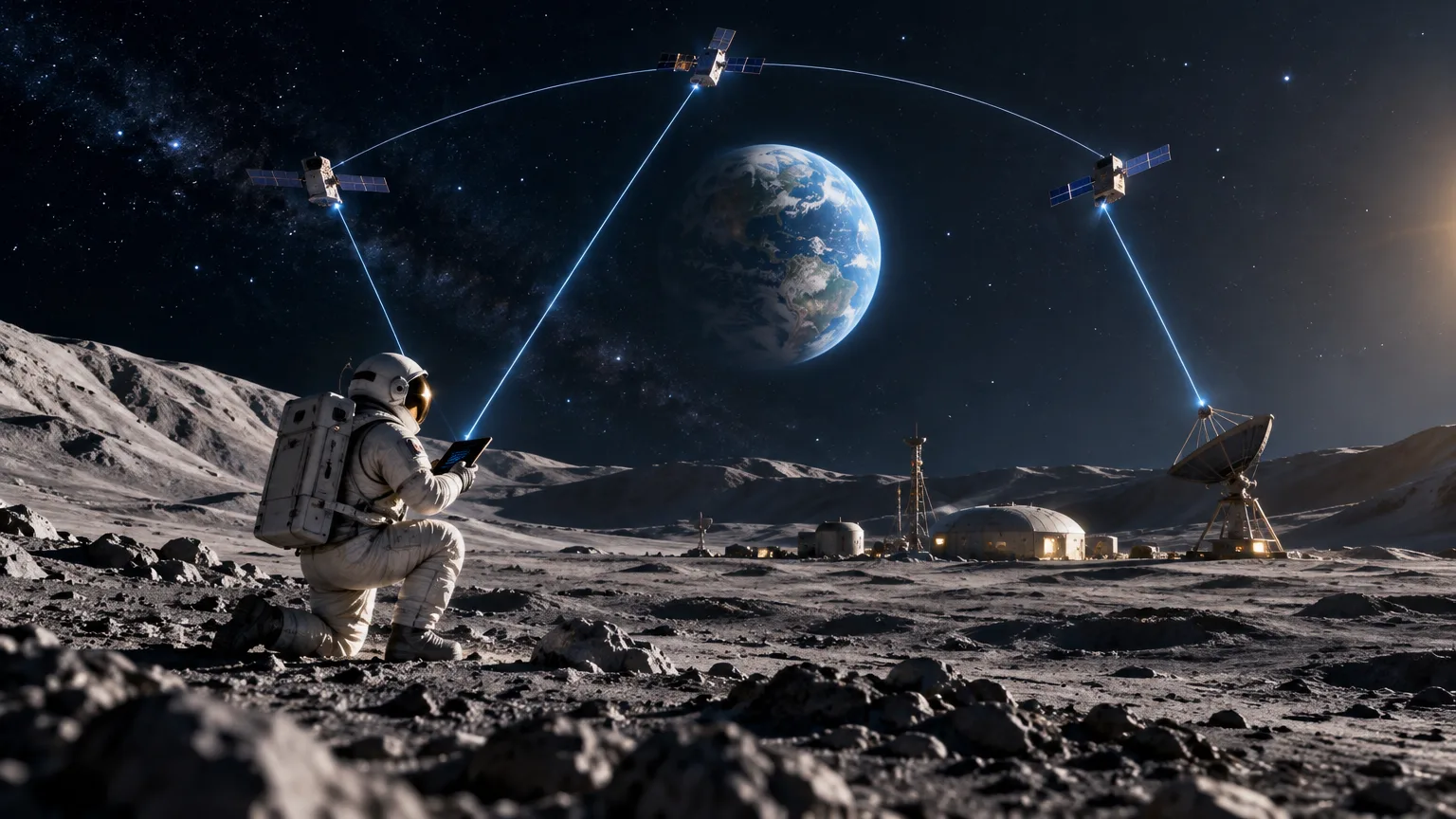
NASA says a resilient communications system would connect astronauts, rovers, habitats, and landers with mission support teams on Earth, among others. The agency links reliable communications to safety, coordination of complex operations, and timely decision-making in the remote and demanding lunar environment. This is the context and rationale for the challenge; the announcement does not report results from a technology developed by the teams, who still have to submit proposals.
The challenge and the lunar exploration context
HuLC is part of NASA’s efforts related to plans for a long-term human presence on the Moon, which the announcement mentions alongside the Artemis and Moon Base programs. NASA describes Artemis as the program through which it will send astronauts to explore the Moon for scientific discovery and economic benefits, and to build the foundation for the first crewed missions to Mars.
The 2027 competition invites U.S.-based collegiate teams and their faculty advisers to propose innovative, systems-level solutions to better understand, establish, and optimize lunar communications for landers and surface operations. NASA says the solutions should be capable of implementation within three to five years. That period is part of the goal set for teams; it is not confirmation that a particular idea will be built or put into service within that time.
In describing the need, the agency identifies connections among astronauts, rovers, habitats, landers, and ground-based support teams. It also says reliable links are essential to coordinate operations and enable timely decisions. These are the reasons NASA gives for launching the challenge, not test results reported in the announcement.
Areas for proposed solutions
NASA identifies three main categories to guide proposals, while allowing teams to submit ideas outside them. The first is hardware: space-rated wireless networks and electronics, as well as antenna signal propagation and modeling and environmental mitigation.
The second category is software. The topics listed by the agency are data efficiency, link optimization, and network management and scheduling. The third is communications architecture: NASA distinguishes between surface communications system architecture and orbital communications system architecture.
The challenge calls for systems-level solutions for communications serving landers and surface operations. The published categories describe areas teams may address; they do not announce that any proposal has been selected. The official challenge page provides the complete rules, eligibility criteria, and terms of participation.
Deadlines, phases, and awards
Teams wishing to participate should submit a non-binding notice of intent by Thursday, October 15. NASA distinguishes this notice from the full proposal: application packages must include a five-to-seven-page written proposal and a two-minute video, and are due March 4, 2027.
After evaluating Phase 1 proposals, organizers may select up to 12 finalist teams to receive US$9,000 each and advance to Phase 2. This phase includes a final design review in Huntsville, Alabama, from June 21 to 24, 2027. NASA’s Marshall Space Flight Center is located there. The top three teams in Phase 2 will share a total award of US$18,000.
These figures describe the awards announced for the competition: the amount for each finalist team and the pool shared by the top three. Finalist selection depends on the Phase 1 evaluation, while the final ranking comes in Phase 2. The challenge page should be consulted for complete participation information, as NASA directs applicants there for rules and terms.
Who administers HuLC and what remains to be decided
The National Institute of Aerospace administers the competition on NASA’s behalf. It is sponsored by the agency’s Human Spaceflight Mission Directorate’s Human Landing System Program Office. NASA presents HuLC as part of its efforts to foster innovative solutions related to long-duration human spaceflight plans at the Moon.
The 2027 edition is not the first HuLC competition. In 2024, the challenge focused on proposed ways to manage or prevent lunar dust clouds associated with plume-surface interaction as a spacecraft touches down. That edition brought together university teams presenting concepts; the current call, by contrast, concerns lunar communications.
So far, NASA has announced the challenge’s purpose, focus areas, general submission requirements, phases, and schedule. The finalists and any prize-winning proposals will depend on the planned evaluations. How submitted ideas might be developed and applied also remains to be determined. The three-to-five-year period is the implementation horizon proposed by the call, not a confirmed deployment date.
Teams interested in participating can consult the rules and details on the official Human Lander Challenge website.