

Key facts
- NASA describes black holes as enormous concentrations of matter compressed into very small spaces.
- ESO obtained conclusive evidence for a black hole at the Milky Way’s center after 15 years of regular monitoring.
- Webb has reported results involving a black hole that formed before its galaxy and GLIMPSE-17775.
- NASA says Roman, scheduled by 2027 and possibly as early as fall 2026, could find more interaction events.
Related records
A black hole is not literally a hole in space. In NASA Science’s explanation, it is an enormous concentration of matter packed into a very small volume. Its density makes gravity immediately beneath its surface—called the event horizon—extremely intense. This is why these objects are difficult to investigate: astronomy must infer their presence and examine their surroundings through light and other signals from nearby material.
Research spans very different scales. Some black holes are linked to the collapse of massive stars, while supermassive black holes are associated with galactic centers. The available sources address both contexts, from conclusive evidence at our own galaxy’s center to indications of supermassive objects wrapped in gas in the distant universe. They are therefore neither one single kind of phenomenon nor a question settled by one observation.
What a black hole is
The central idea is extreme compression of matter. The event horizon is the surface identified by NASA, beneath which gravity is so intense that it characterizes the object. That clarification matters: a black hole is not a cosmic cavity, but concentrated matter and gravity.
NOIRLab describes one formation route in its outreach material: stars much more massive than the Sun can collapse during supernovae and form black holes. This describes a channel involving massive stars; it does not establish that all black holes form this way or by itself explain the origin of supermassive ones.
The Milky Way’s center as a laboratory
The Galactic Center is especially important because it lies in the Milky Way. The European Southern Observatory (ESO) explains that astronomers long suspected a black hole there. After 15 years of regular monitoring with ESO telescopes at the La Silla Paranal Observatory, they obtained conclusive evidence.
This result illustrates the value of sustained observation. Rather than relying on a single image, long-term monitoring assembled evidence from a region that cannot simply be treated as an ordinary visible object. It also identifies ESO and its La Silla Paranal facilities as central to this observational advance.
Webb, gas, and distant-universe candidates
NASA’s James Webb Space Telescope extends the investigation to remote objects. A NASA report describes a black hole that formed before its galaxy. The statement connects a black hole’s history to that of its host galaxy, but the supplied evidence does not provide a distance, mass, observation date, or the full method behind the conclusion.
Another NASA report presents the strongest evidence to date for so-called “black hole stars.” After careful spectral analysis, researchers found lines of evidence supporting an interpretation of GLIMPSE-17775 as a supermassive black hole surrounded by a dense cocoon of partially ionized gas. NASA says this model is called a black hole star. The term should not be read as a conventional star: in the provided material, it names an interpretive model for a supermassive black hole and its gaseous envelope.
When nearby matter reveals activity
Black holes are also studied through what happens around them. NASA’s black-hole collection says that, in 2025, different agency telescopes helped scientists search the sky for supermassive black holes. Separate work investigated for the first time the physical environment of cyclic X-ray outbursts. These references show that the goal is not only to locate objects, but also to characterize physical processes in their vicinity.
NASA data identified three black holes while they were consuming massive stars. An ESO outreach image, meanwhile, describes a supermassive black hole interacting with its food and says the most powerful ones can curb their own growth by clearing away the gas and dust on which they feed. In that interpretation, the removal brings the system toward a kind of galactic balance. This links black-hole activity to its galaxy’s environment.
Instruments and observing prospects
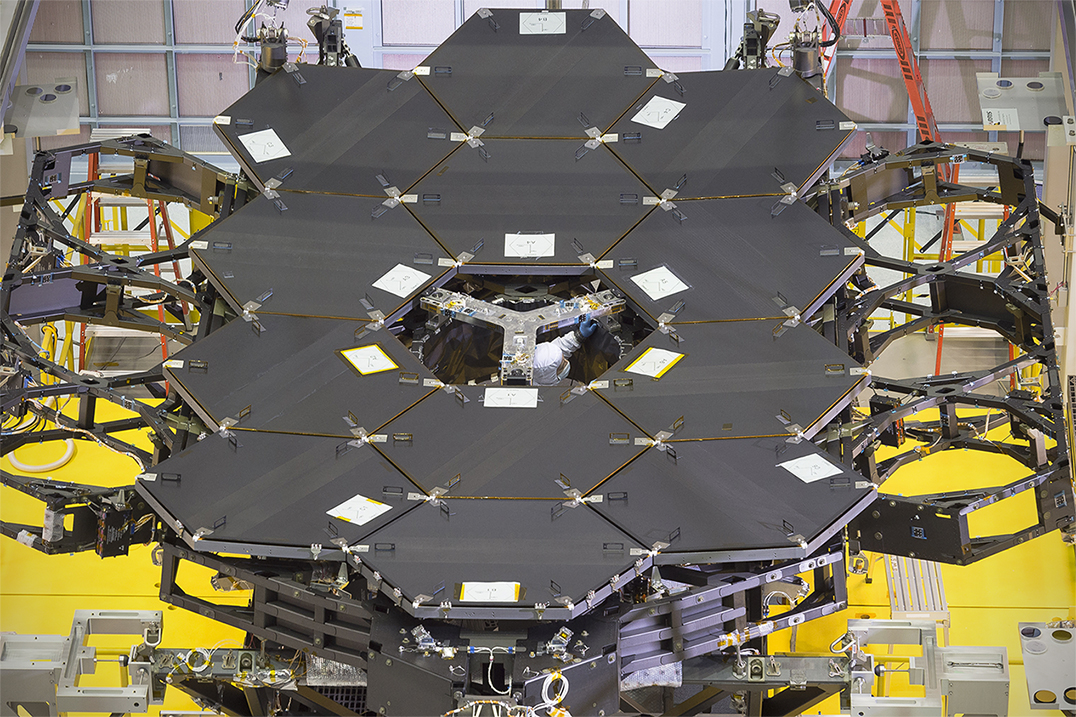
Finding these objects depends on varied instruments and methods. ESO also reported a VLT—Very Large Telescope—detection in another galaxy of a stellar-mass black hole more distant than those previously known. Webb, which NASA describes as the premier observatory of the next decade serving thousands of astronomers worldwide, offers another view from space.
NASA says the Roman Space Telescope was scheduled to launch by 2027, potentially as early as fall 2026, and could uncover many more dramatic black-hole–star interaction events. If so, they would provide another way to explore how stars, galaxies, and black holes formed and evolved over time. This is a mission expectation, not an already achieved result.
What remains uncertain
The assembled sources have different levels of certainty. ESO calls the evidence for the Milky Way’s central black hole conclusive. By contrast, GLIMPSE-17775 is presented as an interpretation supported by several lines of evidence and a model, while the result about a black hole forming before its galaxy is reported by Webb without all supporting data in the supplied material.
These sources also provide no masses, distances, coordinates, X-ray-outburst periods, or detailed growth mechanisms. Headlines should therefore not be turned into broader certainties than they state. One point is robust: black holes are extreme concentrations of matter whose influence can be investigated through stars, gas, dust, and radiation around them. How they form, grow, and affect galaxies remains an active observational field.