

Key facts
- Curiosity captured navigation-camera panoramas near the Martian ridge “Chocolatal”; the first cited image was taken on August 30, 2026, at 9:56 a.m.
- HEASARC announced on August 4, 2026, a catalog of incident rates for all particle species measured by AMS-02 on the ISS.
- NASA referenced a Webb infrared image of part of the Carina Nebula, taken on August 6, 2026.
- NASA says Roman is scheduled to launch in fall 2026.
- ESO reported that proposals for more than 1.7 million satellites would have devastating consequences for astronomy, according to a study publicized on July 1, 2026.
Related records
The astronomy activity documented by official sources in 2026 spans Solar System observations, particle catalogs, sample analysis, and studies of the distant universe. This is not one scientific result, but a picture of projects that continue to produce data and of infrastructure whose value depends on keeping the sky observable.
The references include NASA, its astrophysics and planetary-science programs, the James Webb Space Telescope, the future Nancy Grace Roman Space Telescope, the AMS-02 experiment aboard the International Space Station (ISS), TESS, and the European Southern Observatory (ESO). Each serves a different role: observing, measuring, cataloging, or turning signals and images into research material.
Mars and small bodies: observing and analyzing material
A NASA recent-publications update describes activity by the Curiosity rover on Mars. While parked at a sand ridge nicknamed “Chocolatal,” the vehicle used its black-and-white navigation cameras to capture panoramas at two times of day. The first cited image was taken on August 30, 2026, at 9:56 a.m. The evidence does not specify the panoramas’ full content or the scientific conclusions that may follow, but it documents an observation made by the rover.
On another planetary-science front, NASA’s laboratory astrophysics newsletter publication list includes a paper entitled Physical analysis of Bennu samples reveals regolith production by collisional disruption on near-Earth asteroids, published in The Planetary Science Journal, volume 7, article 87, in 2026. Its title itself links physical analysis of Bennu samples to the production of regolith—loose surface material—through collisional disruption on near-Earth asteroids. The supplied evidence identifies the paper and its DOI reference, but does not provide its methods, quantitative results, or the exact scope of its conclusions.
NASA’s astronomy page also highlights that the DART mission changed the orbit of asteroid Didymos around the Sun. Without further information in the supplied evidence, this article cannot specify the size of the change, the measurement method, or its implications.
Measuring particles and expanding data archives
Space research also produces resources for scientific reuse. On August 4, 2026, HEASARC, NASA’s high-energy data archive, announced the release of the AMS-02 All Particle Rates Catalog. According to the available description, the catalog records incident rates for all particle species obtained with the Alpha Magnetic Spectrometer experiment, AMS-02.
AMS-02 is a cosmic-ray particle detector installed on the ISS in May 2011. That context clarifies the kind of observation involved: this is not an astronomical image, but an instrument measuring particles. The evidence does not detail which species are included, how rates were calculated, or which specific scientific analyses the catalog will enable.
A TESS astrophysics-publications page also lists refereed 2026 work. Visible titles include a study of detached eclipsing binary systems toward the open cluster NGC 7209 and another identifying new Delta Scuti, Gamma Doradus, and RR Lyrae stars using TESS and SuperWASP data. These records confirm publication activity associated with those data, but the supplied descriptions do not support a summary of findings beyond the topics stated in the titles.
Webb, galaxies, and the forthcoming Roman telescope
NASA Science news includes an infrared image, captured on August 6, 2026, by the James Webb Space Telescope, of part of the Carina Nebula, a star-forming region. The reference identifies both the instrument and the kind of target observed. However, the evidence does not describe specific structures in the image or offer an associated scientific interpretation.
Another NASA Science item points to an August 25, 2026 image of the II Zw 096 system, in which two galaxies are merging at a pace described as furious. The supplied source provides no distance, merger rate, or physical mechanism, so those aspects remain beyond what can be stated here.
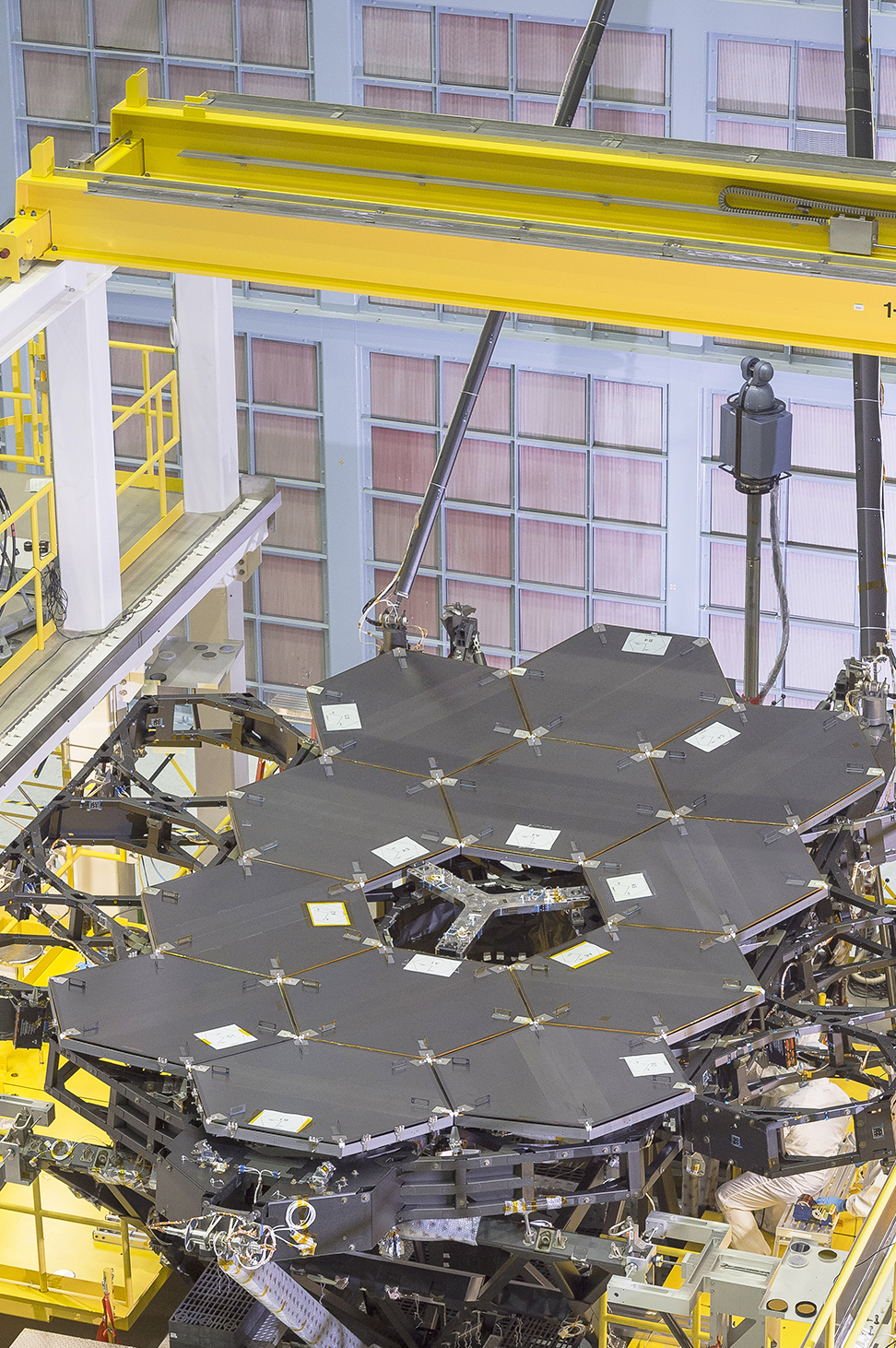
Meanwhile, NASA says the Nancy Grace Roman Space Telescope is scheduled to launch in fall 2026 and will open an unprecedented window onto the universe. This is an agency projection, not confirmation of a launch in the available evidence. NASA’s ASTRA initiative, meanwhile, was listed with a submission deadline of 11:59 p.m. PT on July 1, 2026; the material provided does not explain the proposals’ content or outcomes.
The orbital sky as a condition for astronomy
Observing depends not only on having telescopes, but also on the environment in which they operate. On July 1, 2026, ESO publicized a study finding that current proposals to launch more than 1.7 million satellites, including extremely bright ones, would have “devastating consequences for astronomy.” According to the same summary, the study sets out no more than 100,000 faint satellites, but the supplied description cuts off and does not permit the full conditions of that proposal to be reproduced.
The warning links ground-based research to decisions about orbital use. The available text does not quantify lost observations or allow specific effects to be assigned to each space mission. It does make clear that ESO presents the projected scale of satellites as a central issue for astronomy.
A connected but incomplete research picture
Curiosity, AMS-02, TESS, Webb, Bennu research, and Roman preparations illustrate complementary ways of producing knowledge: images, particle measurements, physical samples, catalogs, and publications. None replaces the others. Together, they show that ongoing astronomy combines continuing operations, data archives, and planned new capabilities.
At the same time, ESO’s warning recalls that access to the sky is a shared condition. The available evidence supports the conclusion that scientific activity and institutional concern were documented in 2026; it does not by itself establish the eventual impact of proposed satellites or predict outcomes from Roman, ASTRA, or the cited observations.