

Key facts
- NASA Science reports an XRISM observation in which the wind from a giant star is captured by a compact companion and powers X-ray flares.
- HEASARC announced a catalogue of AMS-02 particle rates for 4 August 2026; the cosmic-ray detector was installed on the International Space Station in May 2011.
- The Webb mission page attributes an infrared image of part of the Carina Nebula, captured on 6 August 2026, to the telescope.
- NASA Astrophysics describes the Roman telescope’s launch as planned for fall 2026.
- A NASA page headline says DART changed Didymos’s orbit around the Sun, but provides no measurements here.
- On 1 July 2026, ESO published a notice about a study warning of the potential astronomical impact of proposals to launch more than 1.7 million satellites.
Related records
Space news is often grouped under one label even when it concerns very different work: measuring particles near Earth, observing stars in X-rays, imaging star-forming regions or studying how an asteroid’s orbit changes. To distinguish what is known from what remains unverified, this summary is limited to the information explicitly included in the supplied sources, which link to NASA and ESO pages.
These items should be read as a selection of notices, not as a comprehensive report on the status of every mission. Some excerpts provide a date and a specific result; others are only brief headlines or descriptions. As a result, they do not allow readers to compare the scientific scope of the projects or determine whether an observation represents a definitive result.
XRISM observes an interaction between a star and its companion
A NASA Science summary reports that astronomers used data from the XRISM observatory to directly observe the wind from a giant star being captured by its compact companion. The excerpt adds that this material provides the energy source for powerful X-ray flares. XRISM is identified as a Japan-led X-ray imaging and spectroscopy mission.
The observation matters because it connects two parts of the system: material flowing out from the star and the X-ray emission associated with its companion. However, the available material does not identify the star, say when the observation was made, name the specific instruments involved or state the scale of the flares. It also does not include the scientific paper or measurements needed to assess the result’s significance. The reported phenomenon can therefore be described, but further details about the system or a broader interpretation cannot be added.
AMS-02: a catalogue of particles detected aboard the Space Station
HEASARC’s news archive, NASA’s astrophysics data archive, announces the release on 4 August 2026 of a catalogue of incident rates for all particle species recorded by AMS-02. The name refers to the Alpha Magnetic Spectrometer, a cosmic-ray particle detector installed on the International Space Station in May 2011, according to the same description.
This information explains the catalogue’s connection to cosmic-ray research: it brings together particle rates measured by a detector aboard the orbital station. But the notice does not specify how many records it contains, the period covered, which species are included or what scientific conclusions can be drawn. A catalogue release provides a data resource; by itself, the notice does not demonstrate a new finding about the origin or behaviour of cosmic rays.
Webb and Roman: an observation made and one planned
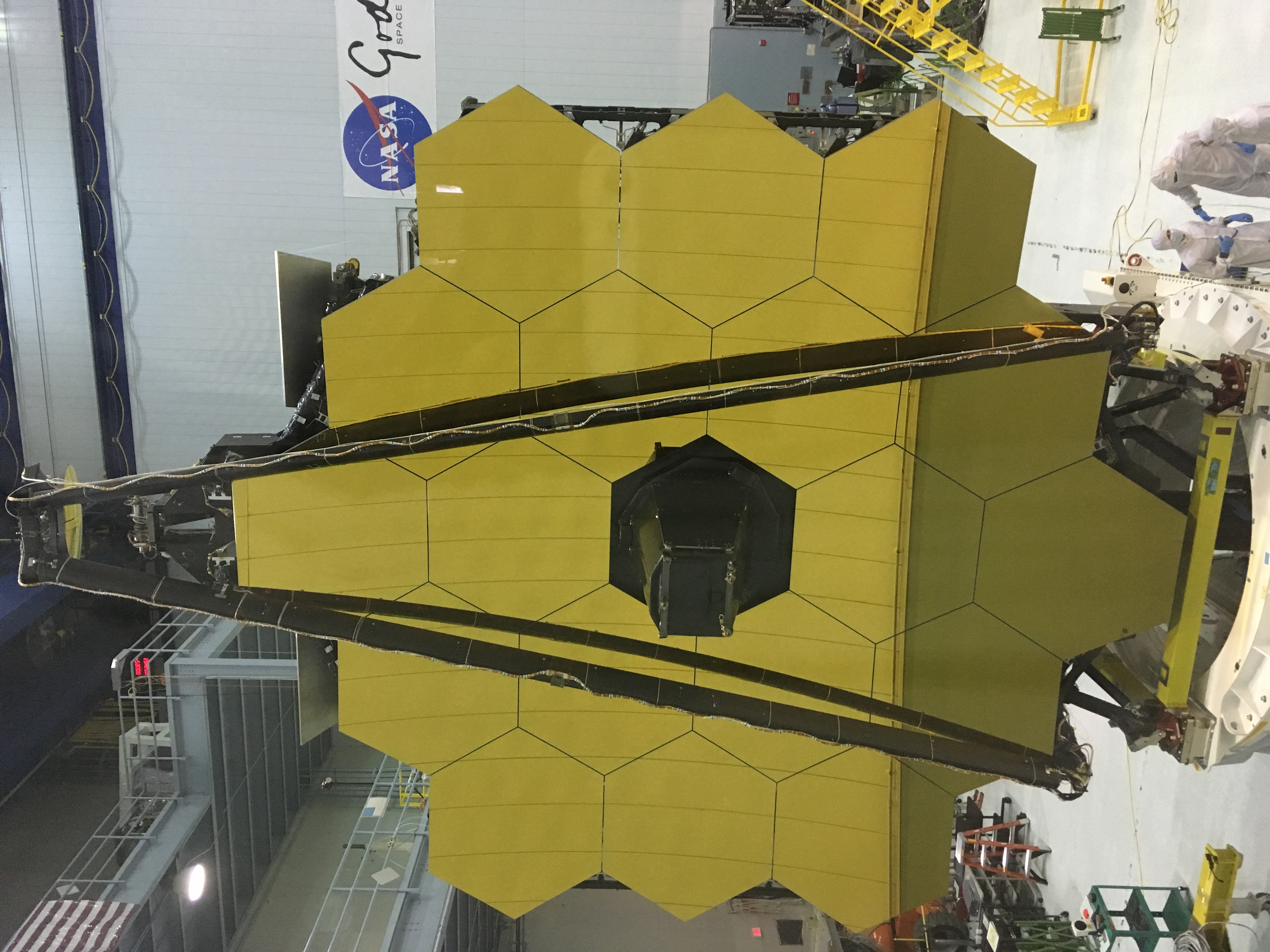
The Webb mission news page says that the James Webb Space Telescope captured an infrared image of part of the Carina Nebula on 6 August 2026. The nebula is described as a star-forming region. This places the image within the telescope’s observing work, but the excerpt does not describe the structures shown, how the data were processed or what scientific conclusion accompanies the image.
In a separate notice, NASA Astrophysics says the Nancy Grace Roman Space Telescope was scheduled to launch in fall 2026 and would open an unprecedented window on the universe. This is a forecast of a future launch, not confirmation in the supplied evidence that the launch has already taken place. The material also gives no details of its instruments, specific scientific goals or updated schedule. In the sources, Webb and Roman therefore represent different situations: an image attributed to an observation already made, and a launch described as planned.
DART and Didymos: an orbital effect reported by NASA
A NASA astronomy page includes a headline stating that the DART mission changed Didymos’s orbit around the Sun. In that headline, DART is presented as a mission whose result affected an asteroid’s orbit. The supplied evidence does not explain the procedure, provide orbital measurements or specify what change was measured. It also does not detail the relationship between Didymos and other bodies in the system.
Caution is particularly important here: the headline supports reporting that NASA states an orbital change occurred, but it is not enough to quantify it or describe its implications. The full page, data and analysis context would be needed, and those are not included in the material provided.
Satellites and astronomy: an ESO warning
In a notice dated 1 July 2026, ESO says a study concluded that current proposals to launch more than 1.7 million satellites, including some that are extremely bright, would have “devastating consequences” for astronomy. The summary adds that, according to the study, there should be no more than 100,000 faint satellites. These figures and this assessment are attributed to the study and ESO notice; they should not be mistaken for a count of satellites already launched.
The issue introduces a practical tension: satellite deployment proposals could affect astronomical observations, according to the study summarised by ESO. But the excerpt does not define exactly what “faint” means, state the assumptions used, describe the mitigation measures assessed or explain how the cited limit was derived. The responsible conclusion is that ESO warns of a potentially significant impact, while details needed to judge that warning require consulting the full study.
Together, these notices describe very different activities: high-energy observations with XRISM, particle data collection by AMS-02, infrared astronomy with Webb, preparation for Roman, an orbital effect attributed to DART and a debate about the number and brightness of satellites. They do not form a single story or provide a common basis for comparing progress. The best reading is as a partial snapshot: each notice points to a line of work, but several crucial details remain outside the summarized evidence.