

Key facts
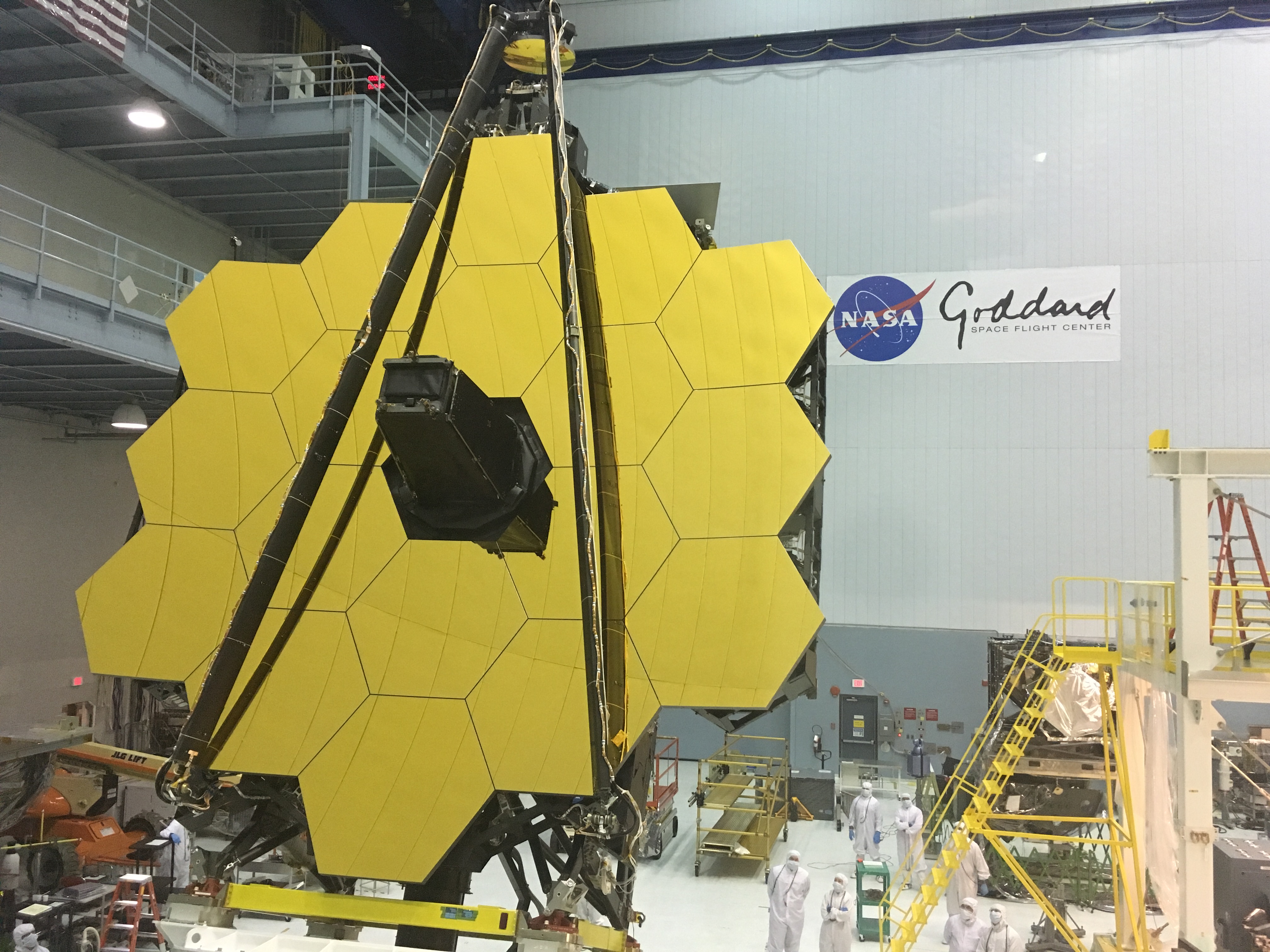
- NASA says the Nancy Grace Roman Space Telescope was planned for launch in fall 2026.
- The evidence does not confirm Roman’s launch, orbital insertion or start of science operations.
- HEASARC announced the AMS-02 All Particle Rates catalogue, dated 4 August 2026.
- The notice describes AMS-02 as a cosmic-ray particle detector on the ISS, installed in May 2011.
- An ESO summary attributes to a study a warning about proposals involving more than 1.7 million satellites.
Related records
Space research does not advance through just one kind of announcement. A mission may be preparing for launch, an already installed experiment may release a new catalogue, and an observatory may publish an image or a scientific paper. When describing work that is “ongoing,” it is therefore essential to distinguish a mission plan, data made available, and a result whose interpretation needs its own publication.
The available evidence consists of official pages from NASA, NASA’s HEASARC archive and the European Southern Observatory (ESO). The item most directly tied to an upcoming astrophysics mission concerns the Nancy Grace Roman Space Telescope. The material also includes the AMS-02 experiment on the International Space Station (ISS), James Webb Space Telescope news, TESS-related publications and an ESO study concerning satellite proposals. These are not interchangeable items: they describe different stages and purposes in astronomical work.
Roman: a planned launch, not one verified by this material
NASA’s Astrophysics page says that the Nancy Grace Roman Space Telescope “will launch in fall 2026” and will open an unprecedented window on the universe. That is the claim supported here: a planned launch during that 2026 season.
The supplied evidence contains no launch report, confirmation of orbital insertion, specific liftoff date, or notice that science operations have begun. Nor does it list instruments, specific observing goals, orbits, contractors or a later schedule. Filling those gaps with details available elsewhere would be inappropriate, because this article is restricted to the supplied material.
The editorial importance of the distinction is straightforward. Saying that Roman is a mission to follow is not the same as saying that it is already observing. In the available record, Roman represents a stage of announced preparation: an institutional statement about a future milestone. An official later source would be needed to turn that announcement into news of a mission that has actually launched.
AMS-02: data from a detector already installed on the ISS
The second item with an explicit operational status comes from HEASARC News, NASA’s archive communicating high-energy astrophysics data updates. The page announces the AMS-02 All Particle Rates catalogue, dated there 4 August 2026.
According to that notice, the catalogue records incident rates for all particle species obtained with the Alpha Magnetic Spectrometer (AMS-02) experiment. The same text identifies AMS-02 as a cosmic-ray particle detector on the ISS, installed in May 2011. In explanatory terms, the notice documents a chain unlike Roman’s: not a future launch, but the availability of a data product from a detector that the record places on a space platform for years.
The excerpt provides no rate values, time span covered, calibration methods, instrumental uncertainties or conclusions about the origin of cosmic rays. Publication of the catalogue is therefore a meaningful information event, but it does not by itself justify an announcement of a specific discovery.
An ecosystem of results, images and alerts
The material also signals other lines of work. The Webb news page notes an infrared image of part of the Carina Nebula captured on 6 August 2026; the excerpt calls it a star-forming region. NASA’s astronomy page mentions, among other items, that the DART mission changed the orbit of asteroid Didymos around the Sun and a story about tiny dust under Webb’s gaze. These references identify outreach subjects, but the excerpts do not provide enough detail to reconstruct their findings.
A HEASARC list of TESS publications also appears, including 2026 references to detached eclipsing binary systems and stars identified using TESS and SuperWASP data. Separately, ESO’s press-release page summarizes a study warning of “devastating consequences for astronomy” if proposals to launch more than 1.7 million satellites, including very bright ones, proceed. The summary says the study proposes no more than 100,000 faint satellites; this article does not have the full study to assess its assumptions or methodology.
How to read the state of the research
Together, these references portray astronomy as simultaneously dependent on space observatories, data archives and observing conditions potentially affected from orbit. Roman is presented as the next announced stage. AMS-02 shows that installed infrastructure can continue to generate data sets. Webb and TESS appear as sources of images and publications. ESO’s warning introduces an environmental issue: proposed satellite expansion could affect astronomy, according to that study.
None of these items should erase its own limits. A schedule does not confirm a launch. A catalogue does not automatically amount to a scientific interpretation. An image is not a substitute for a published analysis. And a press-release summary does not make it possible to reproduce a study’s technical assessment. This separation matters especially because several evidence entries bear dates in July and August 2026.
What to follow next
For Roman, the most consequential update would be an official statement confirming or revising the launch schedule and, later, its operational status. For AMS-02, the next level of reading would be the catalogue documentation and papers using its particle rates. For ESO’s warning, the full study and its data would be needed to examine the quoted threshold and the scope of its scenarios.
Until then, the verifiable picture is intentionally restrained: NASA presents Roman as a telescope planned for launch in fall 2026; HEASARC reports an AMS-02 catalogue and places the detector on the ISS since May 2011; and other official pages show that images, publications and debate over the orbital environment continue to feed astronomical research.