

Key facts
- NASA published the report on September 29, 2026; the team works at Glenn Research Center in Cleveland.
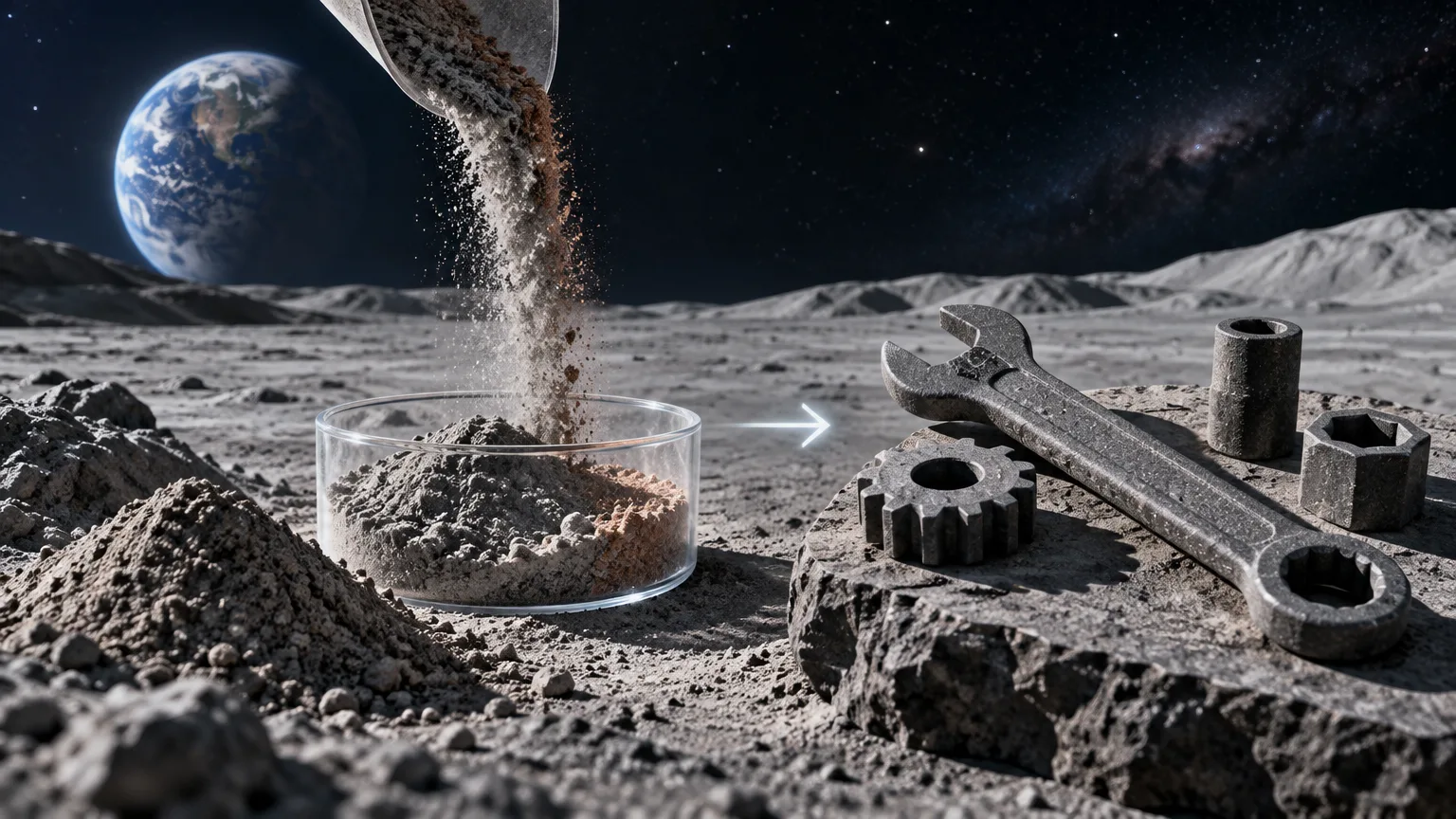
- According to NASA, a mixture of biodegradable plastic and simulated lunar or Martian dust was stronger and easier to process.
- The plastic could be produced using bacteria fed with crew waste or carbon dioxide; the source presents this as a possibility.
- Potential uses include brackets, wrenches, and chairs in future habitats; manufacturing on the Moon or Mars has not been demonstrated.
- Temperature testing is underway, and some samples are slated for exposure outside the International Space Station during MISSE-23.
Related records
A material developed at NASA’s Glenn Research Center in Cleveland could someday help make tools and components on the Moon or Mars. The idea is appealing for long-duration missions: if some supplies could be made at the destination, spacecraft might need to carry less cargo from Earth. For now, however, this is a technological possibility, not a demonstration of operational manufacturing on another world.
NASA published the information on September 29, 2026, in an image article featuring microscope views of the material. The report describes development work and testing; it does not provide performance figures or show that a part has already been made on the Moon or Mars. The pictures reveal a colorful crystal structure, but images alone cannot measure strength or confirm that the material would work in a habitat.
A mixture of plastic and simulated dust
Research chemical engineer Allison Christy and a team of summer interns—Tyler Klinchuch, Ethan Bilodeau, and Emma Levenson—mixed a special plastic with simulated lunar and Martian dust. According to NASA, the plastic is biodegradable and could be produced by bacteria fed with crew waste or carbon dioxide. This describes a potential production route; the published information does not say that the process has already been carried out on the Moon or Mars.
The team found that adding simulated dust particles made the material stronger and easier to process. It also reports that changing the type and amount of dust can adjust the material’s properties. NASA’s gray image shows a sample containing simulated lunar dust, while the reddish image shows a mixture with simulated Martian dust. It is important to distinguish these substances from actual regolith: the reported tests used dust designed to imitate material on those worlds.
Why making things at the destination matters
Transporting every spare part from Earth is a challenge for missions that aim to remain on a surface for a long time. NASA suggests that local manufacturing could reduce the supplies that need to be delivered and allow a crew to repair equipment using available materials. Possible objects it mentions include structural brackets, wrenches, and chairs for the interiors of future lunar or Martian habitats.
The agency also describes the material as a possible option for on-demand, recyclable manufacturing. In that scenario, a part could be made when needed and processed again, reducing reliance on shipments. These are potential uses, however, not mission results or confirmation that every component could be recycled indefinitely. NASA connects the idea with its goal of establishing a permanent Moon Base, but the report announces neither a deployment decision nor a schedule for using this material there.
The tests still ahead
The material is being evaluated in Glenn’s Lunar Environment Structural Test Rig, a facility intended to test structures under lunar-environment conditions. NASA says current testing examines how it withstands extreme temperatures. In addition, some samples are slated to travel on the Materials International Space Station Experiment 23 (MISSE-23) mission, where they would be exposed to intense conditions outside the space station. The source describes this as a future launch: it does not say the samples have already flown or report results from that test.
Exposure in space and thermal tests can provide information about specific aspects of durability, but the report does not detail every parameter being assessed or publish numerical results. The team hopes to investigate later whether the material could also be used outdoors in the harsh environments of the Moon or Mars. That question remains open; passing a test in a facility or outside the station would not automatically prove that a part could function throughout a surface mission.
A technological prospect still under evaluation
The work was funded through NASA Glenn’s 2026 Center Innovation Fund, managed by the agency’s Research and Technology Mission Directorate. NASA’s account credits the Glenn team with the development and describes the funding, but it does not provide a scientific paper, quantitative strength measurements, or a detailed comparison with other materials. The conclusions should therefore be limited to what NASA reports: mixing the plastic with simulated dust improved strength and processing in the tests described.
The work points to a broader strategy for exploration: use resources at a destination and make or repair some equipment there. The immediate next step, however, is to establish how much stress this material can withstand and under what conditions. Until test results are reported and manufacturing and operation are demonstrated in a mission, lunar tools and parts made from this plastic remain a research prospect, not a resource available to astronauts.