

Key facts
- NASA links Artemis to high-priority scientific questions about the Moon and Mars.
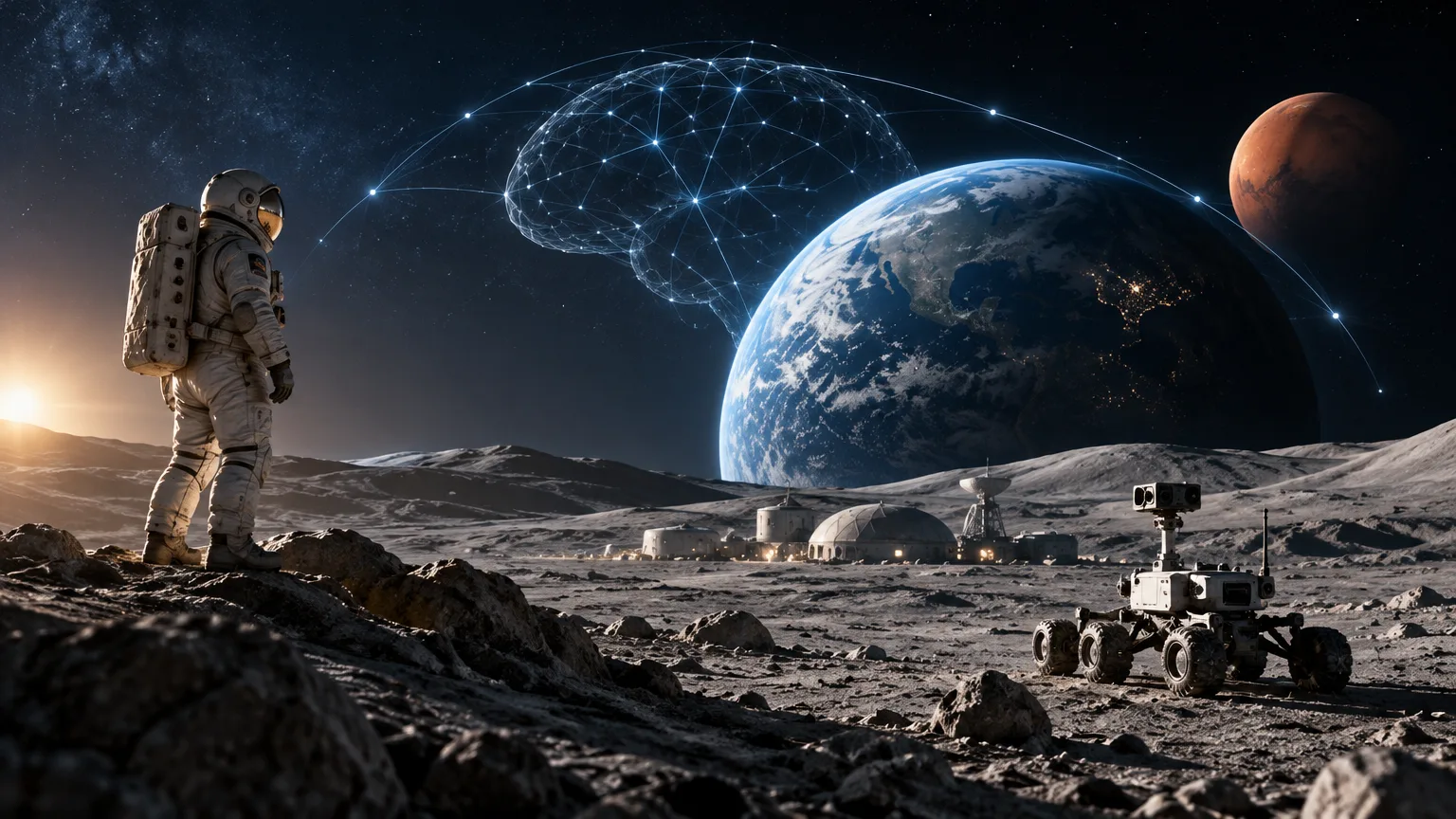
- The agency describes a combination of human explorers and robotic surface and orbital systems.
- NASA Ciencia reports the incorporation of artificial intelligence into lunar study.
- The NASA Ciencia archive mentions completed assembly of a first payload for surface deployment.
- NASA describes International Observe the Moon Night as an annual global event with participation since 2010.
Related records
The Moon, Earth’s natural satellite, has a prominent place in contemporary space exploration. Among the available evidence, official Spanish-language NASA pages describe it as a scientific destination associated with the Artemis program, robotic and orbital systems, and new analytical tools. This picture does not make it possible to predict every outcome or confirm schedules not explicitly given in the sources, but it does show the lines of work publicly communicated by the agency.
Artemis and scientific questions
NASA explains that Artemis will address high-priority scientific questions. The program focuses on questions that, in the agency’s view, can best be pursued by human explorers in person on the surface and in the vicinity of the Moon and Mars. This wording matters: it does not portray human presence as an isolated end, but as part of a research strategy.
The same description includes robotic surface and orbital systems. In other words, the scientific architecture communicated by NASA does not rely on one type of mission. It brings together human activity, instruments or vehicles working on the ground, and platforms operating around the bodies under study. The supplied evidence does not specify which questions belong to each system or provide particular scientific results from a given lunar campaign.
Lunar research is not limited to one mission
NASA Ciencia’s Moon news section says the agency is incorporating artificial intelligence into lunar study. According to that channel, this helps researchers transform the way they work. The statement confirms a technological line supporting research, but the provided material does not state which models are used, what data they examine, or what conclusions they have produced.
The same NASA Ciencia archive says NASA has completed assembly of a first payload designed to be deployed on the surface. A payload is the set of instruments or equipment carried by a mission to perform a scientific or technical role. The notice points to a material-preparation stage for lunar operations, although the evidence does not identify the instrument, its precise destination, its deployment date, or its measurement objectives.
From the agency to the public: observing the Moon
Exploration also has a public dimension. NASA’s main website invites participation on September 19 in International Observe the Moon Night, an annual worldwide initiative celebrating our lunar neighbor through guided observations, hands-on activities, and more. NASA adds that people around the world have taken part in this shared exploration since 2010.
This activity is not equivalent to a space mission and does not replace measurements from scientific instruments. Its role, as described by the agency, is to bring lunar observation closer to the public. It places the Moon at once as an object of professional research and as an accessible reference for education and observations from Earth.
How to read updates cautiously
The collected evidence includes search results and media pages, but the most direct basis for this article is NASA’s official channels. Claims are therefore limited to what those sources say: Artemis integrates human explorers and robotic systems for scientific priorities; the agency communicates the use of artificial intelligence; it reports a prepared payload; and it promotes an international observing event.
It would not be correct to infer that a technology has already solved a lunar question, that a payload has reached the surface, or that every cited component operates within the same mission. Nor can a launch date, operating duration, or experimental result be derived without further documentation. Archive and outreach pages can indicate ongoing activity, but they do not replace technical data, scientific publications, or mission statements needed to assess specific findings.
Exploration at several scales
The picture offered by the sources is one of lunar research distributed across several scales: close exploration by people, observation from orbit, robotic work on the surface, artificial-intelligence-assisted analysis, and public participation from Earth. In this communication, Artemis acts as the framework linking the Moon and Mars to high-priority scientific questions.
The main verifiable conclusion is limited: NASA keeps the Moon as an active field of science, technological preparation, and outreach. Crucial questions—about instruments, methods, dates, and results—remain unresolved by the supplied evidence. Distinguishing what has been announced, prepared, and demonstrated is essential for following lunar exploration without turning expectations into facts.