

Key facts
- ESO reported on 1 July 2026 on a study of proposals to launch more than 1.7 million satellites.
- ESO’s summary includes extremely bright satellites and calls the expected effect “devastating for astronomy.”
- The figure concerns launch proposals, not an inventory of satellites already in orbit.
- The excerpt mentions 100,000 faint satellites, but is incomplete and does not permit a precise interpretation of that number.
Related records
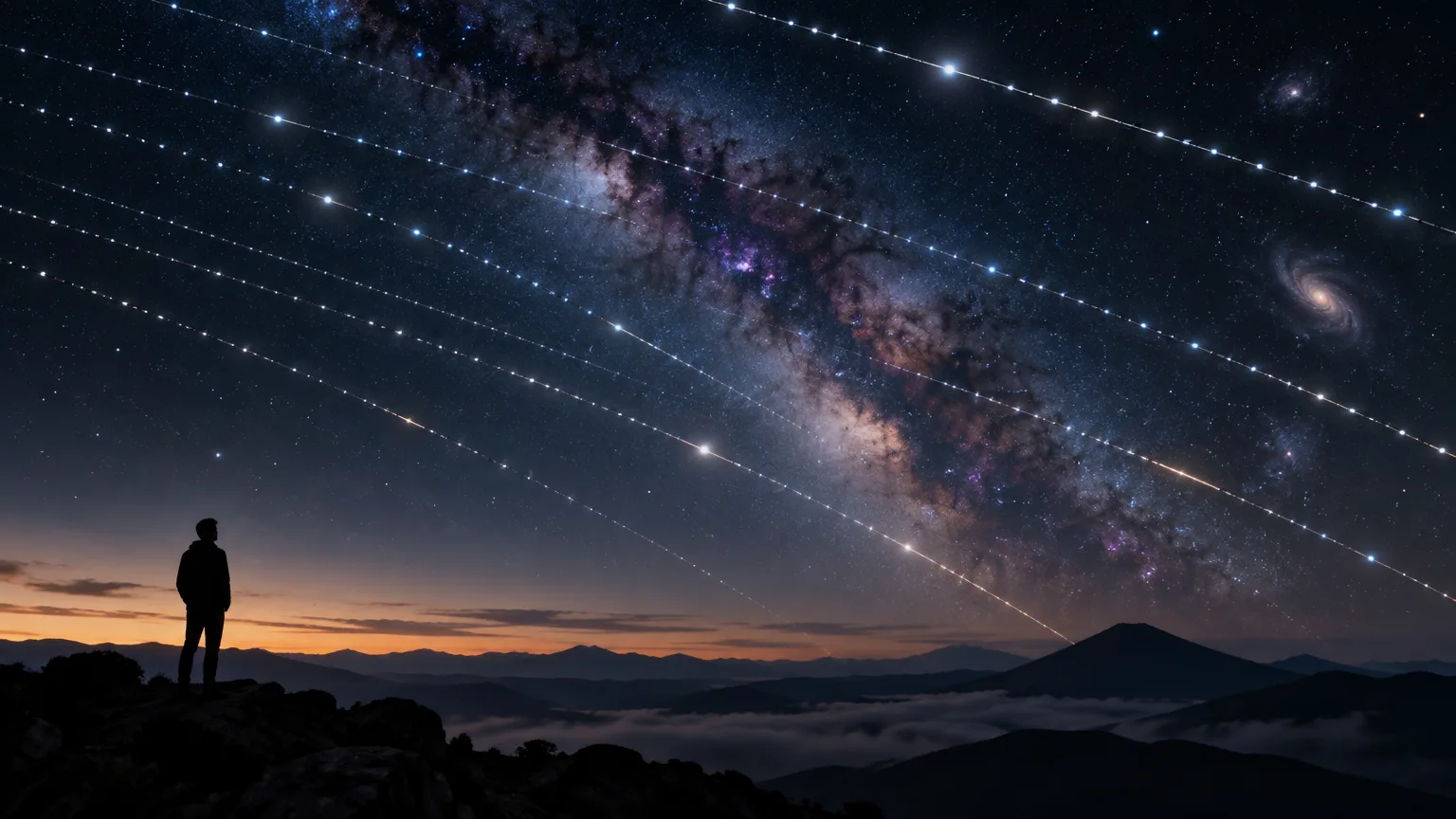
Astronomy relies on observing extremely faint signals arriving from space: light from stars, galaxies, nebulae and other objects. Any object that crosses a telescope’s field of view, or increases the sky’s apparent brightness, can therefore affect observations. The issue has become especially relevant amid plans for large satellite constellations in orbit.
The European Southern Observatory (ESO), an organisation devoted to astronomical research and the operation of observing facilities, reported on 1 July 2026 on a new study of this issue. According to the available summary, current proposals to launch more than 1.7 million satellites—including extremely bright satellites—would have consequences the study calls “devastating for astronomy.”
What the available evidence says
The figure of more than 1.7 million explicitly refers to launch proposals. It is not, therefore, a count of satellites already in orbit. That distinction is essential: the figure describes the scale of plans considered by the study, rather than a situation that has already materialised.
The excerpt also highlights the brightness of some objects. In astronomy, a satellite’s brightness can matter because its passage may leave streaks or alter an image made by a ground-based instrument. However, the supplied material does not explain what brightness definitions the study used, which telescopes or scientific programmes it assessed, or how it quantified each effect. Those details should not be assumed.
Why the issue matters to astronomy
Telescopes observe areas of the sky over defined intervals and record the light they receive. A satellite crossing an exposure can appear as a signal unrelated to the astronomical object under study. If the number of objects and their brightness grow, so may the need to detect, discard or correct those signals in the data.
ESO’s warning is not framed as an isolated-image problem. By using the phrase “devastating consequences,” the summary presents a potential risk to astronomical practice as a whole. Yet the supplied evidence does not allow that wording to be converted into a specific estimate of lost nights, affected observations, costs, harmed scientific fields or differences among observatories. Maintaining that boundary between the reported warning and conclusions requiring the full study is important.
The cited threshold and what remains unknown
The ESO release description adds that the study considers “no more than 100,000 faint satellites,” but the available text stops after that phrase. It is therefore not possible to establish rigorously what condition accompanies the number, whether it is a recommendation, a limit in a modelled scenario, or part of a broader comparison.
This illustrates a basic precaution in reporting research: a headline or search excerpt can convey a central finding, but it does not replace a paper’s methodology, assumptions or caveats. The 100,000 figure should not be presented as a definitive rule on the basis of the evidence assembled here.
A context of active space science
The warning appears amid highly active astronomical research. NASA’s astronomy pages and its James Webb Space Telescope news show the continuing flow of space-based observations and results. NASA also published information about evidence that a small comet’s rotation slowed and then reversed direction, an example of how volatile activity can influence small Solar System bodies.
Meanwhile, the European Space Agency maintains information on the Gaia mission, which observes the sky. These examples do not by themselves demonstrate the effect of constellations, but they help show what is at stake: multiple missions and facilities produce data about the universe, while ground-based observatories remain a central part of astronomical research.
What to follow next
The key next step is access to ESO’s complete study and its parameters: which deployment scenarios it assesses, how it handles satellite brightness, which effects it considers and which measures it examines. It will also be necessary to distinguish among corporate or institutional proposals, approvals, launches and satellites actually operating.
For now, the available evidence supports a limited conclusion: ESO has issued a serious warning about the possible effect on astronomy of proposals exceeding 1.7 million satellites, including very bright objects. It does not yet determine the precise scale of the harm or the solutions the study may support.