

Key facts
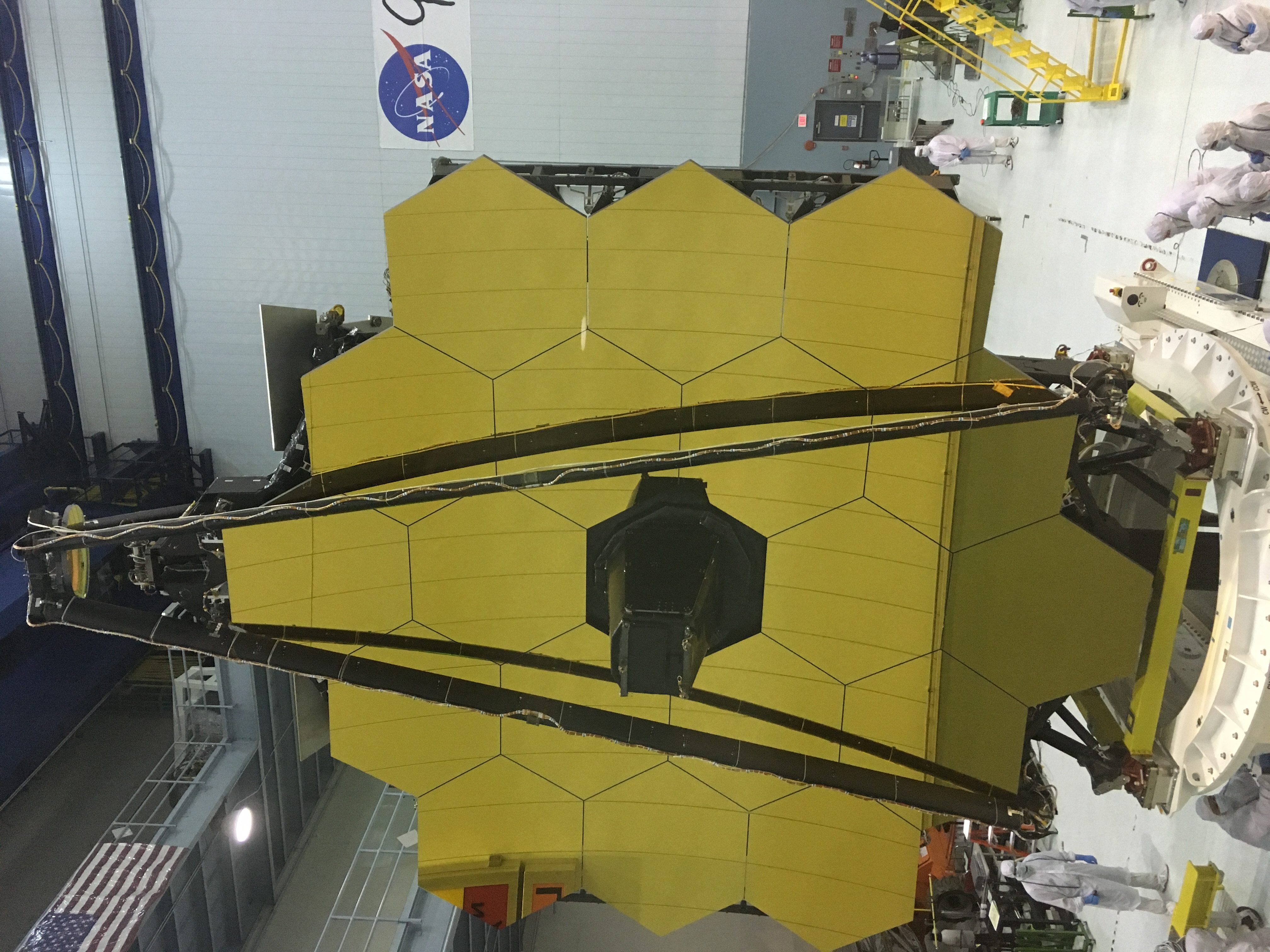
- NASA places the Nancy Grace Roman Space Telescope launch in fall 2026; the source presents this as a projection.
- ESA says Gaia Data Release 4 is expected in December 2026, without detailing its contents here.
- On July 28, 2026, HEASARC recorded CSCSTACK version 2.1.1: 493,236 detections and 855,402 entries including upper limits, based on 10,034 observations.
- ESO attributes to a study the conclusion that proposals for more than 1.7 million satellites could have devastating consequences for astronomy; the summary provides no methodology.
- NASA pages describe a Webb image of Carina from August 6, 2026, and a Hubble image of NGC 4698 released September 18, 2026.
Related records
A landscape made up of different activities
The cited sources do not describe a single mission or coordinated program. They are notices and pages from NASA, the European Space Agency (ESA) and the European Southern Observatory (ESO), as well as information about astronomical data resources. Together, they offer a snapshot of activities planned or reported for 2026: observations, instrument preparation, catalog releases and debate about the conditions under which astronomy is carried out.
It is important to distinguish a space mission from an instrument, a database and an institutional announcement. NASA, for example, describes the Nancy Grace Roman Space Telescope as a mission scheduled to launch in fall 2026. The Chandra catalog, by contrast, is a resource of detections derived from observations by an X-ray observatory. These are different kinds of activity and do not produce the same kinds of results.
Roman, Gaia and GRAVITY+: announced plans and capabilities
NASA’s astrophysics page says that the Nancy Grace Roman Space Telescope, whose launch it places in fall 2026, will open an unprecedented window into the universe. The description does not specify what that window entails, which instruments or programs will make it possible, or whether the date has been recently revised. It is therefore prudent to describe this as a planned launch according to that page, not as a launch that has already taken place.
ESA’s Gaia mission news page says that the fourth data release, Gaia Data Release 4 (DR4), is expected in December 2026. It adds that the announcement was made at the “Gaia” symposium during an astronomical society’s annual meeting in Cork. The available information does not detail what DR4 will contain or which measurements it will include. An expected date is not the same as an actual release.
For GRAVITY+, an ESO page about the NUCLEI 2026 meeting says the instrument would be operational from 2026 and would deliver early, high-precision interferometric results on both quiescent galactic nuclei and active galactic nuclei (AGN). The page presents this capability as an opportunity to extend stellar-dynamical studies into regimes that were previously inaccessible. The available excerpt does not provide specific scientific measurements or observational results already obtained.
Chandra: a catalog update, not a standalone discovery
A HEASARC news item, from NASA’s archive for high-energy astrophysics data, records the release of version 2.1.1 of the Chandra Source Catalog’s stacked-observation detection table, CSCSTACK, on July 28, 2026. According to the description, the table contains 493,236 detections. The full set comprises 855,402 entries when detections and photometric upper limits are counted, and is based on 10,034 observations.
These figures describe the resource’s size and composition, not the number of unique astronomical objects or a specific scientific finding. A detection does not necessarily correspond to a distinct source, and the description does not explain selection criteria, energy bands, the distribution of observations or how possible duplicates were handled. Nor does it allow us to infer what scientific conclusions researchers will draw from the catalog. What can be said here is that an update has been released, bringing together detections and photometric limits from stacked observations.
The sky observed from space and from Earth
NASA’s James Webb Space Telescope page identifies an infrared image captured on August 6, 2026, of part of the Carina Nebula, a star-forming region. The reference describes a particular observation; it does not summarize a study or provide quantitative results. Separately, a NASA news item says that the Hubble Space Telescope released an image of spiral galaxy NGC 4698 on September 18, 2026, presenting it as an apparently serene scene that conceals chaos. Without the explanation associated with that phrase, it is not possible to specify which phenomenon is being highlighted or to interpret it as a new result.
NASA also offers skywatching tips for September 2026. The page title confirms that such a guide exists, but the available material does not list visible objects, specific dates or observing conditions. It would not be appropriate to fill in those details by inference.
Satellite pressure and the limits of the available information
An ESO Spain press release dated July 1, 2026, summarizes a study that, according to the organization, concluded that current proposals to launch more than 1.7 million satellites into orbit, including extremely bright satellites, would have “devastating consequences for astronomy.” This is a conclusion attributed to the study in a press release; it does not mean that all those satellites have already been launched or that the described effect has been observed in full. The summary does not detail the method, assumptions, scenarios or scale of the impacts.
Another NASA page describes the ASTRA Initiative and says its submission deadline was July 1, 2026, at 11:59 p.m. Pacific Time. The reference does not explain the initiative’s purpose or the outcome of the process. It is therefore evidence of a call and its deadline, not enough information to assign it a scientific program or results.
Taken together, these sources sketch a varied agenda: a mission with a planned launch, a future Gaia data release, an announced instrument capability, a quantified update to the Chandra catalog, and observations publicized by Webb and Hubble. Added to these is ESO’s warning about proposals for large satellite constellations. But the available excerpts are brief and their dates fall in 2026; they do not provide the complete results or, by themselves, confirm whether each projected milestone was met. They should be read as a record of announcements and statuses reported by the cited pages, not as independent verification of every milestone.