

Key facts
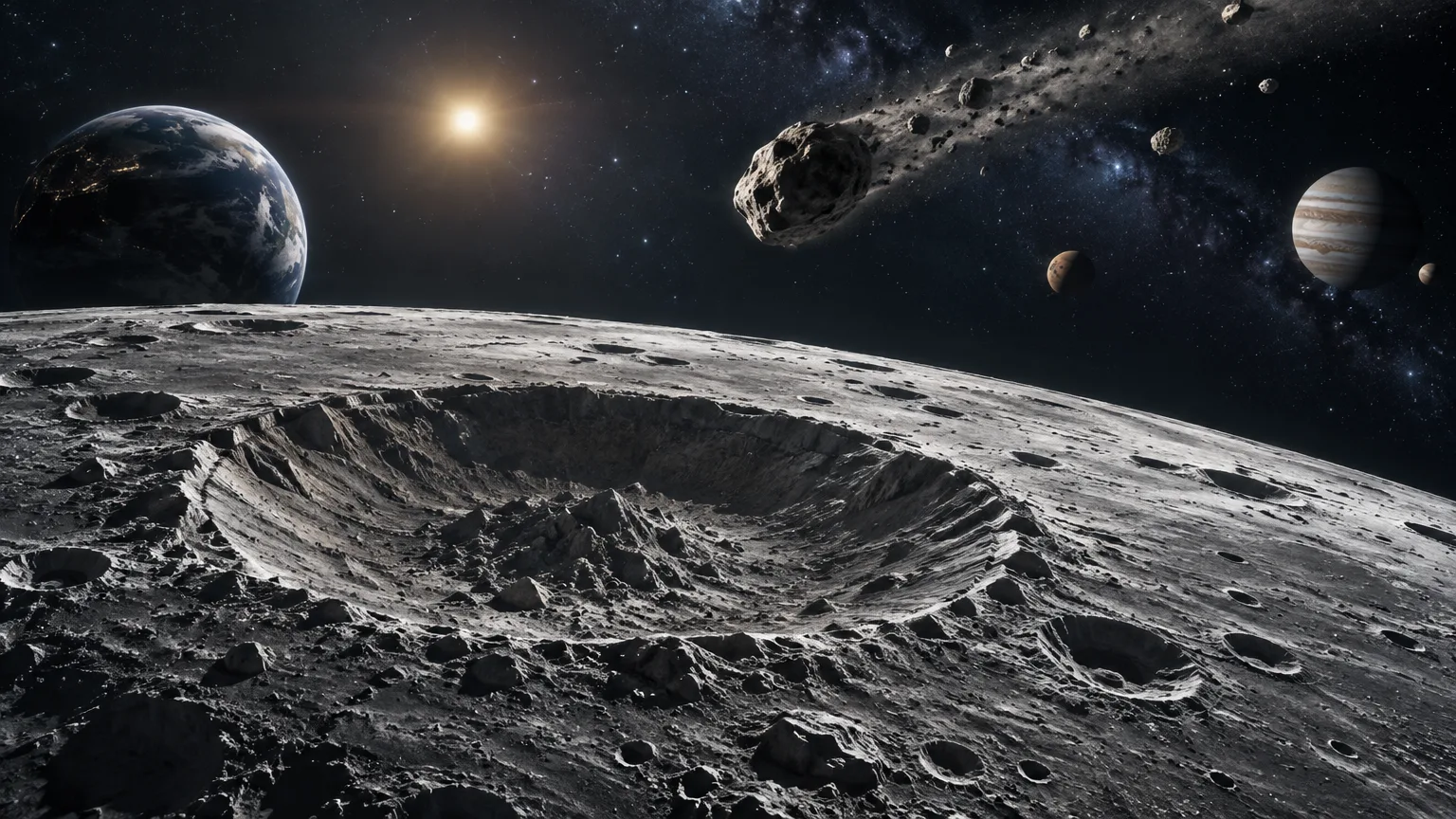
- The lunar surface is covered in craters.
- NASA says evidence of the solar system’s impact history has been preserved on the Moon for billions of years, in an environment without liquid water or wind.
- NASA presents lunar craters as a way to learn about the history of the Moon and other worlds.
- Pierazzo crater was photographed by the Lunar Reconnaissance Orbiter and lies within the far north-northwestern edge of the ejecta surrounding the Orientale basin.
- NASA says there are several theories about the Moon’s formation, although almost all agree that the early solar system experienced violent collisions.
Related records
The Moon’s surface is covered in craters. NASA explains that these features tell the history not only of the satellite, but also of other worlds: on the Moon, where there is no liquid water or wind, evidence of impacts in the solar system has been preserved for billions of years.
A record of impacts
The agency presents lunar craters as a way to study impact history. The claim concerns the evidence preserved on the lunar surface and the value of craters for understanding the history of the Moon and other worlds.
The example of Pierazzo
NASA cites Pierazzo crater, photographed by the Lunar Reconnaissance Orbiter (LRO), an agency mission. According to NASA’s description, the crater lies within the far north-northwestern edge of the ejecta surrounding the Orientale impact basin. The source offers it as an example of a lunar crater and specifies its location relative to the basin.
The formation of the Moon
NASA also summarizes the broader context of the Moon’s origin: several theories explain how the Moon formed, but almost all agree that the early solar system was the setting for violent collisions. These impacts could destroy objects or bring them together to form larger bodies; the resulting objects are among the planets, moons, asteroids, and other solar system bodies we know today.
Thus, NASA’s account links two ideas: craters preserve evidence of impacts for billions of years, and studying them helps reveal the history of the Moon and other worlds. Pierazzo makes this explanation concrete with an identifiable location around Orientale.