

Key facts
- The Soviet Union launched Sputnik I on October 4, 1957; it was the first artificial satellite.
- Sputnik I was 58 cm in diameter, had a mass of 83.6 kg and completed an orbit in 98 minutes.
- Explorer I, the first US Earth satellite, was launched on January 31, 1958.
- The National Aeronautics and Space Act, signed on July 29, 1958, created NASA and assigned the Department of Defense space activities primarily related to weapons, military operations or defense.
- On May 25, 1961, Kennedy proposed sending a man to the Moon and returning him safely before the decade ended.
- Apollo 8 conducted a crewed lunar orbit in December 1968; Apollo 11 took the first human beings to the lunar surface on July 20, 1969.
Related records
The launch of Sputnik I on October 4, 1957 opened a period of space competition between the United States and the Soviet Union in the context of the Cold War. NASA’s historical documents trace a sequence of US milestones: the launch of Explorer I, the creation of a civilian space agency and the lunar commitment announced by President John F. Kennedy. They also record how some US leaders viewed the competition; these political assessments should be distinguished from mission facts and dates.
Sputnik and US concerns
Sputnik I was the world’s first artificial satellite. NASA’s historical document describes an object 58 centimeters in diameter and with a mass of 83.6 kilograms, completing an elliptical orbit around Earth every 98 minutes. Although small, its launch had a considerable impact in the United States, where there were fears of falling behind Soviet technological advances.
The episode took place during the Cold War, the period of rivalry between the United States and the Soviet Union that also encompassed the arms race. NASA’s historical account notes that in the United States there was concern that launch technology could be used for military purposes and that Soviet capability to launch nuclear weapons heightened those fears.
Lyndon B. Johnson, then Senate majority leader, recalled the impact the news had on him. He said the sky seemed “almost alien” to him and that he was startled by the thought that another country could gain technological superiority over the United States. George E. Reedy, an aide to Johnson, summed up what he described as a widespread feeling among Americans: they could no longer assume that the Soviet Union was technologically behind. These are accounts of US perceptions at the time, not a direct description of Soviet intentions.
Explorer I and a new space organization
The US response included a satellite of its own: Explorer I, the first US Earth satellite, was launched on January 31, 1958, four months after Sputnik I. That same year, Congress passed the National Aeronautics and Space Act, which the president signed on July 29. The act created the National Aeronautics and Space Administration, known as NASA, and charged it with planning, directing and conducting aeronautical and space activities.
The act declared that space activities should be devoted to peaceful purposes and benefit all humanity. At the same time, it stipulated that US-sponsored space activities would be directed by a civilian agency, except those primarily related to the development of weapons systems, military operations or national defense, which fell under the Department of Defense.
Among the goals set out in the act were expanding human knowledge of the atmosphere and space, developing space vehicles, and preserving US leadership in aeronautical and space science and technology and their peaceful applications. The text also provided for discoveries with military value to be made available to agencies concerned with defense. Thus, the legal framework combined scientific and peaceful goals with provisions concerning security and national leadership. The 1958 act, reproduced by NASA, details these functions and exceptions.
Kennedy sets a goal for the decade
On May 25, 1961, Kennedy addressed a special joint session of Congress and called on the United States to commit to landing a man on the Moon and returning him safely before the end of the decade. In his speech, he presented space exploration as a national undertaking and linked its achievements to global political competition: he argued that space advances influenced how people in different countries judged the competing political systems.
Kennedy described the lunar project as a major challenge. He said no space project of that period would be more impressive to humanity or more important for long-term exploration, and acknowledged that none would be as difficult or costly. His address established a political commitment with a defined deadline; it did not describe an easy task or an immediate outcome. The full speech is among the historical documents collected by NASA in its Race to Space material.
Apollo 8 and Apollo 11: two stages on the way to the Moon
In December 1968, Apollo 8 made the United States the first country to conduct a crewed lunar orbit, according to NASA’s historical account. Orbiting the Moon was different from landing on it: Apollo 8 carried astronauts around the satellite, but they did not walk on its surface.
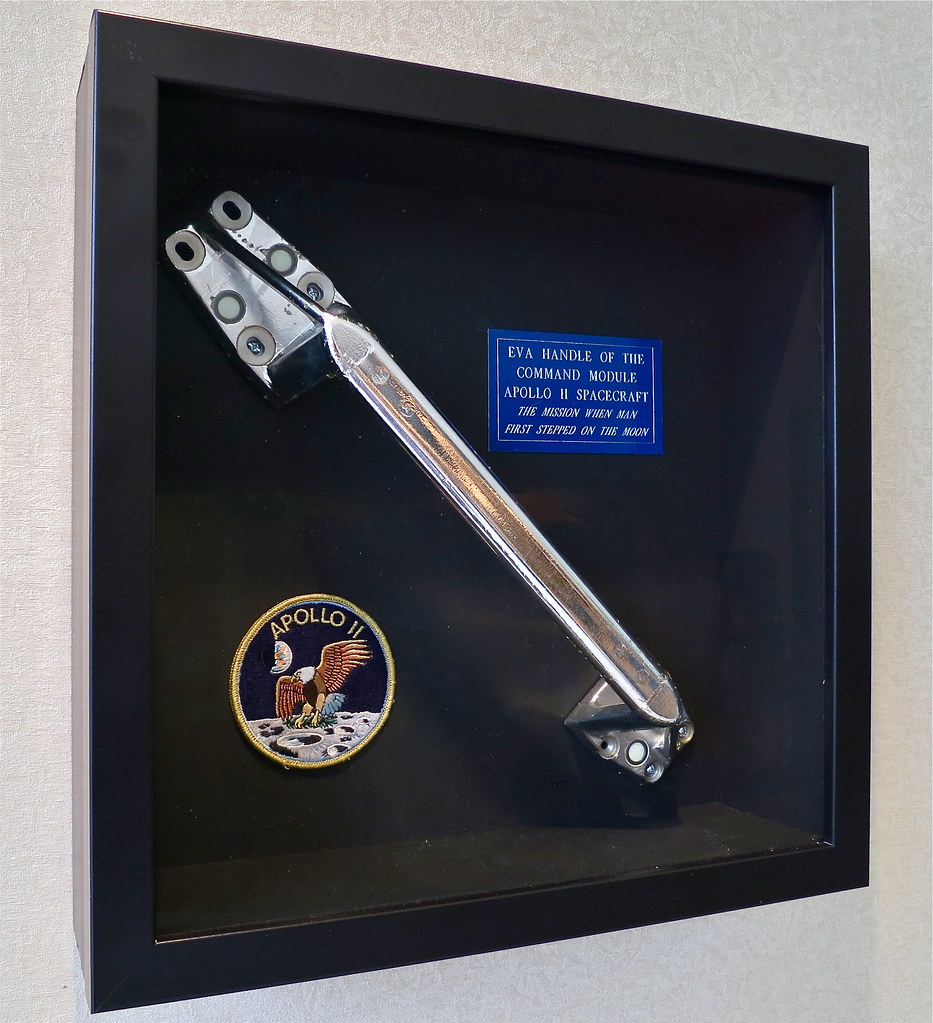
On July 20, 1969, Apollo 11 made the first lunar landing. Neil Armstrong and Edwin “Buzz” Aldrin were the first human beings to walk on the Moon; Michael Collins remained in lunar orbit in the command module. With this mission, NASA’s Apollo program achieved the goal Kennedy had set out eight years earlier. NASA notes that the achievement required the collaboration of hundreds of thousands of people and the resources committed by the United States.
What this sequence documents
The dates and characteristics of Sputnik I, Explorer I and the Apollo missions make it possible to reconstruct the milestones in the US response. Johnson and Reedy’s recollections, Johnson’s report of January 8, 1958, and Kennedy’s speech, in turn, document how US leaders described the competition, security and national objectives. In his report, Johnson contrasted what he considered the Soviet Union’s priority of controlling space with the US tendency to make decisions within the government’s annual budget: a political assessment of his, not independent evidence of Soviet priorities.
Taken together, the sequence shows how Sputnik’s launch was interpreted in the United States as a technological and strategic challenge, and how that perception accompanied institutional changes and a lunar goal with a defined deadline. Political accounts help explain their authors’ concerns; mission dates and the provisions of the act separately describe specific milestones and decisions.