

Key facts
- UNAM Global describes competition between the United States and China for a long-term human lunar presence.
- The sources associate Artemis with a lunar orbital station, a future habitable base, and a possible crewed surface mission in 2028; the latter date is not verified by supplied primary evidence.
- EL PAÍS English attributes satisfactory progress and on-schedule development of Long March-10, Mengzhou, Lanyue, and Wangyu to CMSA officials.
- EFE identifies the lunar south pole as a focus of the new race, while the dossier provides no technical data explaining or demonstrating that priority.
Related records
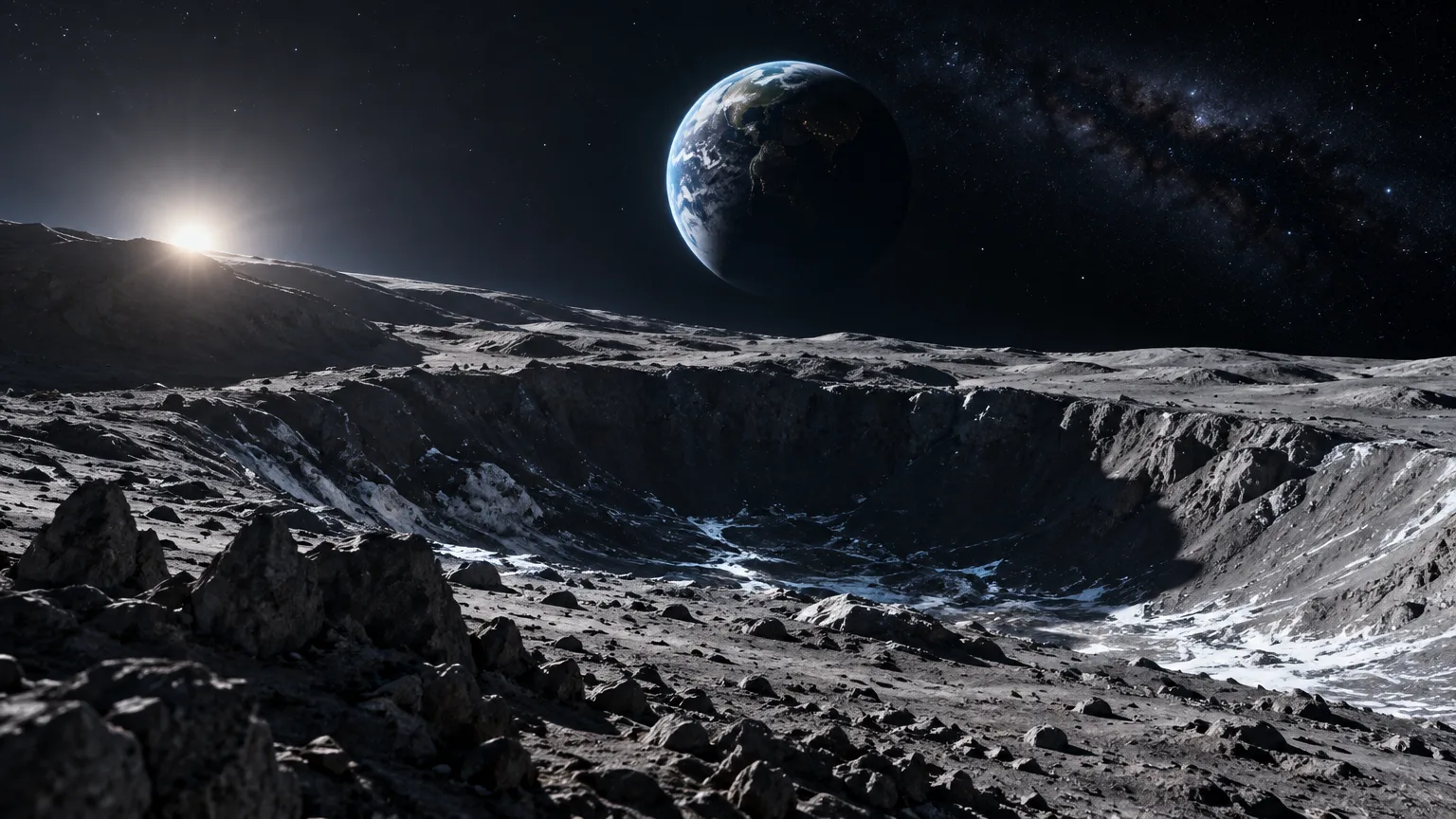
The Moon has again become prominent in discussions of space exploration. The evidence assembled for this article portrays that trend as a “new lunar race”: a competition in which the United States and China seek to secure a lasting human presence on Earth’s natural satellite. That framing comes particularly from a UNAM Global article, which also connects the competition with presence and resources.
The scope of that image needs clarification. “Race” is a way of describing a competitive dynamic; it is not, by itself, proof that there is a single timetable, a shared set of rules, or a guaranteed outcome. The supplied evidence does not include treaties, budgets, launch data, or detailed technical documentation. Nor does it allow lunar resources to be quantified, identify which resources would take priority, or demonstrate that colonization will occur. The term is therefore used here to organize the context, not to predict results.
A competition focused on long-term presence
The main difference from a goal limited to reaching the surface lies in the time horizon. UNAM Global states that there is a new space race between the United States and China to secure a long-term human presence on the Moon. That wording takes the discussion beyond a single visit: the issue becomes whether human activities connected with the Moon can be sustained over time.
The same source attributes to the Artemis project the intention to establish a lunar orbital station and, in the future, a habitable base on the Moon. A topic page from The Conversation, meanwhile, summarizes that new NASA plans for its Artemis lunar exploration program would reduce risks and increase the chances of success for a crewed mission to the lunar surface in 2028. This latter statement is presented as a secondary-source summary: the body of evidence does not provide NASA’s complete plan or official confirmation of that date.
The Artemis program in the supplied sources
Artemis is the name of NASA’s lunar exploration program mentioned in the evidence. According to the available summaries, its outlook combines a crewed surface mission with planned infrastructure: a lunar orbital station and a future habitable base. These are aims and plans described by the sources, not facilities whose operational existence is demonstrated by this material.
The reference to 2028 calls for particular care. The Conversation refers to higher chances of success, not to a guaranteed mission. In addition, the supplied record contains no primary NASA communication allowing the timetable, mission design, safety conditions, or later changes to be checked. The linked official NASA Ciencia website is presented as a Spanish-language page for NASA news, discoveries, and science, but the supplied excerpt does not detail Artemis.
China: declared preparation and named systems
The other side of the account comes from an EL PAÍS English article. Its summary says that officials from the China Manned Space Agency, identified by the initials CMSA, state that preparations for its crewed lunar mission are progressing satisfactorily. It also attributes to those officials the statement that development of the Long March-10 rocket, the Mengzhou crewed spacecraft, the Lanyue lunar lander, and the Wangyu lunar rover is on schedule.
It is important to distinguish a statement attributed to CMSA officials from independent verification. The available evidence contains no specifications, flight tests, confirmed launch dates, or technical reports on those systems. It is therefore possible to report that they have been named as parts of Chinese preparations, but not to conclude from this material that they are complete, flight-ready, or intended for a specific date.
The lunar south pole, an identified focus
A report by EFE portrays the Moon’s south pole as the destination attracting attention in this new race, and argues that the aim would no longer be merely to set foot on the Moon, but to colonize it. That wording shows the narrative and strategic importance the source assigns to that lunar region.
However, the dossier provides no geological studies, maps, resource inventories, landing-site selection criteria, or operational plans explaining why the south pole would have this centrality. It also provides no evidence that would confirm future colonization. Accordingly, the south pole can be described as a target emphasized by the source, but not as an established outcome or a destination whose feasibility is demonstrated here.
What is established and what remains open
The sources make it possible to identify several elements of the debate: competition between the United States and China; the declared aim of a long-term human lunar presence; Artemis’s association with a lunar orbital station and a future habitable base; the CMSA statement concerning several Chinese vehicles; and the attention given to the lunar south pole. They also leave fundamental matters open: verifiable schedules, the technical condition of each system, financing, applicable international rules, the specific resources at stake, and mission success.
There is a further temporal caution. Some links included in the record display dates in 2026. Without access to the full content or to primary records that would validate those publications and their context, they should not be used to establish a confirmed chronology. This article is limited to reporting what the supplied excerpts say and separating those claims from facts the material does not demonstrate.