

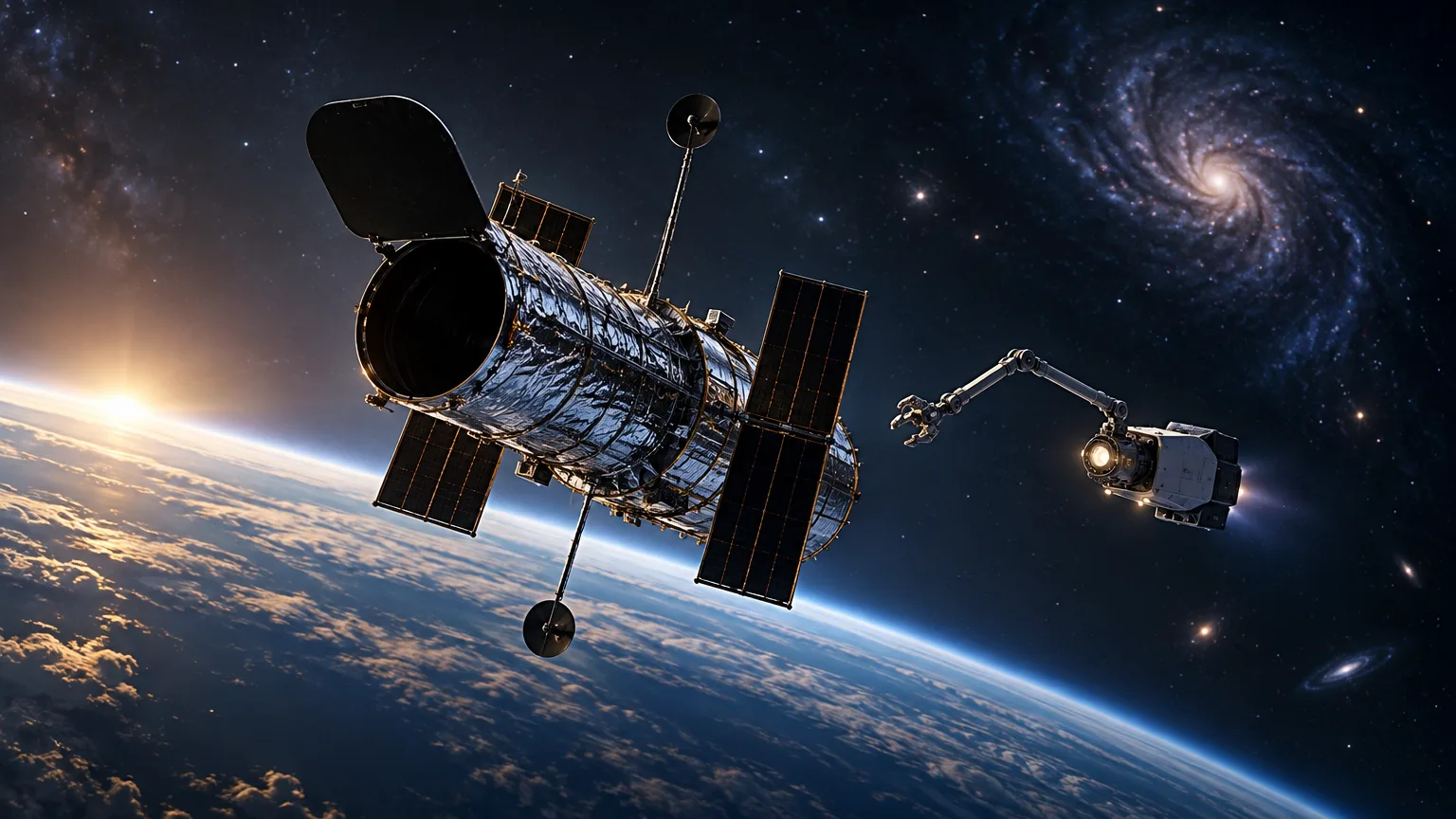
Key facts
- NASA issued the request for information on October 29, 2026; responses may be submitted until 3 p.m. Eastern Time on November 30.
- The options under consideration are raising Hubble to a higher orbit, servicing it to improve its capabilities, or planning a controlled reentry or safe orbital disposal at the end of the mission.
- Hubble has no onboard propulsion to maintain its orbit, which gradually decays because of atmospheric drag.
- Analyses cited by NASA place a probable reentry between 2033 and 2034; the agency anticipates an intervention mission would need to take place before 2032.
- The 2026 inquiry is distinct from the 2022 unfunded agreement between NASA and SpaceX to study the feasibility of raising Hubble with a Dragon spacecraft.
Related records
NASA has opened an inquiry to industry to learn what commercial capabilities are available to service the Hubble Space Telescope in orbit. The agency issued the request for information on October 29, 2026, and will accept responses until 3 p.m. Eastern Time on November 30.
The inquiry presents three options: a mission to raise Hubble to a higher orbit and extend its scientific life; servicing to improve its capabilities; or a controlled atmospheric reentry or safe orbital disposal at the end of the mission. NASA is gathering information about industry interest and capabilities; the announcement does not confirm that any of these missions will take place.
Why the agency is considering an intervention
Like other vehicles in low Earth orbit, Hubble gradually loses altitude because of atmospheric drag. The telescope has no propulsion system with which to maintain its own orbit. According to analyses cited by NASA, it is likely to reenter the atmosphere between 2033 and 2034. Given that timeline, the agency anticipates that an intervention mission would have to take place before 2032.
The inquiry also includes end-of-mission options, in addition to possibilities for extending or improving scientific operations. NASA says it is looking for reasonable opportunities for Hubble to continue producing science while it develops the flagship mission that will succeed it.
A different initiative from the 2022 study
The current inquiry should not be confused with the study announced in 2022. At that time, NASA and SpaceX signed an unfunded agreement to examine the feasibility of raising Hubble with a Dragon spacecraft, based on a proposal from SpaceX and the Polaris Program. The study was to examine the technical challenges of a possible maneuver, but it was not a plan to carry out or fund a mission.
The 2026 request, by contrast, seeks to learn about the range of commercial capabilities and presents alternatives that include raising or servicing the telescope as well as managing its disposal at the end of the mission.
The telescope and its operators
Hubble has been in operation for more than three decades and is an international cooperative project between NASA and the European Space Agency (ESA). NASA’s Goddard Space Flight Center manages the telescope and mission operations; the Space Telescope Science Institute conducts science operations for the agency.