

Key facts
- The excavation campaign described ran from 21 June to 22 July 2026; the account was published on 23 July.
- Twenty-five new Homo antecessor bone and dental remains were recovered from Gran Dolina’s TD6-2 level.
- The assemblage attributed to the species now comprises more than 200 remains; this does not mean 200 individuals.
- The author reports signs of deliberate fractures, cut marks, and human bites, but describes observations of the new fossils as preliminary.
- Teeth found since 2024 point to adults aged 20 to 26 and would raise the estimated number of individuals from eight to between 12 and 15.
Related records
The 2026 campaign at the Atapuerca archaeological sites in Burgos, Spain, produced a significant find for the study of Homo antecessor: 25 new bone and dental remains from Gran Dolina’s TD6 level. The information appeared on 23 July 2026 in an article by Marina Lozano Ruiz, a researcher who works at the site. The excavation campaign ran from 21 June to 22 July.
This is not yet a complete analysis of the fossils. The author says the remains will be studied in the coming months and describes her observations as preliminary. Any potential revision of hypotheses about the group should therefore not be mistaken for a definitive conclusion.
A campaign across several sites
More than 200 researchers and students took part in the campaign, which worked at ten Atapuerca sites. The account describes discoveries from different periods, including stone tools, animal remains, and evidence of Neanderthal occupation. At Sima del Elefante, the team recovered flint, quartzite, and quartz tools described as the oldest found there; the article links them to human groups who lived in the mountains more than 1.3 million years ago. A nearly complete lynx skeleton was also found.
Galería yielded animal remains, mainly bison and horses, as well as stone tools, including a quartzite hand axe. The author interprets this assemblage as evidence that the cave served as a place to obtain meat around 300,000 years ago. At Cueva Fantasma, tools suggest a Neanderthal presence, while coprolites—fossilised droppings—indicate that hyenas also used the site. These discoveries place the Gran Dolina find within wider research into the environments and human occupations of the Atapuerca mountains.
The Gran Dolina fossils
Gran Dolina is known for the Homo antecessor remains found in its TD6 level. According to the article, this species lived at Atapuerca around 850,000 years ago and combined very primitive dentition with a face showing modern features. Excavation at TD6 resumed in 2023. In earlier campaigns, the team worked on TD6-1, described as a hyena latrine, where it found more than 1,600 coprolites, as well as tools, herbivore remains, and some human fossils.
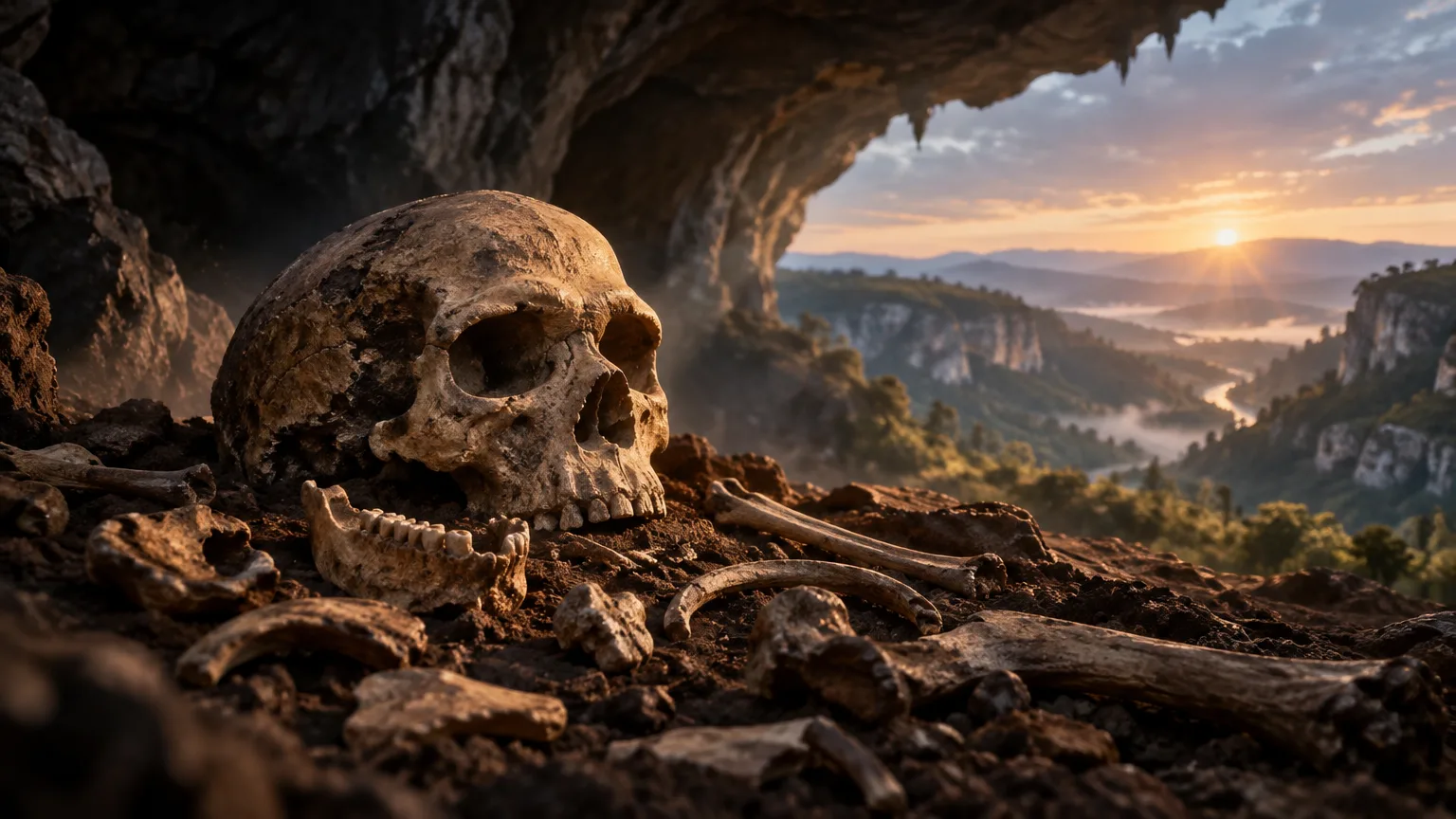
In 2026, excavation began in TD6-2. Earlier work in this sublevel had yielded remains of hunted animals—including deer, horses, bison, and rhinoceroses—and tools made from flint, quartzite, limestone, and sandstone. The 25 new fossils include three teeth, vertebrae, hand and foot bones, a fairly complete ulna, and fragments of long bones, including a humerus and a tibia. With these finds, the number of remains attributed to Homo antecessor in the assemblage exceeds 200; this is a count of remains, not people.
What the finds may reveal about cannibalism
The researcher notes deliberate fractures, cut marks, and human bite marks on the bones—signs that support the interpretation that cannibalism took place. The new material may also change the picture of who was in the group. Until recently, the individuals identified in this assemblage were considered children or adolescents: the youngest was thought to have been around two or three, and the oldest 17.
However, teeth uncovered since the 2024 campaign point, according to the author, to several adults aged between 20 and 26. The estimated number of individuals would rise from eight to between 12 and 15. The absence of adults had informed a hypothesis that cannibalism resulted from a conflict between rival groups, in which one group attacked the other’s young. If adults are confirmed, that explanation will need to be reconsidered, but the evidence available does not yet justify a definitive alternative interpretation.
A recent finding, with clear limits
The campaign account was published by The Conversation on 23 July 2026, one day after the stated end of the excavation. It is an explanatory account by a researcher who works at Atapuerca, not an independent report of a completed analysis of the fossils. The supplied bibliographic record classifies it as posted content or a preprint; that label alone does not show that it underwent peer review. The author herself says detailed study remains to be done.
The material available for this article also includes general NASA news pages, but no specific scientific announcement that would allow an astronomy development to be verified. This article therefore focuses on Atapuerca, the finding described with supporting detail in the supplied evidence, and does not claim to be a comprehensive roundup of the latest science news.