Identity and classification
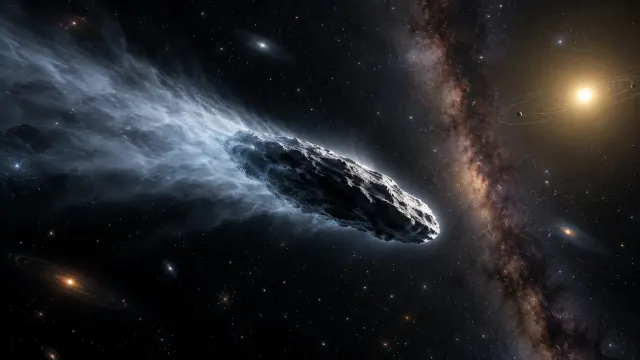
1I/'Oumuamua is an astronomical object classified as interstellar. NASA identifies it as the first known interstellar object to visit our Solar System. Its permanent designation from the International Astronomical Union is 1I/2017 U1; the full form 1I/'Oumuamua is also used. In this designation system, the capital letter “I” marks an object as interstellar.
Discovery and significance
The object was discovered on 19 October 2017. Its recognition prompted the International Astronomical Union to establish a new designation class for interstellar objects. This system provides a distinct marker for such objects and records 'Oumuamua as the first in the series. NASA’s account says that it appeared to have originated outside the Solar System and that, if confirmed, it would be the first interstellar object observed and confirmed by astronomers. Its official designation subsequently recognized its interstellar classification.
Nature and uncertainties
The available evidence supports describing it as an interstellar object that visited the Solar System, but does not settle its physical nature: a NASA source describes it as a small asteroid or perhaps a comet. Neither possibility should therefore be presented as certain. The supplied information also does not specify its composition, dimensions, or detailed orbital parameters. The firmly supported points are its status as the first known object of this class and the date of its discovery.
Designation context
The series that began with the “I” prefix also appears in later identifications: ESA describes 3I/ATLAS as the third known interstellar object. That example helps explain the role of the naming system, but does not establish additional physical properties of 'Oumuamua. This profile is limited to facts supported by the cited sources and does not infer details they do not provide.