

Key facts
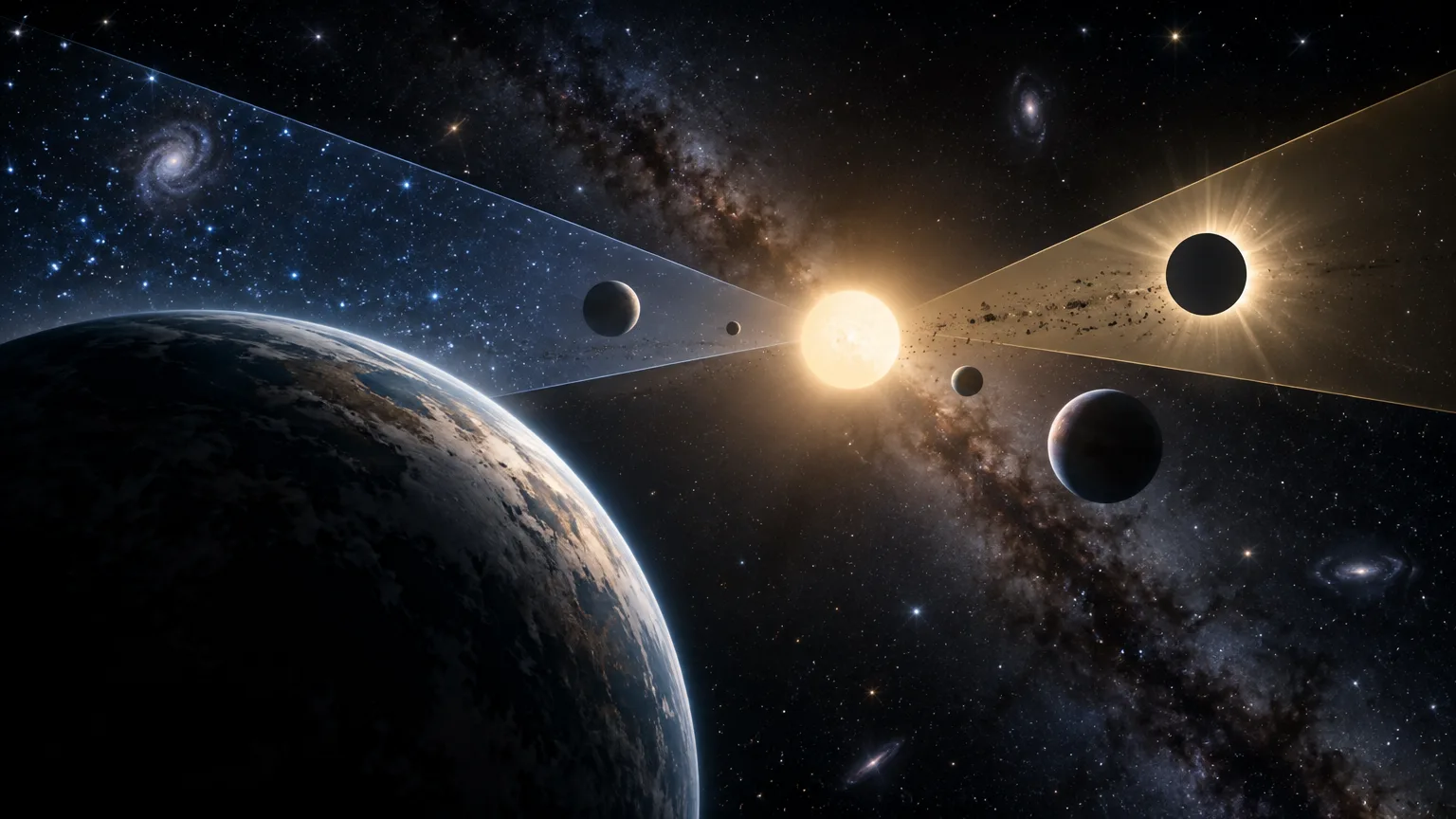
- An exoplanet is a planet orbiting a star beyond the Solar System.
- NASA Ciencia says new discoveries feed an increasingly complete catalog of worlds in the galaxy.
- ESA says the nature of planets in other systems will be the goal of its fourth medium-class science mission, anticipated for mid-2028.
- The Nancy Grace Roman Space Telescope team successfully activated its Coronagraph Instrument.
- NASA says the coronagraph blocks starlight to view planets and dusty disks around nearby stars, and will then undergo calibrations and tests lasting several months.
Related records
Exoplanet research seeks to expand the catalog and understanding of planets beyond our Solar System. According to NASA Ciencia, as new discoveries continue to arrive, scientists are building an increasingly complete catalog of the worlds with which we share the galaxy. This work does not rely only on finding planets: it also requires instruments and missions able to study stellar systems with great precision.
The available evidence points to two distinct institutional developments. On one hand, the European Space Agency (ESA) has stated that the nature of planets orbiting stars in other systems will be the goal of its fourth medium-class science mission. On the other, the team behind NASA’s Nancy Grace Roman Space Telescope has successfully activated its Coronagraph Instrument, which must still undergo a lengthy phase of calibrations and tests.
What exoplanets are and why they matter
An exoplanet is a planet orbiting a star beyond our Solar System. This definition, included in the supplied information, describes a very broad field of study: it is not one single kind of world or one stellar system, but planets around other stars.
The scientific interest is reflected in continuing discoveries and in the compilation of catalogs. NASA Ciencia’s page describes precisely a growing inventory of worlds in our galaxy. A catalog, however, does not by itself amount to a complete description of every planet. Observational and analytical capabilities are essential to move from detection toward more detailed characterization.
ESA and a mission focused on planets in other systems
ESA reports that the nature of planets orbiting stars in other systems will be the objective of its fourth medium-class science mission. The agency places its launch in mid-2028. The wording matters because it puts the mission’s purpose on studying planets, rather than simply counting them.
The material provided does not specify this mission’s name, the instruments it will carry, the systems it will observe, or the results it might produce. It would therefore not be rigorous to assign specific discoveries, additional technical capabilities, or a target selection that does not appear in the evidence. What is established is ESA’s stated scientific priority: investigating the nature of planets in systems other than our own.
Roman’s coronagraph: reducing a star’s light
NASA says that the Nancy Grace Roman Space Telescope team has successfully activated the mission’s Coronagraph Instrument. Its stated function is to block starlight in order to view planets and dusty disks around nearby stars. In the exoplanet context, that blocking matters because a star’s light can make objects around it difficult to observe.
Activation does not mark the end of the instrument’s preparation. The same NASA update says it will next undergo a series of calibrations and tests lasting several months. This detail requires a distinction between a technical milestone already achieved—activation—and a capability that has already been fully validated for scientific observations. Calibration and testing are part of the process before observational conclusions can be drawn.
Two complementary paths of scientific preparation
The two announcements concern different stages. ESA’s presents a mission objective and an anticipated mid-2028 launch. NASA’s reports an instrument being switched on and subsequent testing. Together, they show that exoplanet exploration combines planning future missions with developing, activating, and verifying observing technology.
These advances should not be confused with confirmation of a particular planet. Neither of the primary sources supplied here identifies a new exoplanet, a mass, a distance, a composition, or signs of life. The significance of the developments lies in the scientific infrastructure that may help observe and study worlds in other stellar systems.
What can be said—and what remains open
From the available sources, it can be said that exoplanets remain an active target of space astronomy; that ESA anticipates a medium-class mission dedicated to investigating their nature; and that Roman’s coronagraph has been activated and will enter a period of calibrations and tests lasting several months. It can also be said that NASA links the coronagraph’s purpose to viewing planets and dusty disks around nearby stars.
Crucial issues remain open: the instrument’s final performance after testing, specific observing targets, future scientific results, and any discoveries these initiatives may enable. Keeping objectives, technical preparation, and results separate is essential for interpreting exoplanet news cautiously.