

Key facts
- NASA announced the X-70 Fractal on November 4, 2026, at UP.Summit at Kennedy Space Center in Florida.
- It is a piloted experimental aircraft for testing flight controls, maneuverability, and other aeronautical technologies.
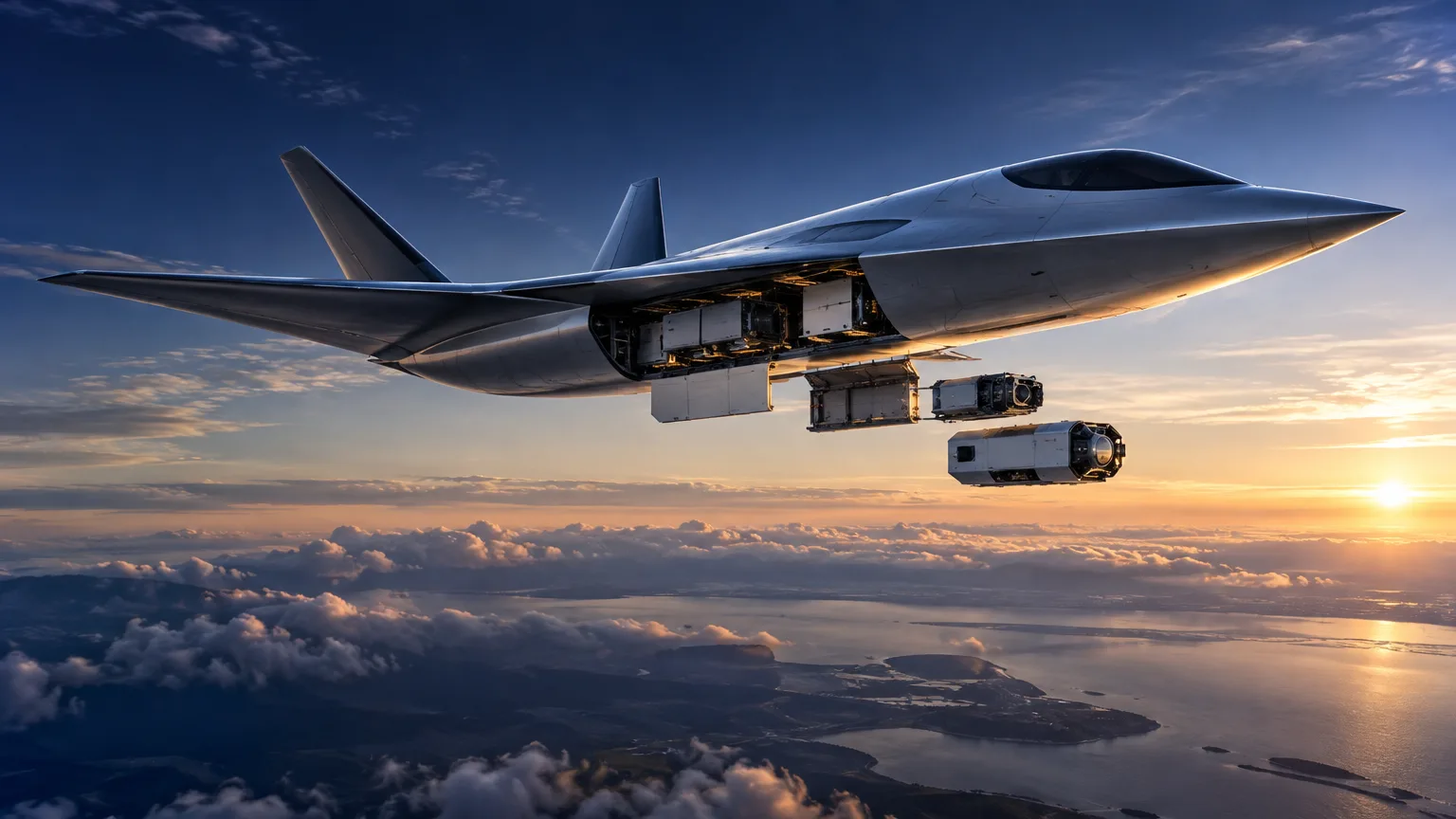
- Its modular design allows internal and external payloads to be swapped quickly; it can carry up to 2,000 pounds (about 907 kg) of experimental payload.
- NASA lists a maximum takeoff weight of 10,000 pounds (about 4,535 kg), a cruise speed of Mach 0.75, a maximum altitude of 45,000 feet, and a range exceeding 1,500 nautical miles (about 2,778 km).
- The agency expects the X-70’s first flight under the NASA banner to take place within the next two years.
Related records
NASA unveiled the X-70 Fractal at UP.Summit, held at Kennedy Space Center in Florida. The November 4 announcement adds a new experimental aircraft to the agency’s X-plane family, platforms designed to test aviation technologies in flight.
The X-70 will be piloted and dedicated to evaluating advanced flight-control systems, maneuverability, and other emerging aeronautical technologies. NASA identifies its modular design as a central feature: experimental payloads located both inside and outside the aircraft can be changed quickly, allowing the platform to be adapted for different tests.
A platform that can change configuration
The planned payload capacity is up to 2,000 pounds, about 907 kilograms. According to NASA, this flexibility opens up different research and flight-testing opportunities, while the ability to swap equipment between tests allows a single aircraft to be used for different experiments.
The agency describes the X-70 as a platform for exploring aircraft maneuverability under piloted flight conditions. NASA Administrator Jared Isaacman said the aircraft will enable advanced flight controls and other technologies to be tested in real flight, and described it as part of “a new beginning for aeronautics.” NASA expects its first flight under the agency’s banner to take place within the next two years.
Planned performance
NASA lists a maximum takeoff weight of 10,000 pounds (approximately 4,535 kilograms), a cruise speed of Mach 0.75, and a maximum operating altitude of 45,000 feet. Its planned operating range exceeds 1,500 nautical miles, equivalent to about 2,778 kilometers.
These specifications describe the operating range NASA envisions for the research platform. The stated goal is to use the aircraft to test aviation technologies in flight, with experimental configurations that can be changed quickly.
Continuing the X-plane tradition
X-planes are experimental aircraft that NASA has used for decades to develop and test aviation technologies. The agency cites the Bell X-1, which first broke the sound barrier in 1947, and the X-15 hypersonic research aircraft as predecessors; it also mentions the X-59, its quiet supersonic flight demonstrator.
Laurie Grindle, director of the Aeronautics Division in NASA’s Mission Directorate for Research and Technology, said that adding another X-plane will help advance aeronautics research. The X-70 extends that tradition with a piloted platform featuring interchangeable payloads and reconfigurable flight controls.