

Key facts
- NASA published the 2026 edition of the ISAM State of Play on October 29, 2026.
- The edition is 368 pages long and organizes capabilities into 11 functional areas.
- NASA’s official page lists 621 capability entries, 61 facility descriptions and 169 developer profiles.
- To be included, a technology must have hardware that exists as a ground-based prototype or has been demonstrated in flight.
- NASA presents the document as a reference for mission planning, not as a formal industry standard.
- The agency plans annual editions and accepts contributions for future revisions.
Related records
On October 29, 2026, NASA published a new edition of its In-Space Servicing, Assembly, and Manufacturing (ISAM) State of Play, an overview of technologies and capabilities for operating on spacecraft and building systems in space. The 2026 edition is 368 pages long and covers 11 functional areas, from robotic manipulation to refueling and structural assembly.
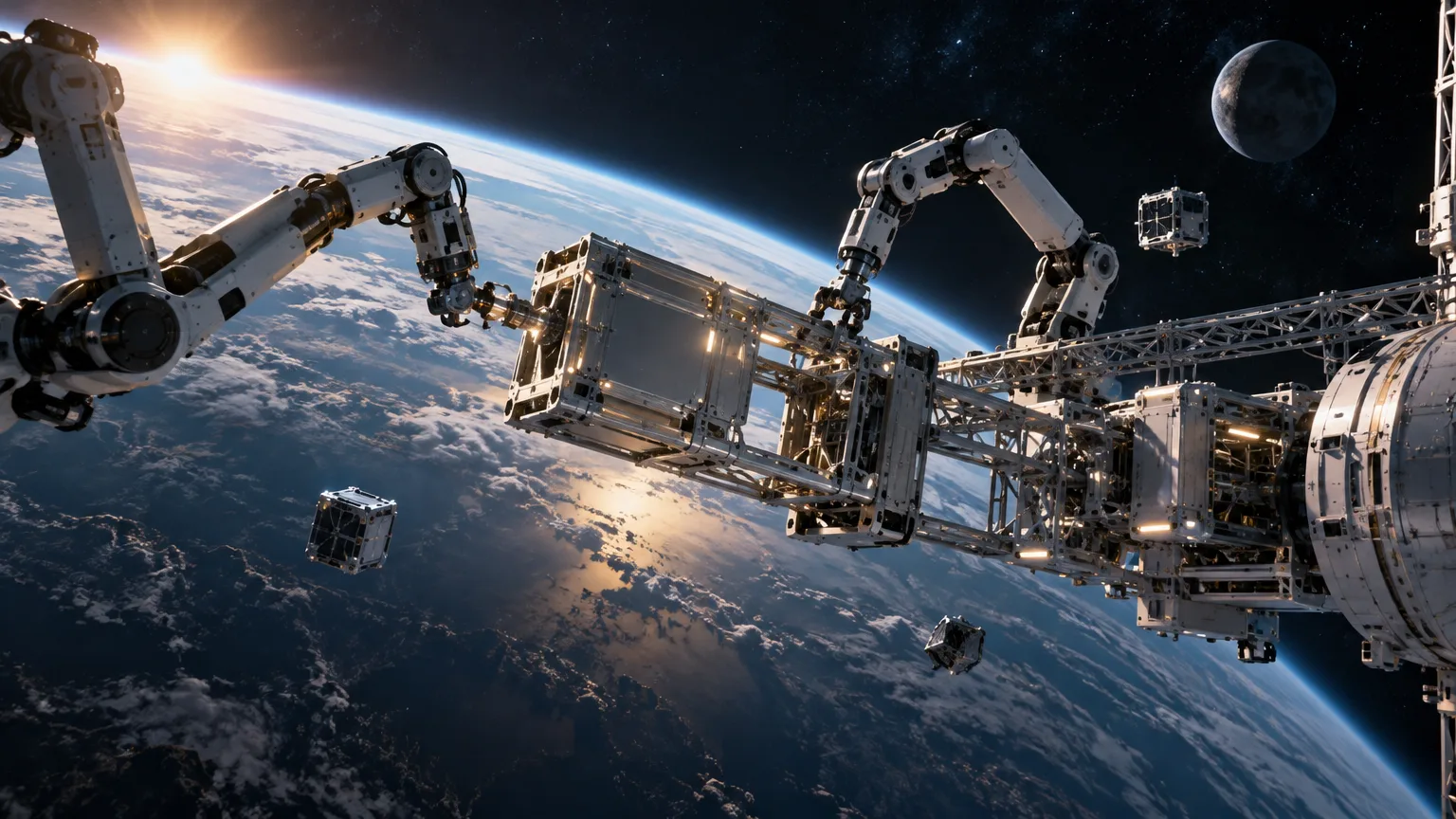
ISAM comprises capabilities for servicing space objects, assembling structures beyond Earth, and manufacturing components in space. Servicing can include refueling, repairing or upgrading satellites; assembly brings parts together to form a functional structure, while manufacturing produces components as needed. These activities can help mission designers avoid having to launch each complete system aboard a single vehicle.
An inventory for mission planning
NASA describes the State of Play as a survey of past, current and near-term capabilities in industry, academia and government agencies. Its purpose is to provide a reference for studying architectures and formulating missions, as well as to foster dialogue, partnerships and innovation in the ISAM field.
The program’s official page specifies that the 2026 edition contains 621 capability-area entries, 61 facility descriptions and 169 developer profiles. NASA’s announcement notes that the document also includes profiles of technology developers and information about facilities, so mission teams can learn both what capabilities exist and who is working on them and where.
Hardware must exist
The team applies an inclusion criterion based on physical maturity: the technology must have existing hardware, either a ground-based prototype or an in-flight demonstration. Proposals that describe only an idea, with no physical work completed, are excluded from the current review and may be reconsidered in the following year’s review.
The document is prepared with input from several NASA centers—including Ames, Glenn, Marshall, Kennedy and Johnson—and from international developers who meet this requirement. The team also conducts annual interviews with industry partners to improve the inventory’s accuracy and coverage.
Dale Arney, the team lead at NASA Langley, explained that the publication began as a shared reference for the agency’s centers and has become a resource for a rapidly growing field. Arney said that some companies had asked whether the document contained confidential competitive information; he said it did not and presented its impartiality as part of its value to the sector.
A reference, not a standard
NASA’s announcement headline refers to an industry standard, but the content describes the State of Play as an inventory and shared reference, not a formal industry standard. The publication records capabilities and developments; its intended use is to help mission planners understand what exists and what is at a near-term stage.
NASA plans to publish future editions annually and invites comments, corrections or additional information for inclusion in later revisions. The inventory is therefore intended as a reference updated with input from its contributors, while retaining existing hardware as the filter for included capabilities.