

Key facts
- The call opened on November 7, 2026, and closes on December 3, 2026, at 11:59 p.m. Eastern Time.
- Final selection is expected by late 2027.
- A master's degree in STEM or equivalent (doctorate, medical degrees, or test pilot school) is required.
- At least 3 years of professional experience after the degree are required.
- NASA currently has 32 active astronauts.
- In the last call (2024-2025), 10 candidates were selected from over 8,000 applications.
- Initial training lasts approximately 2 years.
- Admission does not guarantee immediate assignment to a space mission.
Related records
Artemis program context and personnel needs
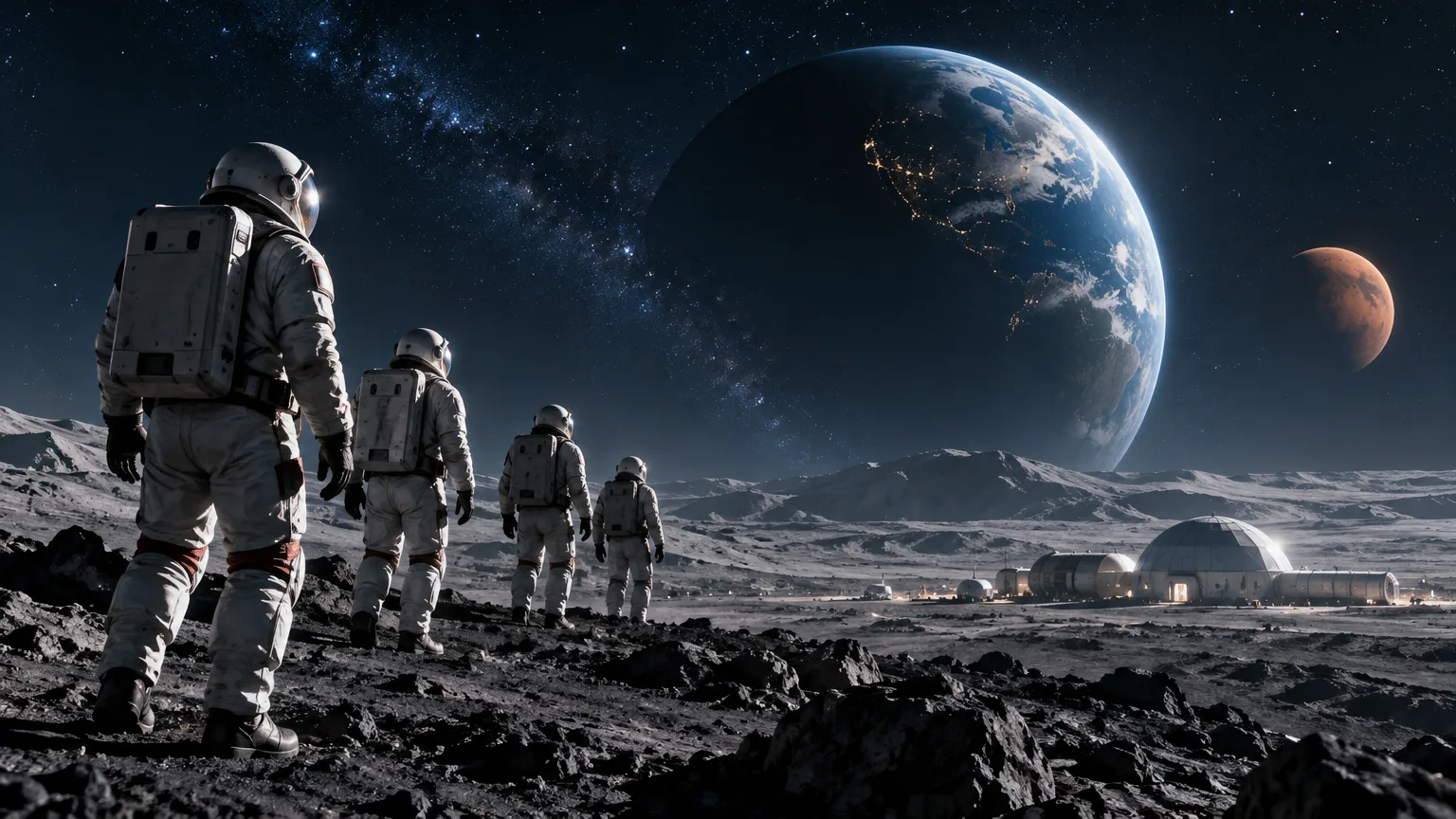
NASA is in a critical phase of its space exploration strategy, centered on the Artemis program. This program aims to return to the Moon, establish a Lunar Base, and prepare crewed missions to Mars. To achieve these goals, the agency needs not only new rockets and landing vehicles but also a qualified workforce capable of operating in extreme environments.
According to the agency, the next generation of astronauts will be trained to operate on the lunar surface, live and work beyond Earth, and undertake missions that will expand the limits of human exploration. NASA Administrator Jared Isaacman highlighted that the selected individuals could walk on the Moon, work at the Lunar Base, and help develop the systems that will take crews to Mars.
Eligibility requirements
The call establishes specific requirements for candidates. Among the basic criteria are:
- U.S. citizenship.
- A master's degree in a STEM field (science, technology, engineering, or mathematics), obtained from an accredited institution. This requirement can also be met by:
- At least two years of doctoral studies in a relevant technical field.
- Specific medical degrees, such as Doctor of Medicine, Osteopathy, Nurse Practitioner, or Physician Assistant.
- Completing or being enrolled in a nationally recognized test pilot school, with completion before July 2027.
In addition, candidates must have at least three years of relevant professional experience after obtaining their degree. For pilots, this experience can be demonstrated through specific flight hours:
- High-performance jet aircraft: 750 hours as pilot in command.
- Other fixed-wing aircraft: 1,500 total hours, including 750 as pilot in command.
- Rotary-wing aircraft: 1,000 total hours, including 300 as pilot in command.
Candidates must also pass the long-duration spaceflight medical examination and demonstrate leadership, teamwork, and communication skills.
Selection and training process
NASA plans to conduct the final selection by late 2027. The process includes document review, interviews, and aptitude tests at the Johnson Space Center. Once selected, new candidates will begin a training program of approximately two years. This program includes training in spacewalks, robotics, spacecraft systems, and lunar geology.
It is important to note that, according to the agency, admission to the astronaut corps does not guarantee immediate assignment to a space mission. Mission planning depends on future factors, and many astronauts perform work on Earth, such as preparing other crews or developing spacecraft.
Background and figures
NASA has selected 370 people as astronaut candidates since the 1960s. In the previous call, opened in 2024, more than 8,000 applications were received, from which 10 candidates were selected in 2025. These astronauts are currently completing their nearly two-year training.
The Artemis III mission is scheduled for 2027, while Artemis IV, which includes a landing near the lunar south pole, is planned for 2028. These missions are fundamental for system validation and preparing for a durable human presence on the Moon.
“The window of opportunity is open. The mission awaits us. And the only thing missing from the greatest adventure humanity has ever undertaken is you,” said Matt Anderson, NASA Associate Administrator.